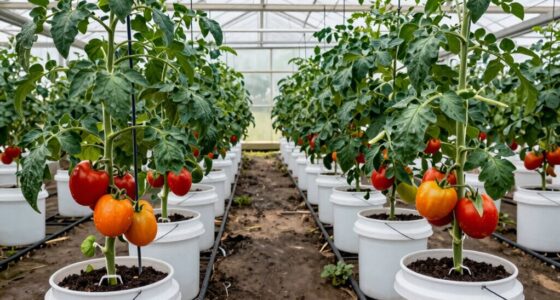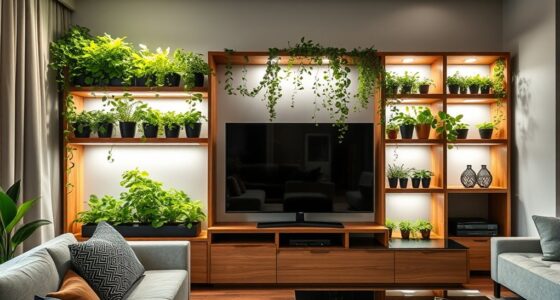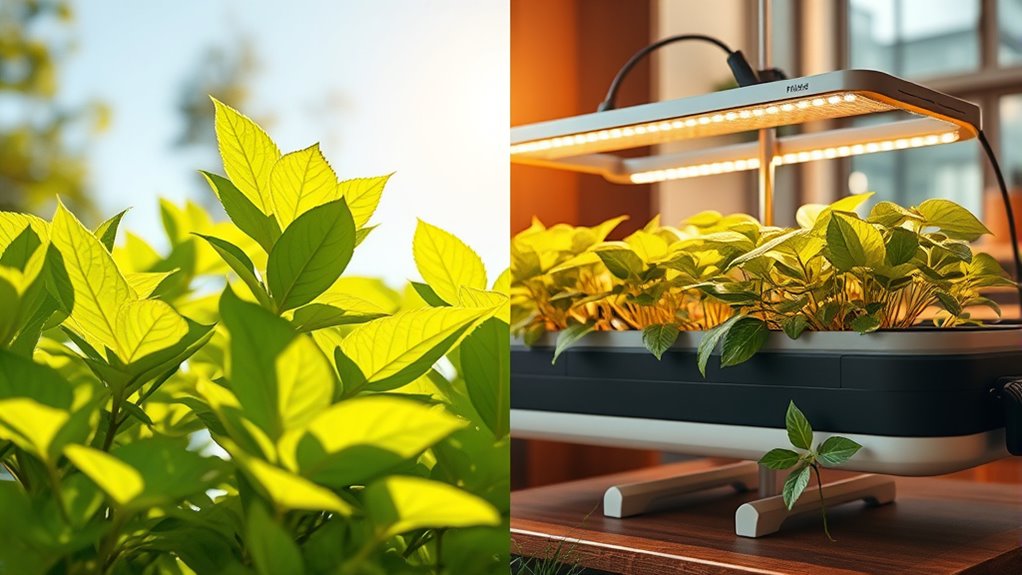

To optimize your hydroponic kit for summer and winter, adjust lighting, nutrients, and temperature accordingly. In summer, extend daily light hours to 14-16 and reduce nutrient concentration to prevent burn from increased warmth. In winter, shorten light periods to 12-14 hours and slightly boost nutrients to support slower growth. Keep temperatures stable and monitor humidity to prevent issues. If you’re curious about precise seasonal strategies, you’ll find helpful tips below.
Key Takeaways
- Increase nutrient concentration slightly in winter; dilute or reduce nutrients during summer to prevent burn.
- Extend lighting hours to 14-16 in summer; shorten to 12-14 hours in winter for optimal plant growth.
- Maintain temperatures between 65-75°F year-round, using heaters in winter and fans in summer to regulate heat.
- Adjust humidity levels seasonally to support transpiration: higher in winter, moderate in summer.
- Regularly monitor environmental conditions to fine-tune nutrient, lighting, and temperature adjustments for each season.
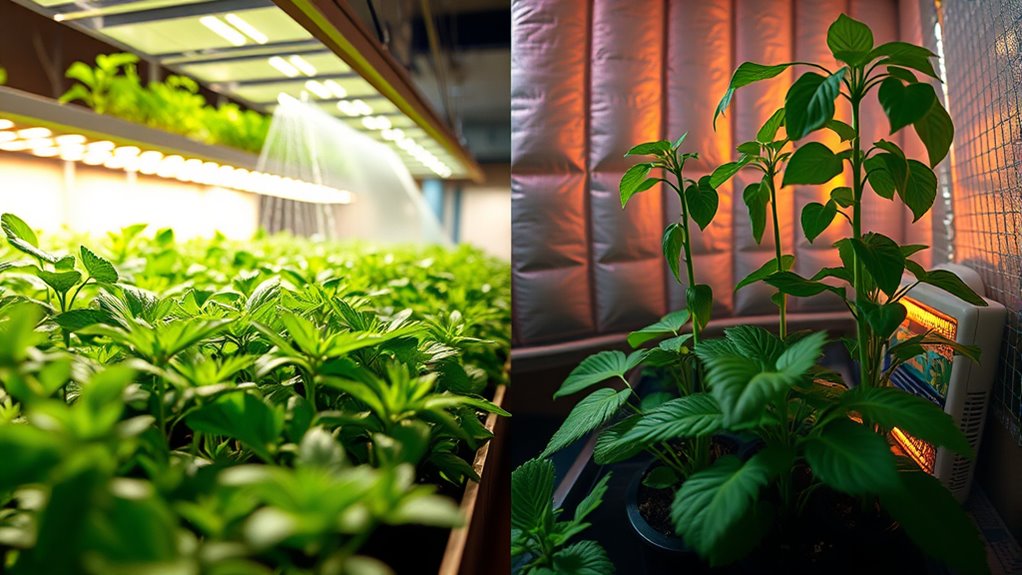
Seasonal changes can substantially impact the performance of your hydroponic kit, so making adjustments throughout the year is crucial for healthy plant growth. As seasons shift, so do the environmental conditions that influence your system’s efficiency. In summer, increased temperatures and longer daylight hours demand careful management of nutrient concentration and lighting schedules. Higher temperatures can accelerate plant growth, but they also risk causing nutrient imbalances or root problems if you don’t adjust your nutrient solution accordingly. You might need to dilute your nutrient mix or reduce its concentration to prevent nutrient burn or toxicity. Conversely, during winter, cooler temperatures slow growth, and shorter days mean your plants receive less natural light. This makes it necessary to boost your lighting schedules to compensate for reduced sunlight, ensuring your plants still get enough energy for healthy development. You may also need to increase the nutrient concentration slightly to support growth, but be cautious—over-fertilizing in colder months can lead to nutrient buildup and plant stress. Proper environmental monitoring can help you identify these needs more precisely.
Monitoring and adjusting your lighting schedules are critical for maintaining consistent growth rates across seasons. During summer, you can often extend your lighting periods, providing 14-16 hours of light daily to support vigorous growth. Just be mindful of potential heat stress caused by prolonged lighting and ensure your system’s temperature remains within ideal ranges. In winter, shortening your lighting duration to around 12-14 hours can help prevent stress from excessive light or heat buildup from grow lights, which are often used to supplement natural sunlight. When setting your lighting schedule, consider the natural photoperiod and your plant’s specific needs—some plants prefer longer days, while others thrive with shorter periods of light. Adjusting these factors thoughtfully will help optimize growth throughout the year.
Adjustments aren’t just about lighting and nutrients; temperature control plays a big role too. Maintain the right temperature for your plants, typically around 65-75°F (18-24°C), and use heaters or fans as necessary. Proper temperature regulation supports nutrient uptake and prevents issues like root rot or stagnation. Additionally, keep an eye on humidity levels, as they fluctuate with the seasons and can influence transpiration and nutrient absorption. By staying attentive to these environmental factors and making timely adjustments, you’ll ensure your hydroponic setup remains productive year-round. Remember, each season presents unique challenges, but with proactive management of nutrient concentration, lighting schedules, and temperature, you can keep your plants healthy, thriving, and productive regardless of the weather outside. Incorporating seasonal environmental adjustments can further enhance your system’s resilience and yield.

Multicolor Lantana Flowers (4 Pack), Live Outdoor Flowering Plants, Easy Plant Care, Attracts Pollinators, Extended Bloom, Heat and Drought Tolerant, Real Flowers
A low-maintenance and easy to grow garden plant with a long blooming season
As an affiliate, we earn on qualifying purchases.
Frequently Asked Questions
How Do Light Requirements Change Between Seasons for Hydroponic Kits?
In winter, you’ll need to increase your LED grow lights because natural sunlight decreases, and plants require more light for healthy growth. During summer, rely more on natural sunlight, which is abundant, and reduce your LED lighting hours to prevent overstimulation. Adjust your light requirements based on the season, ensuring your hydroponic kit gets the right amount of light for ideal growth year-round.
What Are the Best Types of Nutrients for Summer Versus Winter?
You should choose nutrient solutions with different fertilizer ratios for summer and winter to optimize growth. In summer, opt for a balanced or slightly higher nitrogen mix to support vigorous growth, since warmer temperatures boost nutrient absorption. In winter, lower nutrient concentrations help prevent root burn, and a slightly increased phosphorus and potassium ratio promotes root health and flowering. Modifying these ratios guarantees your plants get the right nutrients year-round.
How Should I Adjust Ph Levels Seasonally?
Your hydroponic pH levels can feel like a rollercoaster, but don’t worry — you can tame it with seasonal adjustments. In summer, you might need to lower your pH slightly to counteract increased pH fluctuation caused by heat. During winter, raise it a bit to maintain seasonal stability. Regularly test and fine-tune your pH to keep your plants thriving no matter the season.
Are There Specific Pests More Active in Summer or Winter?
In summer, pest activity tends to increase, with seasonal pests like aphids and whiteflies being more active. During winter, pest activity generally decreases but can still occur, especially if conditions favor their survival. You should regularly inspect your hydroponic kit for signs of seasonal pests and take preventive measures, like introducing natural predators or using organic pest control, to keep your plants healthy year-round.
Can Hydroponic Kits Be Used Outdoors Year-Round?
Using your hydroponic kit outdoors year-round is like riding a wave—you can enjoy it, but you’ll need to steer carefully. In outdoor placement, seasonal planting matters; summer provides warmth and sunlight, while winter demands extra insulation or indoor backup. With proper adjustments, you can keep your hydroponic garden thriving through all seasons, but be ready to tweak your setup to handle temperature swings and seasonal changes.

Costa Farms Ruellia Live Outdoor Plant, Purple Showers Mexican Petunia, 10-Inch Grower Pot, 2-Feet Tall, Fast Growing Flowering Shrub, Drought-Tolerant Perennial, Pollinator & Butterfly Attractant
VIBRANT YEAR-ROUND PURPLE BLOOMS: Ruellia is famous for its prolific, trumpet-shaped violet flowers that bloom continuously from spring...
As an affiliate, we earn on qualifying purchases.
Conclusion
Now that you know how summer and winter affect your hydroponic kits, are you ready to make those seasonal adjustments? By tweaking your water temperature, lighting, and nutrient levels, you can keep your plants thriving all year round. Don’t let the seasons catch you off guard—embrace these simple changes and enjoy fresh, healthy produce no matter the time of year. After all, isn’t growing your own food worth a little seasonal effort?
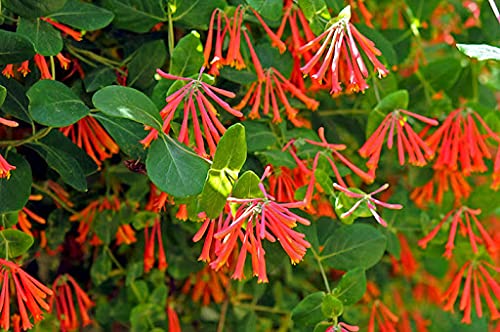
Trumpet Honeysuckle (Lonicera sempervirens), Coral Honeysuckle in 4" Pot
Scientific Name: Lonicera sempervirens
As an affiliate, we earn on qualifying purchases.

Coral Honeysuckle - Lonceria sempervirens - Live Plant - Non-Invasive Native Species - No Fragrance - Orange Pink Flower - Emerald Goddess Gardens - Starter Sz 4 Inch Pot
Loniceria sempervirens, or Coral Honeysuckle, is native to much of the southern United States and is a beautiful,...
As an affiliate, we earn on qualifying purchases.