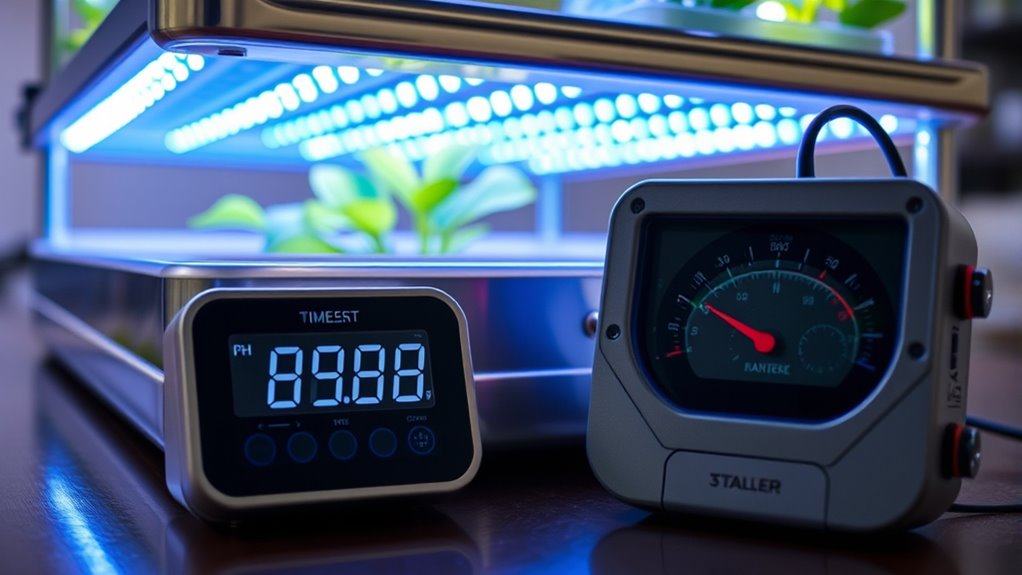

Hydroponic kit accessories like lights, timers, and meters are key to optimizing your plant growth. Grow lights provide the necessary spectrum for healthy development, while timers automate light cycles to match your plants’ needs. Meters help monitor pH levels, nutrients, and environmental conditions to prevent issues. Using these tools guarantees your system stays balanced and efficient. Keep exploring to discover how these accessories can boost your hydroponic success even further.
Key Takeaways
- Proper lighting options (LED, fluorescents) enhance photosynthesis and plant growth in hydroponic systems.
- Timers automate light cycles, ensuring consistent day/night schedules for optimal plant development.
- pH and electrical conductivity meters monitor nutrient solution quality, preventing deficiencies and toxicities.
- Combining lights, timers, and meters improves environmental control and simplifies hydroponic system management.
- High-quality accessories boost crop yields, promote healthy growth, and streamline maintenance routines.
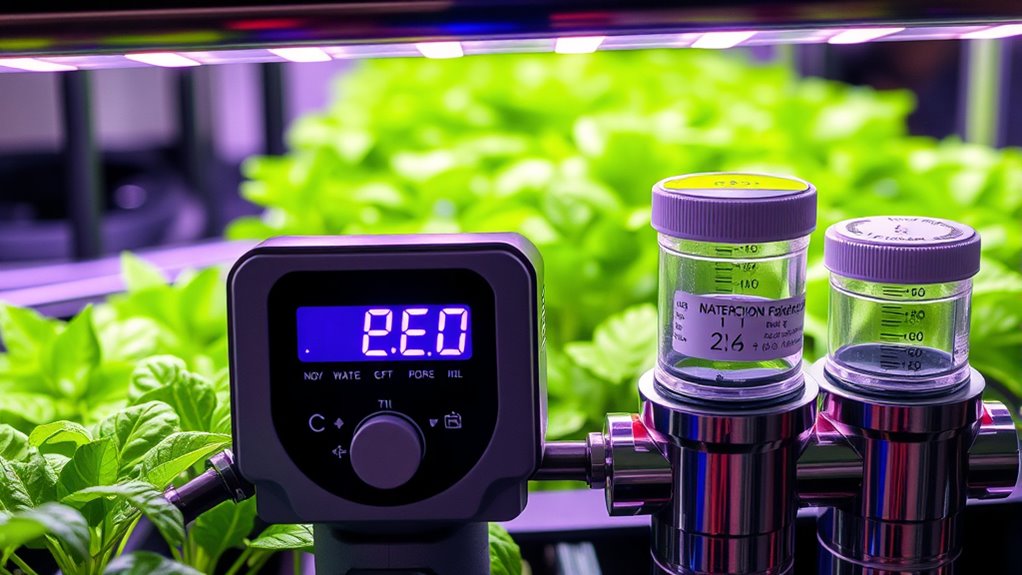
Hydroponic kit accessories are essential tools that enhance your growing experience and help guarantee healthy, thriving plants. Among these, nutrient solutions and pH monitoring equipment play critical roles in maintaining ideal plant health. Nutrient solutions provide your plants with the essential minerals and nutrients they need to grow vigorously, while pH monitoring ensures that the environment remains within the perfect range for nutrient uptake. Without proper attention to these elements, your plants could suffer from deficiencies or nutrient lockout, stunting growth or causing disease. Investing in quality nutrient solutions tailored to your specific plants and regularly checking pH levels allows you to create the perfect conditions for healthy development.
Hydroponic accessories like nutrient solutions and pH monitors are vital for healthy, thriving plants.
When it comes to nutrient solutions, you want to select products designed specifically for hydroponic systems. These solutions are formulated to deliver balanced nutrients directly to the roots, bypassing soil limitations. You should also pay attention to the concentration and composition, adjusting as your plants grow and their needs change. Mix your nutrient solution according to the manufacturer’s instructions, and always keep a record of your feeding schedule. Regularly replenishing the nutrient reservoir with fresh solution prevents imbalances and ensures your plants receive a steady supply of nutrients.
pH monitoring is equally essential, as it directly influences nutrient availability. Most hydroponic plants thrive within a pH range of 5.5 to 6.5. When the pH level is outside this window, plants can struggle to absorb nutrients, leading to deficiencies and poor growth. Using a reliable pH meter, you can quickly and accurately check the acidity or alkalinity of your nutrient solution. Daily monitoring is recommended, especially during initial setup or when adjusting nutrient concentrations. If your pH drifts outside the ideal range, you can correct it using pH up or down solutions, which are readily available at garden centers. Keeping a close eye on pH levels ensures your plants are always in an environment conducive to absorbing nutrients effectively. Additionally, understanding the importance of proper maintenance can help prevent issues before they arise.
Incorporating these accessories into your hydroponic setup might seem like extra work at first, but they’re essential for consistent, successful growth. Accurate nutrient solutions and diligent pH monitoring help you avoid common pitfalls like nutrient deficiencies or toxic build-up. They also give you greater control over your plants’ health and development, leading to more bountiful harvests and healthier plants overall. With these tools at your disposal, you’ll be better equipped to troubleshoot issues, optimize growth conditions, and enjoy the rewarding experience of hydroponic gardening.
Frequently Asked Questions
How Do I Choose the Right Light Spectrum for My Hydroponic Plants?
You should choose a light spectrum that enhances your plants’ photosynthesis efficiency. Look for lights with a balanced mix of blue and red wavelengths, as blue promotes vegetative growth and red encourages flowering. Consider the light quality to match your plants’ growth stage. Using full-spectrum LED grow lights can provide ideal light conditions, ensuring your plants get the right spectrum for healthy, vigorous growth.
What Is the Optimal Timer Setting for Different Plant Stages?
Think of your plant’s growth stages as a delicate symphony. During seedling and vegetative phases, set your timer for 16-18 hours of light, then let darkness nurture root development. For flowering, reduce to 12 hours, mimicking nature’s rhythm. Proper timer programming guides each phase, ensuring your plants receive just the right amount of light and dark to thrive. Adjust settings as your plants progress, like a conductor fine-tuning a masterpiece.
Which Meter Is Best for Measuring Nutrient Levels Accurately?
You should choose a meter that offers precise pH measurement and electrical conductivity readings to accurately gauge nutrient levels. Look for a digital meter with clear displays and calibration features, ensuring consistent results. A combination pH and EC meter simplifies testing and helps you maintain ideal nutrient balance, which is vital for healthy plant growth. Regularly monitoring these parameters allows you to adjust your nutrient solution effectively.
Can Accessories Be Upgraded Without Disrupting My Hydroponic System?
Yes, you can upgrade accessories without disrupting your hydroponic system, as long as you check system compatibility and accessory compatibility first. Make certain new lights, timers, or meters are compatible with your existing setup, and follow manufacturer instructions for installation. By verifying compatibility and upgrading carefully, you maintain ideal growth conditions without causing system disruptions or compromising your hydroponic environment.
How Often Should I Calibrate My Hydroponic Meters for Precision?
You should calibrate your hydroponic meters at least once every month to maintain ideal meter accuracy. Regular calibration ensures your readings stay precise, which is essential for healthy plant growth. If you notice inconsistent or unexpected results, consider calibrating more frequently. Using calibration solutions or standards specific to your meters can help improve accuracy. Consistent calibration practices help you monitor and adjust your system effectively, ensuring your hydroponic setup performs at its best.
Conclusion
By choosing the right lights, timers, and meters, you guarantee your hydroponic system thrives. These accessories help you monitor, control, and optimize growth, making your gardening experience more efficient and rewarding. With the right tools, you can encourage healthy roots, vibrant plants, and abundant yields. Invest in quality accessories, maintain consistency, and enjoy the process of cultivating greenery indoors. Together, these essentials turn your hydroponic setup into a flourishing, productive garden you can be proud of.