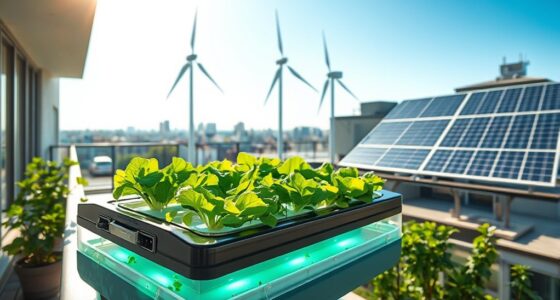

To successfully expand your hydroponic kit, you need to plan carefully, integrating automation and managing resources efficiently. Automate lighting, nutrient dosing, and environmental controls to maintain consistent conditions and save time. Monitor water, nutrients, and energy use with sensors to reduce waste and optimize growth. Balancing automation with resource management creates a resilient system that supports healthy plants and scalable yields. Continue exploring how to build a long-term, sustainable hydroponic operation that can grow with you.
Key Takeaways
- Develop a strategic plan that accounts for increased plant numbers, resource needs, and space management.
- Incorporate automation tools like timers and sensors to streamline environmental controls and nutrient delivery.
- Optimize resource management by monitoring water pH, nutrient levels, and energy use with automated systems.
- Ensure proper airflow, lighting, and sanitation to prevent disease and pests during expansion.
- Continuously monitor and adjust the system remotely to maintain quality, efficiency, and scalability.
Have you ever wondered how small startups transform into industry giants? The same principle applies to expanding your hydroponic kit. Growth isn’t just about adding more plants; it involves strategic planning, especially when it comes to automation integration and resource management. When you scale up, manual processes can quickly become overwhelming, leading to inconsistencies and inefficiencies. That’s where automation integration becomes essential. By incorporating automated systems—such as timers for lighting, nutrient dosing pumps, and environmental controls—you not only streamline operations but also guarantee optimal growing conditions at every stage. Automation reduces the margin for error, saves time, and allows you to focus on other critical aspects of your operation, like expansion planning or quality control. Additionally, understanding the importance of high-quality projectors in supporting remote monitoring and control can further enhance your system’s efficiency and precision.
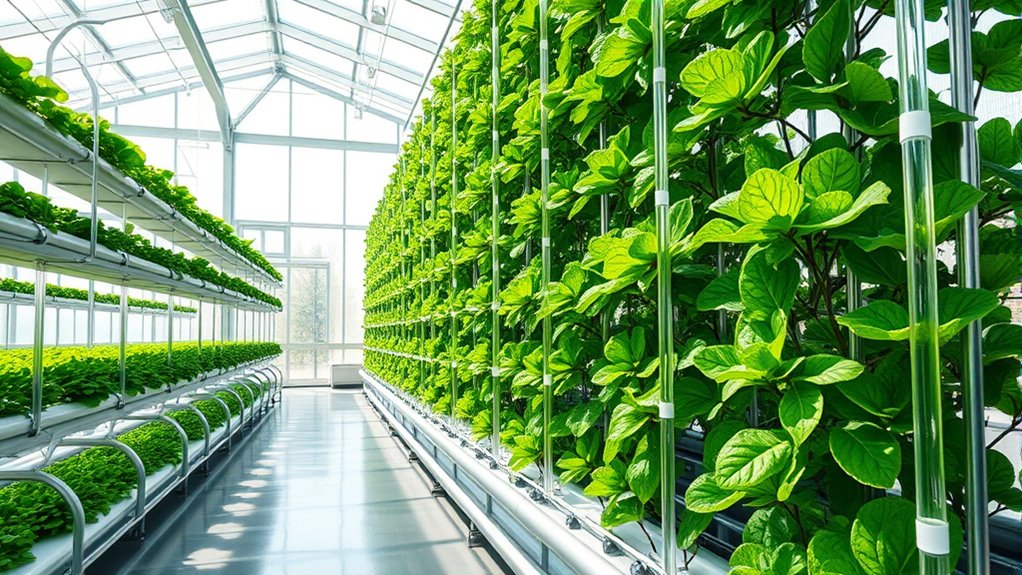
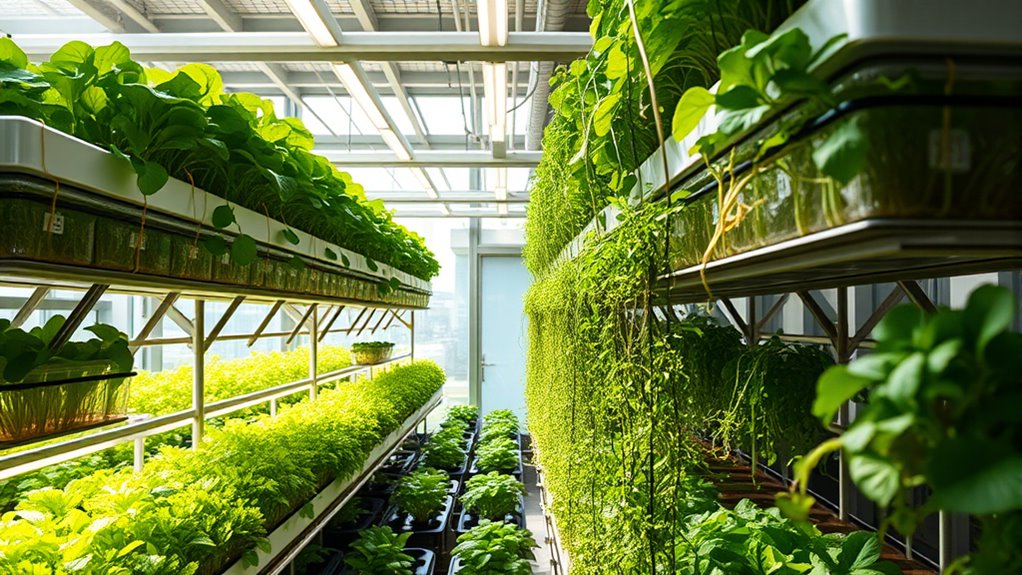
Resource management is equally vital when scaling your hydroponic setup. As your operation grows, so does the demand for water, nutrients, energy, and space. Managing these resources efficiently prevents waste and keeps costs under control. For example, using sensors to monitor nutrient levels and water pH helps guarantee your plants receive exactly what they need without wastage. Automated nutrient delivery systems can adjust feedings based on real-time data, optimizing plant growth while conserving resources. Proper resource management also involves planning your space effectively—adding new grow modules or shelves, ensuring proper airflow, and maintaining a clean environment to prevent disease and pests. When you coordinate automation with resource management, you create a seamless system that supports healthy plant development and maximizes yield.
Scaling up isn’t just about enlarging your hydroponic kit; it’s about adopting systems that support growth sustainably. Automation integration plays a pivotal role by making your operation more efficient and less labor-intensive. It allows you to monitor and control conditions remotely, giving you peace of mind and the ability to respond quickly to any issues. Meanwhile, resource management ensures that your increased output doesn’t come at the expense of efficiency or environmental impact. Balancing these elements helps you build a resilient, scalable system that can adapt to higher demands without sacrificing quality. As you expand, focus on integrating smart technologies and managing your resources wisely. This approach not only accelerates growth but also lays a solid foundation for long-term success in your hydroponic venture.
Top picks for "scal expand hydroponic"
As an affiliate, we earn on qualifying purchases.
Frequently Asked Questions
What Are the Initial Costs for Expanding a Hydroponic System?
The initial costs for expanding your hydroponic system depend on your budget considerations and the equipment upgrades you choose. You’ll need additional grow lights, larger containers, and more pumps, which can add up. Expect to spend a few hundred dollars for basic expansion, but costs can rise if you opt for advanced technology or high-end equipment. Planning carefully helps you stay within budget while ensuring your system grows successfully.
How Do I Manage Nutrient Levels in Larger Setups?
To manage nutrient levels in larger setups, you should focus on regular nutrient balancing and pH monitoring. Check your nutrient solution frequently and adjust the concentrations to make certain plants receive the right nutrients. Use a reliable pH meter daily to keep pH levels between 5.5 and 6.5, which optimizes nutrient uptake. Consistent monitoring and adjustments help prevent deficiencies and overfeeding as your system grows.
What Are Common Pests in Expanded Hydroponic Systems?
Imagine your hydroponic garden as a peaceful forest, suddenly threatened by unwelcome pests like aphids, spider mites, or fungus gnats. To protect your thriving ecosystem, practice pest management with organic control methods such as neem oil, beneficial insects, or insecticidal soaps. Regular monitoring and maintaining a healthy environment help prevent infestations, ensuring your expanded system remains lush and productive without harmful chemicals.
How Do I Ensure Uniform Light Distribution Across a Bigger Grow Area?
To guarantee uniform light distribution, you should strategically place your LED lights to cover the entire grow area evenly. Use reflective surfaces like Mylar or white paint to bounce light into hard-to-reach spots. Keep LEDs at the ideal height and angle, adjusting as plants grow. Regularly monitor plant responses and adjust the placement to maintain consistent light levels, promoting healthy, uniform growth throughout your expanded hydroponic system.
What Safety Precautions Should I Consider When Scaling Up?
When scaling up, you need to prioritize safety to prevent accidents. For example, a grower overlooked electrical safety, leading to a short circuit and fire. Always guarantee proper chemical safety by storing nutrients securely and labeling them clearly. Regularly inspect electrical wiring and equipment to prevent shocks or fires. Use grounded outlets, avoid overloading circuits, and wear protective gear. These precautions protect both your plants and your safety as you expand.
Conclusion
Now that you’re ready to scale up your hydroponic kit, you’ve got the tools and know-how to take your setup to the next level. Remember, Rome wasn’t built in a day, so be patient and persistent as you expand. With careful planning and attention, your garden will flourish beyond your wildest dreams. Keep your eye on the prize, and soon you’ll be reaping the rewards of your efforts—green thumbs and lush, healthy plants await!