
TL;DR

Get garden gear delivered free with Prime
- Fast, free delivery on millions of items
- Prime Video, Amazon Music and more included
- Member-only deals all year
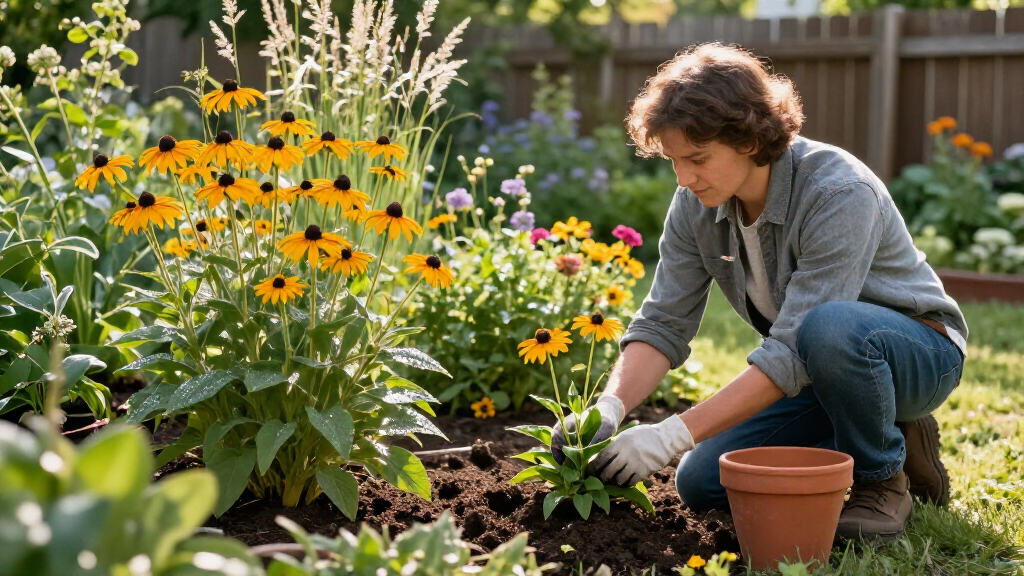
Gardening Know How has published a guide to seven native perennials that can return in successive growing seasons and add flowers, foliage or texture. The selections include sun- and drought-tolerant plants as well as species that need shade or consistently moist soil; success depends on matching each plant to its conditions.
Gardening Know How has published a guide to seven native perennials for gardens designed to return and develop over successive growing seasons. The list spans sun-loving flowers, ornamental grass and shade-tolerant fern, with different moisture and soil needs that gardeners must match to their planting sites.
The plants named are coneflowers, coreopsis, pink muhly grass, ostrich fern, bee balm, black-eyed Susan and anise hyssop. The report presents them as options for building seasonal variety and a planting that can become more established over time, rather than requiring gardeners to recreate the same display each spring.
Several selections are described as suited to sunny, drier conditions. Coneflowers and coreopsis are characterized as drought-tolerant, while black-eyed Susan is recommended for full sun and said to tolerate a range of soils. Pink muhly grass also prefers sun and well-drained soil; the article cautions against planting it in wet or poorly drained locations, especially in winter.
Other plants suit different conditions. Ostrich fern prefers shade and consistently moist soil, including beneath trees or along shaded beds. Bee balm and anise hyssop are presented as pollinator-attracting choices. The article says bee balm flowers provide nectar popular with hummingbirds, while anise hyssop offers aromatic foliage and flower spikes. These are the source’s gardening descriptions, not guarantees of results in every garden.
A Longer-Lived, More Varied Garden
The guide’s practical point is that a perennial planting can deliver recurring seasonal interest after plants establish, while reducing the need to start the whole garden over each spring. Its seven choices also show that a garden does not need to rely on flowers alone: foliage, seedheads and ornamental grass can add texture and structure at different times of year.
The report also links native plants with food and habitat for wildlife, including bees, butterflies and birds. That benefit depends on the plants growing successfully and on local wildlife, conditions the article does not quantify. For readers, the list is most useful as a starting point for selecting plants suited to their own site, rather than as a one-size-fits-all planting plan.
Products Worth Considering

Takywep 6 x 9 ft Walk-In Greenhouse with Polycarbonate Panels

EGO Power+ SNT2122 21-Inch Single-Stage Snow Blower with Two 4.0Ah Batteries and 320W Charger

Weber Spirit E-325 3-Burner Gas Grill with Sear Zone
As an affiliate, we earn on qualifying purchases.
Matching Plants to Garden Conditions
The report frames native perennials as plants adapted to local conditions and says they can be relatively easy to grow once established. It does not give a region-specific planting plan, and the word “native” depends on where a garden is located; gardeners should check whether a species is native to their area before buying or planting it.
The list covers contrasting environments, from sun and well-drained soil for pink muhly grass to the cool, moist shade favored by ostrich fern. The article also mentions named selections, including ‘Moonbeam’ coreopsis, ‘Jacob Cline’ bee balm and ‘Glitters Like Gold’ black-eyed Susan. These examples do not change the importance of checking local suitability and growing requirements.
“Plant them in the right conditions, give them time to establish, and they’ll reward you with a garden that gets better with every growing season.”
— Gardening Know How
Local Suitability Still Needs Checking
The supplied report does not specify its publication date, geographic focus or the regions where each plant is native. It also does not provide trial data, a comparative ranking, or evidence that every listed plant will become fuller or flower more heavily every year. Results will vary with climate, soil, water, light and establishment.
Some claims are broad descriptions rather than measured findings. The material does not quantify wildlife benefits or give a standard for how much maintenance each plant needs. It also does not provide detailed planting instructions, such as spacing or timing, for all seven selections.
Check Native Status Before Planting
Gardeners considering the list can first identify their region, sun exposure, drainage and soil moisture, then confirm each plant’s local native status and requirements with a regional native-plant organization, extension service or reputable nursery. The article offers no announced follow-up, testing or next publication milestone; the practical next step is site-specific selection and care as plants establish.
Key Questions
Which seven native perennials does the report recommend?
It lists coneflowers, coreopsis, pink muhly grass, ostrich fern, bee balm, black-eyed Susan and anise hyssop.
Do all seven plants need full sun?
No. Pink muhly grass and black-eyed Susan are described as sun-loving, while ostrich fern prefers a cooler, shadier location with consistently moist soil. Check each plant’s needs before planting.
Are the plants native everywhere?
No. The supplied report does not identify a region for its recommendations. Native status is location-dependent, so check with a local native-plant group or extension service before choosing a species.
Do these plants require no maintenance?
The article describes some selections as relatively easy to grow once established, but it does not claim they need no care. Water, soil, light and maintenance needs vary; anise hyssop may flower longer with deadheading, according to the report.
Source: gardeningknowhow.com