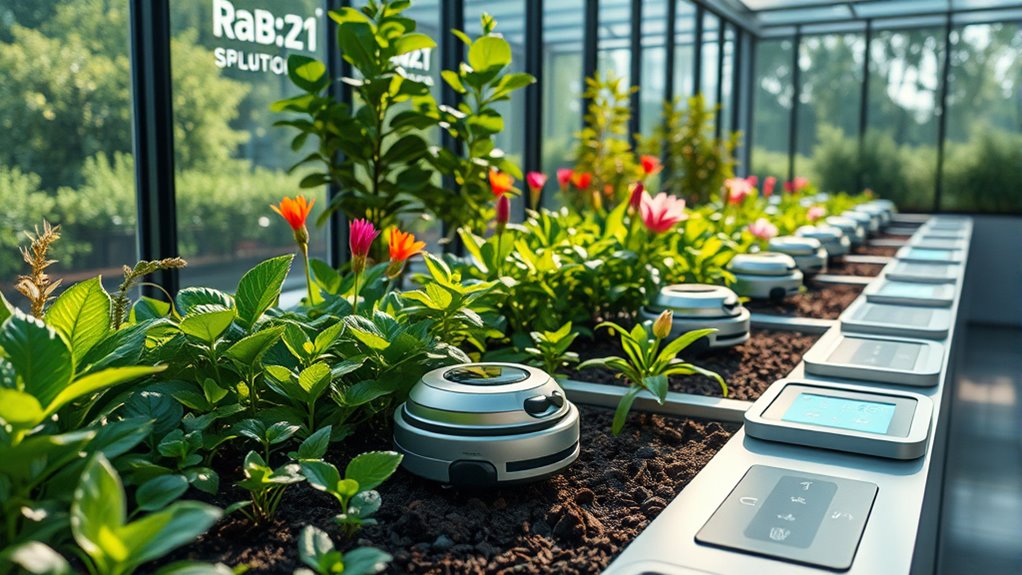

To keep your smart garden thriving, establish a regular cleaning routine that covers soil maintenance, pest control, equipment sanitation, and overall hygiene. Aerate soil, add compost, and monitor moisture levels frequently. Inspect plants for pests and remove debris to prevent problems. Clean sensors, irrigation, and containers to avoid mold and clogs. Maintain a tidy environment and address issues early. Following these steps will help you sustain a healthy, sustainable garden — discover more tips on how to optimize it.

Get garden gear delivered free with Prime
- Fast, free delivery on millions of items
- Prime Video, Amazon Music and more included
- Member-only deals all year
Key Takeaways
- Regularly inspect and clean sensors, irrigation systems, and containers to prevent mold and blockages.
- Aerate soil, add organic matter, and test soil pH and nutrients for optimal plant health.
- Remove debris, fallen leaves, and weeds promptly to reduce pests and maintain hygiene.
- Monitor plant condition, soil moisture, and signs of pests or disease for early intervention.
- Establish consistent routines for cleaning garden surfaces, tools, and system components to ensure efficiency.

Maintaining a clean smart garden is vital to keep your plants healthy and your system running smoothly. One of the key aspects of this is regular soil maintenance. Over time, soil can become compacted or depleted of nutrients, which hampers plant growth. To prevent this, you should routinely aerate your soil to improve airflow and water penetration. Adding organic matter or compost helps replenish nutrients naturally, guaranteeing your plants get what they need to thrive. Checking soil moisture levels regularly allows you to adjust watering schedules accordingly, preventing both overwatering and drought stress. Keeping an eye on soil health also involves removing any dead or decaying plant material that can harbor pests or diseases, reducing the risk of problems spreading. Proper soil maintenance not only supports healthy root development but also creates a less hospitable environment for pests, making pest control easier and more effective. Using soil testing kits can provide precise information about nutrient levels and pH, enabling more targeted amendments for optimal plant health.
When it comes to pest control, staying proactive is vital. A clean smart garden minimizes pest issues by removing potential hiding spots and food sources. Regularly inspecting your plants helps catch infestations early—look for chewed leaves, discolored spots, or unusual insects. Using integrated pest management techniques, such as introducing beneficial insects or applying organic treatments, can control pests without harming your plants or the environment. Keep your garden clean by promptly removing fallen leaves, plant debris, and weeds, which can serve as breeding grounds for pests. Maintaining proper sanitation also involves cleaning smart garden components, like sensors and watering systems, to prevent buildup of mold, algae, or bacteria that attract pests. A tidy garden reduces the likelihood of pest problems escalating, saving you time and effort in the long run.
In addition to soil maintenance and pest control, establishing a consistent cleaning routine for your smart garden components enhances overall health. Regularly wipe down sensors, check irrigation systems for clogs, and clean containers to prevent mold or algae growth. This all-encompassing approach ensures your smart systems function at their best and reduces the risk of pest invasions caused by dirty equipment. Staying vigilant with these practices helps you catch small issues early before they turn into major problems. Remember, a well-maintained garden not only keeps pests at bay but also promotes vigorous plant growth. By dedicating time to soil care and pest management, you’ll enjoy a lush, productive smart garden that stays healthy, resilient, and easy to manage.
As an affiliate, we earn on qualifying purchases.
Frequently Asked Questions
How Often Should LED Lights Be Cleaned in a Smart Garden?
You should clean your LED lights regularly to maintain ideal light hygiene and guarantee efficient LED maintenance. Typically, cleaning once every two to four weeks is sufficient, but if dust or dirt accumulates more quickly, you might need to clean more often. Use a soft, damp cloth to gently wipe the lights, avoiding harsh chemicals. Keeping your LED lights clean helps your smart garden thrive and prevents any light obstruction issues.
Can Cleaning Products Damage Smart Garden Electronic Components?
Cleaning products can be your garden’s worst enemy, causing more chaos than a tornado in a trailer park. They can lead to chemical damage and threaten electronic safety, especially if you use harsh chemicals near sensitive components. Always opt for gentle, electronics-safe cleaners, and avoid abrasive or chemical-heavy solutions. Protect your smart garden by cleaning carefully, ensuring your LEDs and electronics stay safe and your garden thrives without unnecessary risks.
What Is the Best Way to Remove Algae From Smart Garden Surfaces?
To remove algae from smart garden surfaces, you should use gentle algae removal techniques that won’t damage your smart surface. Start by mixing a mild soap solution or a vinegar and water mix for smart surface cleaning. Use a soft cloth or sponge to gently scrub the algae, avoiding harsh abrasives. Rinse thoroughly with water, then dry with a clean cloth. Regular maintenance prevents algae buildup and keeps your garden functioning preferably.
How Do I Prevent Mold Buildup in Smart Garden Soil?
Mold buildup in your smart garden soil is like a stubborn stain, but you can prevent it with proper care. Guarantee good soil aeration to allow air to circulate, preventing moisture from becoming trapped. Use moisture control techniques, like watering only when needed, to keep the soil from staying too damp. Regularly check your garden, and you’ll create an environment that discourages mold and promotes healthy plant growth.
Are There Specific Cleaning Tools Recommended for Smart Garden Maintenance?
You should use specific smart garden tools and cleaning equipment to keep your system in top shape. A soft brush or a gentle cloth helps remove dirt without damaging sensors or delicate parts. A small brush or compressed air can clear out hard-to-reach areas. Avoid harsh chemicals, and opt for gentle cleaning solutions. Regularly cleaning your smart garden with these tools guarantees ideal performance and longevity for your system.
automatic irrigation system cleaning tools
As an affiliate, we earn on qualifying purchases.
As an affiliate, we earn on qualifying purchases.
Conclusion
By sticking to this cleaning schedule, you’ll keep your smart garden thriving like a well-tuned symphony. Think of it as tending a garden of endless possibilities—each task a note that guarantees harmony and growth. Remember, a little effort now prevents chaos later, turning your garden into a lush paradise. With consistent care, you’ll enjoy vibrant blooms and fresh herbs, proving that a clean garden isn’t just an act, but a love letter to nature itself.
As an affiliate, we earn on qualifying purchases.
organic pest control for smart gardens
As an affiliate, we earn on qualifying purchases.
As an affiliate, we earn on qualifying purchases.
Fall yard work Picks
leaf blowers
As an affiliate, we earn on qualifying purchases.