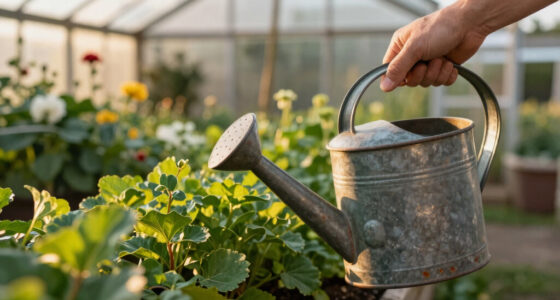
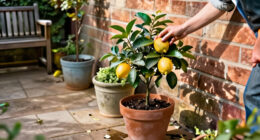
Inspect your indoor garden during early morning or late afternoon for the best visibility and to match pest activity patterns. These times provide softer light, reducing glare and shadows, making it easier to spot pests and plant issues. Pest activity is higher during dawn and dusk, so inspecting then helps catch problems early. Sticking to these times also helps you become familiar with your plants’ normal appearance. Keep going to discover how to optimize your inspections even further.

Get garden gear delivered free with Prime
- Fast, free delivery on millions of items
- Prime Video, Amazon Music and more included
- Member-only deals all year
Key Takeaways
- Conduct inspections during peak daylight hours for optimal visibility of pests and plant issues.
- Inspect early morning or late afternoon when plants are relaxed and lighting is softer, reducing glare.
- Check during dawn or dusk when pests like spider mites and aphids are most active for early detection.
- Maintain a consistent inspection schedule at the same time to develop familiarity with healthy plant appearance.
- Combine optimal lighting with environmental awareness, such as temperature and humidity, for comprehensive problem identification.

Inspecting your indoor garden at the right time of day can make all the difference in catching problems early. The timing impacts how well you can assess your plants’ health and spot issues like pests or nutrient deficiencies. Lighting conditions vary throughout the day, and these changes can influence how visible certain problems are. For example, during the daytime, natural or artificial light is usually at its brightest, which helps reveal pests hiding on leaves or signs of disease such as discoloration or spots. Conducting your inspection during these peak light hours ensures you don’t miss subtle symptoms that might be harder to see in dimmer conditions.
Inspect your indoor garden during peak daylight hours for clearer visibility of pests and diseases.
Early morning or late afternoon inspections are often ideal because the light is softer, reducing glare and shadows that can obscure details. During these times, your plants are likely to be in a more relaxed state, making it easier to notice changes. If you inspect during midday when the grow lights are at their strongest, you get a clear, direct view of your plants. However, midday inspections can sometimes be less revealing if the intense light causes glare or washes out color differences. To strike the right balance, try inspecting your plants in the early morning or late afternoon, when the lighting conditions are perfect for detailed observation.
Pest activity tends to follow specific patterns, often peaking during certain times of the day. Many pests, such as spider mites and aphids, are most active during the cooler periods of dawn and dusk. If you want to catch early signs of pest activity, it’s best to check your plants during these times. Look closely at the undersides of leaves, stems, and new growth, where pests like to hide and lay eggs. Spotting pest activity early allows you to take swift action, preventing a minor problem from escalating into a full-blown infestation.
Timing your inspections around these biological and lighting cues ensures you catch issues before they become severe. Regularly checking your indoor garden at consistent times helps you become familiar with what healthy plants look like at different times of day, making deviations more noticeable. Additionally, understanding the lighting conditions during different times of day can help optimize your inspection routine for better results. For example, pest activity often correlates with specific lighting and temperature conditions, so aligning your inspection schedule with these patterns increases your chances of early detection. Recognizing how plant behavior varies with lighting can further improve your ability to identify problems early. Incorporating knowledge of environmental factors such as temperature and humidity can also enhance your overall pest management strategy. In conclusion, the best time of day to inspect your indoor garden combines perfect lighting conditions with an understanding of pest activity patterns—early morning or late afternoon usually hits that sweet spot for thorough, effective inspections.
indoor plant pest inspection tools
As an affiliate, we earn on qualifying purchases.
As an affiliate, we earn on qualifying purchases.
Frequently Asked Questions
How Often Should I Inspect My Indoor Garden?
You should inspect your indoor garden at least once a week to catch issues early. Check soil moisture to prevent over or under-watering, and look for leaf discoloration, which can indicate nutrient deficiencies or pests. Regular inspections help you maintain ideal conditions, ensuring healthy plants. Pay attention to subtle changes, and adjust your care routine accordingly, so your garden stays vibrant and problem-free.
What Signs Indicate Pest Problems Early?
Did you know that early pest detection can save your plants? Look for tiny holes, sticky residue, or webbing as signs of pest problems. Regular pest identification is essential because these early warnings let you act before infestations spread. Keep an eye out for discolored or wilting leaves, and check under leaves and in soil. Recognizing these signs early helps prevent major damage and keeps your indoor garden thriving.
Should I Inspect During Watering or Dry Periods?
You should inspect your indoor garden during dry periods, not when watering. Your watering schedule influences plant moisture levels, so dry period insights help you spot issues like pests or disease early. When plants are dry, you’re more likely to see signs of stress or problems on leaves, stems, and soil surface. Regular inspections during these times allow you to catch issues sooner and maintain healthier plants.
How Does Humidity Affect Garden Inspections?
Humidity levels considerably impact your garden inspections because high humidity can mask signs of problems like pests or mold, while low humidity makes issues more visible. When inspecting, focus on moisture detection, checking leaves and soil for excess or insufficient moisture. Conduct inspections during periods of stable humidity, preferably when humidity levels are consistent, to accurately assess your plants’ health and catch potential problems early.
Are Specific Light Conditions Better for Spotting Issues?
You’ll find that inspecting your indoor garden under natural sunlight makes issues like pests, mold, or nutrient deficiencies easier to spot since the light reveals color changes and subtle damage. Artificial lighting can also work, especially if it mimics natural sunlight’s spectrum, but natural sunlight generally provides the best contrast. So, aim to inspect your plants during the day when sunlight is abundant for the clearest view of any problems.
LED grow light for indoor plants
As an affiliate, we earn on qualifying purchases.
As an affiliate, we earn on qualifying purchases.
Conclusion
By choosing the right time of day to inspect your indoor garden, you can catch potential problems early and keep your plants thriving. Morning checks allow you to spot issues like moisture imbalance or pest activity when plants are most alert. So, aren’t those early inspections worth the effort? Regularly monitoring at the most suitable time ensures your garden stays healthy, vibrant, and beautiful—all it takes is a little planning and a keen eye.
plant magnifying glass for pests
As an affiliate, we earn on qualifying purchases.
As an affiliate, we earn on qualifying purchases.
indoor garden pest control products
As an affiliate, we earn on qualifying purchases.
As an affiliate, we earn on qualifying purchases.
Halloween Picks
halloween
As an affiliate, we earn on qualifying purchases.