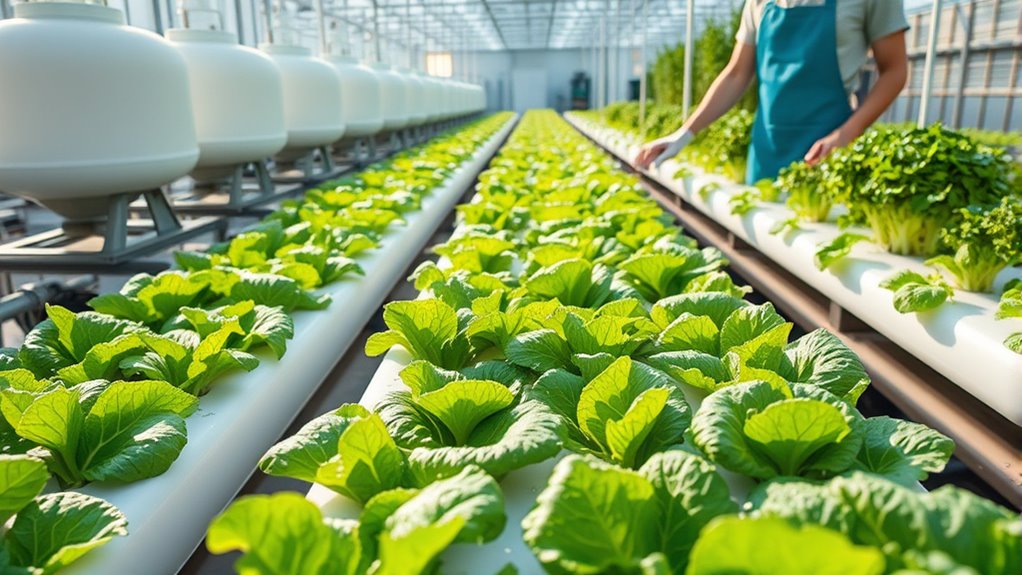

Seasonal deep cleaning is key to keeping your hydroponic garden healthy and pest-free. You’ll want to thoroughly remove debris, dead plant material, and residue that can harbor pests and cause blockages. disinfect all surfaces, clean filters, and flush nutrient lines to prevent algae and mineral buildup. Regularly inspecting and maintaining pumps and connections ensures peak performance. Applying these steps now will help keep your system productive and thriving—there’s more to learn that can make this process even easier.
Key Takeaways
- Thoroughly clean and disinfect all system components, including trays, containers, and hidden spots, to prevent pests and disease buildup.
- Flush the entire hydroponic system with clean water to remove residual nutrients, salts, and mineral deposits, ensuring optimal flow.
- Inspect and replace filters and worn pump parts to maintain proper water circulation and oxygenation.
- Remove debris, dead plant material, and potential pest breeding grounds to promote plant health and prevent infestations.
- Regularly perform seasonal deep cleaning as part of maintenance to extend equipment lifespan and ensure a thriving, healthy garden.
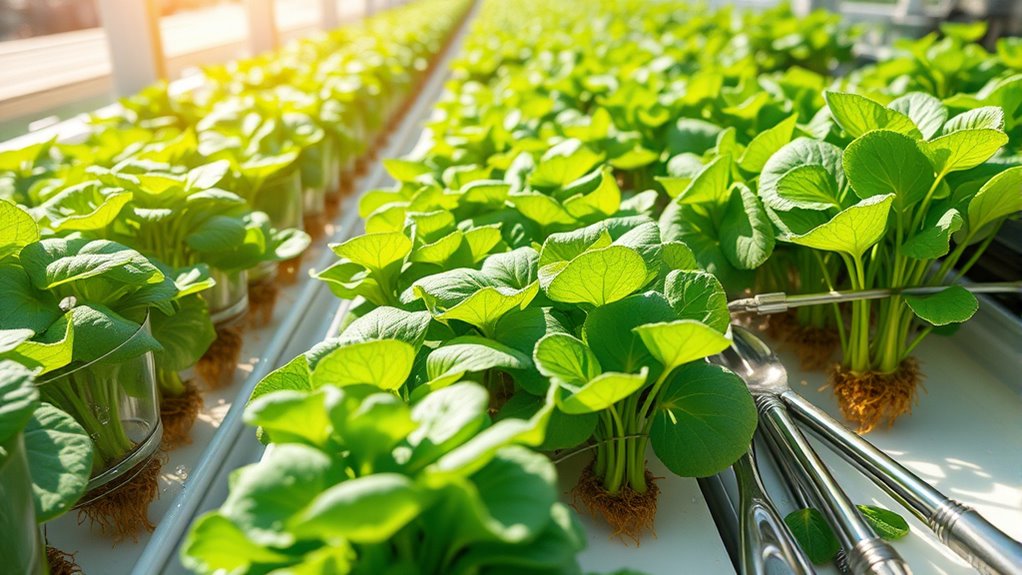
Have you ever wondered how to keep your hydroponic garden healthy and thriving? The key lies in regular, thorough deep cleaning, especially as seasons change. Seasonal deep cleaning isn’t just about wiping down equipment; it’s about resetting your system to prevent pests and maintain ideal nutrient management. When you start preparing for a new season, it’s the perfect time to inspect every component, from reservoirs to tubing, ensuring no hidden issues can compromise plant health.
Seasonal deep cleaning resets your hydroponic system, preventing pests and ensuring healthy, thriving plants season after season.
First, focus on pest prevention. Over time, pests like fungus gnats or aphids can hide in unnoticed corners, especially if you neglect deep cleaning. During this process, remove any debris or dead plant material that can serve as breeding grounds. Use a gentle but effective disinfectant on all surfaces, including trays and containers, to eliminate any lingering eggs or pests. Pay special attention to hidden spots like drip lines or connections, which can harbor pests or mold. Regular deep cleaning acts as a barrier, preventing infestations from taking hold and spreading to healthy plants.
Nutrient management also benefits considerably from seasonal cleaning. Residual nutrients can build up in your system over time, leading to imbalances or blockages that hinder plant growth. During deep cleaning, flush your system thoroughly with clean water to remove any excess salts or mineral deposits. This ensures your plants receive a fresh, balanced nutrient solution, promoting vigorous growth. Replacing or sterilizing your nutrient reservoirs and delivery lines helps prevent the buildup of algae or bacteria, which can interfere with nutrient uptake. Proper nutrient management during cleaning also offers an opportunity to assess your feeding regimen, adjusting concentrations or types of nutrients based on your plants’ changing needs.
Additionally, cleaning your system’s filters and pumps ensures consistent water flow and oxygenation, critical factors for healthy root development. Remove and scrub filters carefully, replacing them if they’re worn or clogged. Check all pump components for wear and clean any buildup that might restrict circulation. This not only improves nutrient delivery but also reduces the risk of disease.
In essence, seasonal deep cleaning isn’t a chore to be rushed through; it’s a crucial part of your hydroponic garden’s health regimen. By thoroughly cleaning your system and paying attention to pest prevention and nutrient management, you create an environment where your plants can flourish. Regular maintenance keeps pests at bay, ensures your plants get the nutrients they need, and prolongs the life of your equipment. Approaching this task with care and consistency guarantees a productive, thriving hydroponic garden season after season. Proper use of tools like BTU and CADR calculators can also optimize environmental conditions during cleaning, ensuring your system remains efficient and balanced.

CAREKITPHCON Probe Care Kit for pH and Conductivity (TDS/PPM) Probes and Pens with 4 Solutions and Cleaners, Cleaning Kit Tool for Hydroponic system and Indoor Plant Grow
- Includes 4 Solutions and Cleaners: Complete cleaning kit for probes
- Extends Probe Lifespan: Improves accuracy and durability
- Easy Calibration: Two-point pH calibration, no calibration for EC probe
As an affiliate, we earn on qualifying purchases.
As an affiliate, we earn on qualifying purchases.
Frequently Asked Questions
How Often Should I Perform Seasonal Deep Cleaning in My Hydroponic Garden?
You should perform seasonal deep cleaning in your hydroponic garden at least once every three to four months. This maintenance schedule helps prevent algae buildup, nutrient imbalances, and equipment clogging. Increase cleaning frequency if you notice slow water flow or disease. Regularly inspecting and cleaning your system ensures peak plant health, extends equipment lifespan, and maintains a balanced environment. Stick to this routine for a thriving, productive hydroponic setup.
Are There Specific Cleaning Products Safe for Hydroponic Systems?
Back in the day, gardeners trusted simple solutions, and today, you should too. Use eco-friendly disinfectants and pH neutral cleaners designed for hydroponic systems to keep your garden safe. These products won’t harm your plants or system components. Always check labels for safety and compatibility. Steer clear of harsh chemicals, and opt for natural, plant-safe options to make certain your hydroponic garden stays healthy and thriving.
Can Deep Cleaning Improve Plant Yield and Health?
Deep cleaning your hydroponic system can considerably improve plant yield and health by ensuring proper plant nutrient balance and effective root zone sanitation. When you remove biofilm, algae, and debris, you reduce disease risk and promote better nutrient absorption. This process helps create an ideal environment for roots to grow, leading to healthier plants and increased productivity. Regular deep cleaning is essential for maintaining a thriving, high-yield hydroponic garden.
What Signs Indicate My Hydroponic System Needs Deep Cleaning?
You should consider deep cleaning your hydroponic system if you notice algae detection on surfaces or a foul smell. Root discoloration, especially brown or black roots, also signals buildup or disease, indicating it’s time for a thorough clean. These signs suggest your system needs a deep clean to prevent further issues, improve water flow, and promote healthier plant growth. Regular maintenance helps keep your hydroponic garden thriving.
How Do I Prevent Algae Buildup During the Cleaning Process?
To prevent algae buildup during cleaning, you should use algae prevention techniques like avoiding excess light exposure and maintaining proper nutrient levels. During cleaning, scrub surfaces thoroughly with a brush, and rinse all components well to remove residues. Using a diluted hydrogen peroxide solution can also help inhibit algae growth. Regular inspections and timely cleanings ensure your hydroponic system stays algae-free, promoting healthy plant growth and ideal system performance.

Hydroponic Nutrients for Edible Plants, One Part Complete Liquid Plant Food for Hydroponic Systems, 8 oz (250mL)
- Supports Root and Plant Growth: Encourages strong roots and balanced growth
- Balanced Hydroponic Nutrition: Provides nutrients for water-based systems
- Suitable for Indoor & Controlled Growth: Ideal for hydroponics and container systems
As an affiliate, we earn on qualifying purchases.
As an affiliate, we earn on qualifying purchases.
Conclusion
By performing seasonal deep cleanings, you’ll transform your hydroponic garden into a pristine oasis that could outshine even the most luxurious botanical gardens. Your plants will thrive like never before, basking in an environment so immaculate, it’s practically a paradise for root and leaf alike. Don’t underestimate the power of this routine—it’s your secret weapon for cultivating perfection, turning your garden into an awe-inspiring marvel that will leave everyone breathless at its pristine beauty.
hydroponic pump and filter replacement parts
As an affiliate, we earn on qualifying purchases.
As an affiliate, we earn on qualifying purchases.
Hydroponic Nutrients for Edible Plants, One Part Complete Liquid Plant Food for Hydroponic Systems, 8 oz (250mL)
- Supports Root and Plant Growth: Encourages strong roots and balanced growth
- Balanced Hydroponic Nutrition: Provides nutrients for water-based systems
- Suitable for Indoor & Controlled Growth: Ideal for hydroponics and container systems
As an affiliate, we earn on qualifying purchases.
As an affiliate, we earn on qualifying purchases.