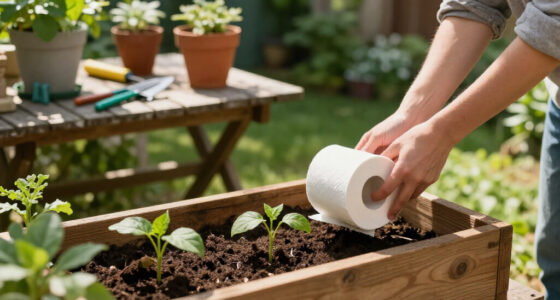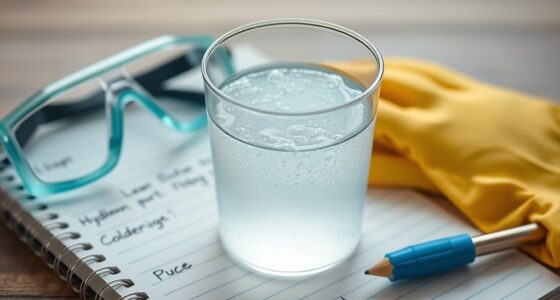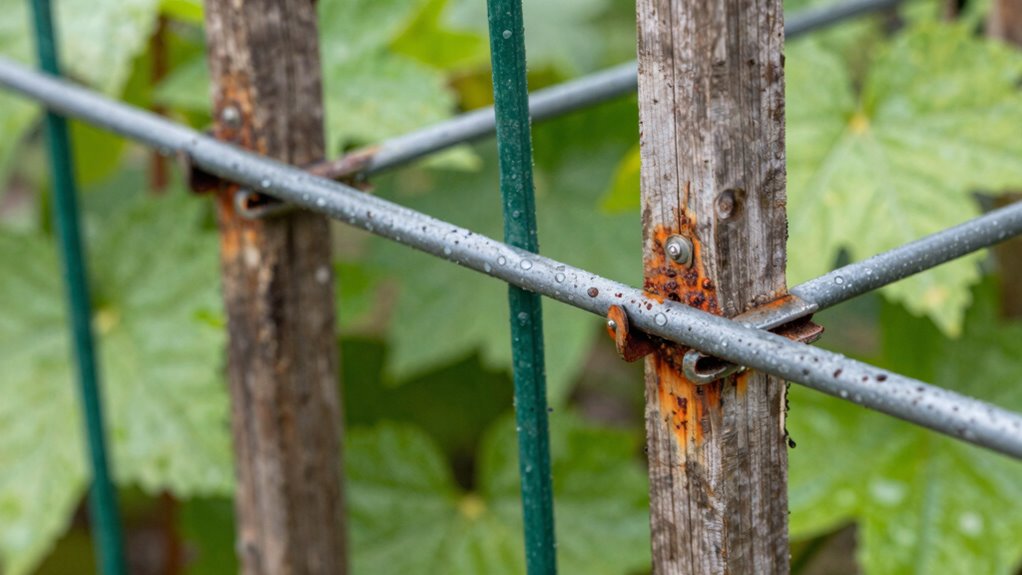

You should sanitize trellis clips, stakes, and supports at least at the start and end of each growing season. During active planting, disinfect every few weeks or after handling infected plants, especially for susceptible crops like tomatoes or cucumbers. Increase cleaning frequency if you notice signs of disease or pests. Regularly inspect supports for damage and replace them when needed. Staying consistent with sanitation helps keep your garden healthy, and if you keep going, you’ll discover even more ways to protect your plants.

Get garden gear delivered free with Prime
- Fast, free delivery on millions of items
- Prime Video, Amazon Music and more included
- Member-only deals all year
Key Takeaways
- Sanitize before reuse at the start and end of each growing season to prevent disease spread.
- Clean supports regularly during active planting, especially every few weeks or after handling infected plants.
- Increase cleaning frequency during disease outbreaks or when growing highly susceptible crops.
- Disinfect supports after removing infected plants or switching plant varieties to avoid cross-contamination.
- Use a diluted bleach solution or horticultural disinfectant, rinsing thoroughly and allowing supports to dry completely.

Maintaining clean and secure trellis clips, stakes, and supports is crucial for healthy plant growth and effective garden management. These garden structures not only support your plants but also play an essential role in preventing the spread of plant diseases. When you neglect to sanitize them regularly, you risk harboring fungi, bacteria, and viruses that can infect healthy plants, ultimately compromising your entire garden’s health. Proper garden tool maintenance, including cleaning and sanitizing trellis components, ensures that you’re not unintentionally transferring pathogens from one plant to another. This simple step can make a significant difference in maintaining a productive and disease-free garden.
Keeping trellis supports clean prevents disease spread and promotes healthy plant growth.
How often you should sanitize these structures depends on several factors, including plant variety, season, and recent disease outbreaks. As a general rule, it’s wise to clean and disinfect trellis clips, stakes, and supports at least at the start and end of each growing season. During active planting periods, especially if you notice signs of disease or pest problems, you should sanitize more frequently—every few weeks or after handling infected plants. If you’re growing highly susceptible crops, such as tomatoes or cucumbers, consider more frequent cleaning to minimize disease transmission.
Whenever you remove or replace plants, take the opportunity to thoroughly clean your supports. Use a sturdy brush to remove dirt and debris, then disinfect with a solution of diluted bleach (about 10% bleach to water), isopropyl alcohol, or a horticultural disinfectant. Make sure to rinse off any residue with water after disinfecting, and let everything dry completely before reusing. This routine not only helps with plant disease prevention but also keeps your garden tools in good condition, prolonging their lifespan and ensuring they perform effectively. Incorporating proper cleaning techniques can further enhance the longevity of your garden structures. Additionally, regularly inspecting for signs of wear and tear can help prevent potential entry points for pathogens.
In addition to sanitation, inspect your trellis clips, stakes, and supports regularly for damage or wear. Broken or splintered supports can create entry points for pathogens and pests. Replacing damaged parts promptly is a key component of garden tool maintenance. When you handle these components, always wash your hands afterward and disinfect tools used to install or repair supports. This minimizes cross-contamination and keeps your gardening practices hygienic. Regular sanitation practices also promote overall plant health and reduce the need for chemical interventions. Using appropriate disinfectants according to manufacturer instructions ensures effective sterilization without harming your plants or environment. Incorporating these practices into your routine helps maintain a healthy garden ecosystem.
Ultimately, consistent sanitation of trellis clips, stakes, and supports is a straightforward yet crucial habit. It protects your plants from disease, enhances your garden’s overall health, and ensures that your support structures do their job effectively throughout the growing season. By integrating routine cleaning and inspection into your gardening routine, you’ll foster a healthier, more productive garden with less risk of disease spreading.
garden trellis clip disinfectant
As an affiliate, we earn on qualifying purchases.
As an affiliate, we earn on qualifying purchases.
Frequently Asked Questions
Can I Reuse Trellis Clips After Cleaning?
Yes, you can reuse trellis clips after cleaning them thoroughly. Cleaning boosts their durability and guarantees they stay functional for future use. Simply remove any dirt or plant residue, then scrub them with soap and water or a mild disinfectant. Make sure they’re completely dry before reusing. Proper cleaning extends the lifespan of your clips and keeps your garden tidy, making reusing a practical and eco-friendly choice.
Are There Specific Cleaning Solutions for Different Materials?
You should match cleaning solutions to the material to avoid a recipe for disaster. For example, metal supports need a mild soap or vinegar solution, while plastic clips often tolerate diluted bleach. Always consider chemical compatibility to prevent damage. Cleaning frequency depends on usage and weather, but a good rule of thumb is to sanitize after heavy rain or dirt exposure. This way, your garden stays safe and your supports last longer.
How Do I Prevent Pest Transfer During Sanitation?
To prevent pest transfer during sanitation, you should regularly apply pest-resistant coatings to your trellis clips, stakes, and supports. Use natural disinfectants like vinegar or neem oil to clean surfaces thoroughly, as they help eliminate pests without harmful chemicals. Always wear gloves and change cleaning tools between uses to avoid cross-contamination. Proper sanitation combined with pest-resistant coatings and natural disinfectants keeps pests at bay, protecting your plants effectively.
Should I Sanitize Supports Before Planting Each Season?
Yes, you should sanitize supports before planting each season to guarantee plant health and extend equipment longevity. Dirty or contaminated supports can harbor pests and diseases that threaten your crops. Regular sanitation removes residues and pathogens, preventing transfer between seasons. By maintaining clean trellis clips, stakes, and supports, you promote healthier plants and protect your gardening investments, keeping your setup in top condition throughout the growing cycle.
What Are Signs That Sanitation Is No Longer Effective?
If you notice mold, rust, or stubborn debris clinging to your supports, sanitation is failing—it’s like inviting pests to a feast! When sanitation effectiveness drops, you risk pest transfer, which can ruin your plants. Worn or damaged clips and supports also signal it’s time to reassess your cleaning routine. Keep things spotless to prevent pests and guarantee your garden stays healthy and vibrant all season long!
As an affiliate, we earn on qualifying purchases.
Conclusion
Keeping your trellis clips, stakes, and supports clean is essential for healthy plants. Regular sanitation prevents the spread of diseases and pests, ensuring your garden stays vibrant. You don’t need to overdo it—just a quick wipe or rinse every few weeks works well. Remember, a clean tool is a happy tool. As the saying goes, “A stitch in time saves nine,” so stay ahead with routine cleaning, and your garden will thank you with a bountiful harvest.
As an affiliate, we earn on qualifying purchases.
garden support disinfectant solution
As an affiliate, we earn on qualifying purchases.
As an affiliate, we earn on qualifying purchases.
Fall yard work Picks
leaf blowers
As an affiliate, we earn on qualifying purchases.