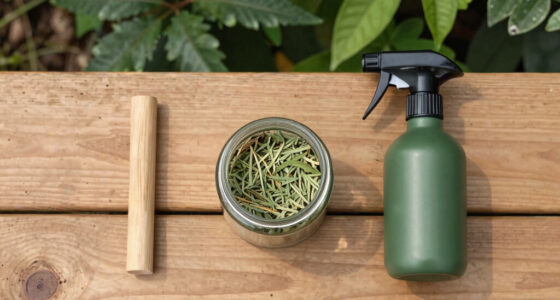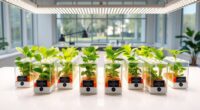
To sanitize your hydroponic equipment safely, start by inspecting and thoroughly cleaning all components with warm water and a mild, plant-safe detergent using non-abrasive brushes. Rinse everything well to remove residues, then sterilize with a diluted hydrogen peroxide solution or a compatible commercial sanitizer, following the manufacturer’s instructions. After sterilizing, rinse again to eliminate any chemical traces. Proper maintenance and regular inspections will keep your system healthy. Keep going to discover more expert tips.
Key Takeaways
- Regularly inspect equipment for residue, algae, and corrosion before cleaning.
- Use warm water and mild, plant-safe detergent to scrub all hydroponic components gently.
- Rinse thoroughly to remove soap residues and prevent chemical buildup that could harm plants.
- Apply appropriate sanitizers like diluted hydrogen peroxide, following manufacturer instructions carefully.
- Maintain equipment by checking hoses, filters, and pumps regularly, replacing parts as needed for safety and efficiency.

Maintaining clean hydroponic equipment is vital for healthy plant growth and preventing disease. When you follow proper cleaning protocols, you guarantee that your system stays free of harmful pathogens, algae, and mineral buildup. Regular equipment maintenance isn’t just about keeping your setup looking good; it directly impacts plant health and your overall yield. Developing a routine for cleaning and maintaining your hydroponic system helps you catch issues early and keeps everything functioning smoothly.
Keeping your hydroponic system clean ensures healthy plants and higher yields.
Start by inspecting your equipment regularly. Look for signs of residue, algae, or corrosion. Once you notice buildup or debris, it’s time to clean. Use a non-abrasive brush or cloth to scrub components like reservoirs, tubing, and pumps. For stubborn grime, a solution of warm water and a mild, plant-safe detergent works well. Avoid harsh chemicals that could leave residues harmful to your plants or interfere with nutrient absorption. After cleaning thoroughly, rinse all parts with clean water to remove any soap or residue. Proper rinsing is vital because leftover cleaning agents can impact your plants’ health.
When it comes to sterilizing, you want to use a safe, effective method. Many growers opt for a diluted hydrogen peroxide solution or a commercial sanitizer designed for hydroponic use. These options are effective at killing bacteria, fungi, and algae without introducing toxic chemicals into your system. Follow the manufacturer’s instructions carefully to guarantee proper dilution and contact time. Once sterilized, rinse the equipment thoroughly to remove any residual sanitizer. This step prevents chemical buildup that could harm your plants or alter nutrient pH.
Equipment maintenance also involves checking for wear and tear. Regularly inspect hoses for cracks or leaks, replace filters as needed, and ensure pumps are operating efficiently. Maintaining the right flow rate and pressure is essential for uniform nutrient delivery. Lubricate moving parts if necessary, and keep electrical components dry and clean. By staying vigilant with maintenance, you reduce the risk of equipment failure during crucial growth phases.

Yofuly Sterilizer for Esthetician, 12L Double-layer Large Sterilizer for Nail Tools, Multi-Functional Nail Cleaner Box, Large Capacity Cleaning Cabinet for Home Use, Barbers, Beauty Salons, and Spas
- Efficient 360° Cleaning: Provides comprehensive cleaning for tools
- 12L Large Capacity: Double-layer design with movable shelves
- Durable and Easy to Clean: Made of long-lasting materials with smooth interior
As an affiliate, we earn on qualifying purchases.
As an affiliate, we earn on qualifying purchases.
Frequently Asked Questions
How Often Should Hydroponic Equipment Be Sanitized?
You should sanitize your hydroponic equipment at least once a month to maintain ideal equipment lifespan and prevent disease buildup. Regular cleaning frequency helps guarantee your system stays healthy, reducing the risk of algae, mold, and pathogen growth. If you notice any signs of contamination or after harvesting, increase the cleaning frequency. Consistent sanitation keeps your plants thriving and extends the longevity of your equipment.
Can I Use Homemade Cleaning Solutions?
You can use DIY disinfectants and natural cleaning agents for sanitizing your hydroponic equipment, but you need to be careful. Make sure your homemade solutions are effective against bacteria and mold, and avoid ingredients that could harm your plants or clog your system. Test small areas first, and always rinse thoroughly with clean water afterward. When in doubt, use proven commercial sanitizers designed for hydroponic systems.
Is Bleach Safe for All Hydroponic Materials?
Think of bleach like a double-edged sword—you want to use it carefully. Bleach safety depends on Equipment compatibility; some materials like certain plastics or rubber can be damaged, while others tolerate it well. Always check manufacturer guidelines before using bleach. If you’re unsure, test on a small area first. Using the wrong cleaning agent can compromise your equipment and plants, so choose wisely to keep your hydroponic system safe and thriving.
What Are Signs of Equipment Contamination?
You’ll notice signs of equipment contamination through reduced equipment durability and unexpected microbial growth. Look for discoloration, foul odors, or slimy residues, which indicate microbial indicators are present. Regularly inspect your equipment for cracks or corrosion, as these can harbor bacteria. If you see any of these signs, it’s time to thoroughly sanitize and replace damaged parts to prevent crop issues and ensure a clean, safe growing environment.
How Do I Prevent Future Microbial Buildup?
To prevent future microbial buildup, you should regularly clean and sanitize your hydroponic equipment, avoiding microbial resistance. Use effective disinfectants and follow recommended contact times. Maintain proper pH and nutrient levels to discourage microbial growth. Also, regularly inspect your equipment for wear and tear, which can reduce equipment longevity and create hiding spots for microbes. Proper maintenance and sanitation help guarantee a healthy, productive hydroponic system.

Hydroponics Nutrients for Aerogarden(800ml in Total), Plant Food A & B Hydroponics Supplies, Indoor Plant Fertilizer for Hydroponics Growing System, Hydroponic Solution for Vegetables Thrive
- 8 Pack A & B Nutrients: Includes 2 bottles and 6 packs of nutrients
- Universal Compatibility: Suitable for all hydroponic systems
- Simple to Use: Mix with water using included dispensing cup
As an affiliate, we earn on qualifying purchases.
As an affiliate, we earn on qualifying purchases.
Conclusion
Properly sanitizing your hydroponic equipment is essential to prevent disease and guarantee healthy plant growth. Did you know that contaminated equipment can lead to crop losses of up to 20%? By following effective cleaning routines, you protect your plants and maximize yields. Remember, a clean setup isn’t just safer—it’s smarter. Stay consistent with your sanitizing practices, and you’ll enjoy healthier, more productive hydroponic systems all season long.

Hydroponic Nutrients for Edible Plants, One Part Complete Liquid Plant Food for Hydroponic Systems, 8 oz (250mL)
- Supports Root and Plant Growth: Encourages strong roots and balanced growth
- Balanced Hydroponic Nutrition: Provides nutrients for water-based systems
- Suitable for Indoor & Controlled Growth: Ideal for hydroponics and container systems
As an affiliate, we earn on qualifying purchases.
As an affiliate, we earn on qualifying purchases.

LUORNG 5IN1 Nozzles Kit for Fountain Pump, Aquarium, Fish Tank, Pond, Hydroponics, Statuary Accessories 5 Sizes
- Durable Plastic Construction: High-quality, deformation-resistant material
- Multiple Nozzle Sizes: Five sizes for varied water flows
- Versatile Compatibility: Suitable for aquariums, ponds, hydroponics
As an affiliate, we earn on qualifying purchases.
As an affiliate, we earn on qualifying purchases.