To set an effective light schedule for your indoor plants, observe their specific needs and provide consistent exposure to natural or artificial light. Use south-facing windows for bright light or grow lights for indirect sunlight, adjusting duration based on the plant’s requirements—typically 6-8 hours daily. Regularly monitor soil moisture to prevent over- or underwatering, especially as light intensity changes. By fine-tuning these factors, you’ll create ideal conditions—if you explore further, you’ll discover how to perfect your plant’s environment.

Get garden gear delivered free with Prime
- Fast, free delivery on millions of items
- Prime Video, Amazon Music and more included
- Member-only deals all year
Key Takeaways
- Assess each plant’s light needs based on species and placement, such as direct or indirect sunlight requirements.
- Use grow lights or south-facing windows to provide consistent, adequate light exposure.
- Establish a regular light schedule, typically 12-16 hours of light daily, with a dark period for rest.
- Adjust light duration and intensity seasonally, increasing during growth periods and decreasing in dormancy.
- Monitor plant responses and soil moisture to fine-tune your light routine for optimal health.
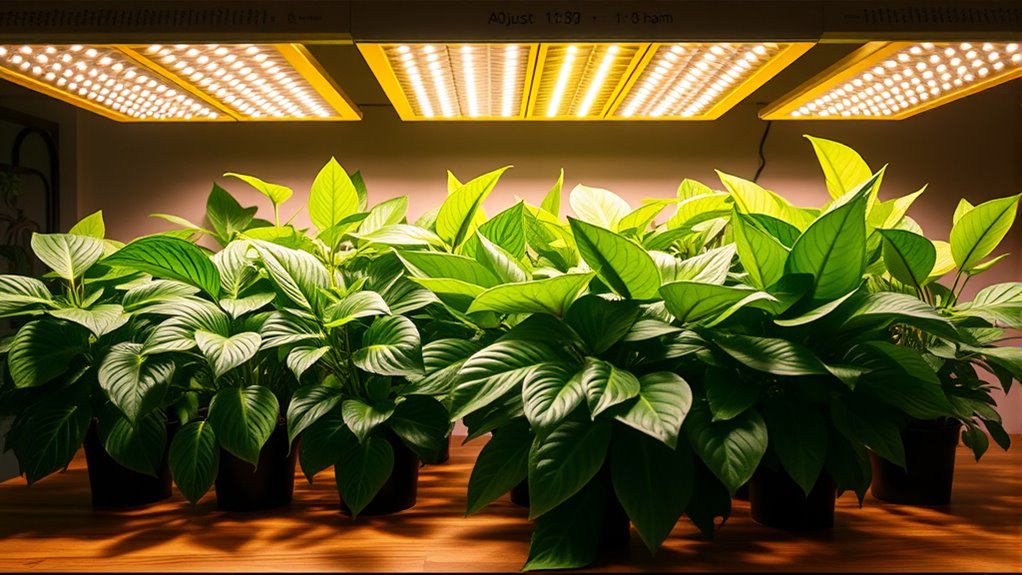
Indoor plants rely on proper light schedules to thrive, especially when natural sunlight is limited. When you set a consistent light routine, you help your plants develop healthy growth patterns and prevent problems like etiolation, where they stretch toward the light. But light isn’t the only factor to consider; watering routines and soil moisture play essential roles in supporting your plants’ overall health and guaranteeing they respond well to their light environment. If your plants aren’t receiving enough light, they tend to become leggy and weak, which can make them more vulnerable to overwatering or underwatering. Conversely, too much light can cause stress, leading to dry soil and inconsistent soil moisture levels. Balancing light exposure with your watering habits helps maintain stable soil conditions, creating an ideal environment for root development and nutrient absorption.
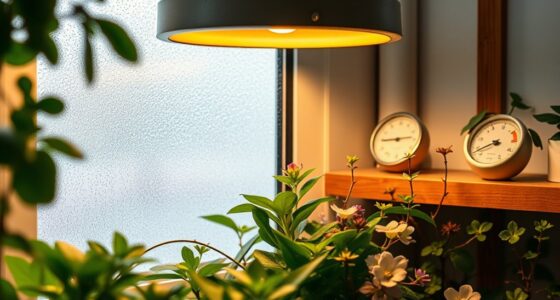
To establish an effective light schedule, you should observe your plant’s specific needs. Some indoor plants thrive with bright, direct light for several hours, while others prefer indirect, filtered sunlight. Once you determine their preferred light conditions, you can set a routine—such as placing them near a south-facing window or using grow lights if necessary. Consistency is key; abrupt changes in light exposure can shock the plant, disrupting its growth cycle. As you adjust light schedules, keep an eye on soil moisture levels. When your plant receives more light, it often dries out faster, so you might need to adjust your watering routines accordingly. Checking soil moisture regularly with your finger or a moisture meter guarantees you’re watering only when necessary, preventing overwatering that can lead to root rot or underwatering that causes stress. Additionally, understanding how light affects plant growth can help you optimize your indoor gardening setup for healthier, more resilient plants.
As an affiliate, we earn on qualifying purchases.
Frequently Asked Questions
How Do Seasons Affect Indoor Plant Light Needs?
Seasons considerably impact your indoor plant light needs due to seasonal light variation. During winter, days are shorter, so you should adjust your light schedule to guarantee proper indoor light optimization, providing more consistent and brighter light. In summer, natural sunlight is stronger and longer, so you might reduce artificial light. Monitoring your plants and adjusting their light schedule accordingly helps them thrive year-round, regardless of the season outside.
Can Artificial Light Replace Natural Sunlight Completely?
No, artificial light can’t fully replace natural sunlight due to its limitations. Sunlight provides a full spectrum that LEDs often can’t replicate perfectly, and natural light changes throughout the day. While LEDs are effective for supplementing light needs, especially with the right spectrum and intensity, they don’t offer the same benefits as sunlight. So, for healthy growth, try to maximize natural sunlight before relying solely on artificial options.
What Are Signs of Overexposure to Light?
You might think more light means happier plants, but overexposure quickly shows signs. Watch out for leaf burn, where edges turn crispy or brown, and pale foliage indicating stress. Ironically, your plant’s “bright” environment can become its enemy. If you notice these symptoms, it’s time to adjust the light, giving your plant relief from the harsh glare before damage becomes irreversible.
How Should Light Schedules Change During Plant Dormancy?
During dormancy, you should reduce your plant’s light schedule to prevent stagnant growth and light stress. Decrease the daily light exposure, often by shortening the duration or moving the plant further from the light source. This adjustment helps mimic natural conditions, encouraging your plant to rest. Keep an eye out for signs of overexposure, and gradually increase light when the plant enters its active phase again.
Are There Specific Light Requirements for Flowering Indoor Plants?
Your flowering indoor plants need the perfect balance of light duration and intensity—think of it as a golden ticket for blooms! Aim for 12-16 hours of bright, direct light daily, adjusting based on the plant’s specific needs. Keep the light intensity high enough to encourage flowering without scorching leaves. Consistent, adequate light exposure is key to vibrant blossoms, so monitor your plants closely and tweak as needed.
indoor plant soil moisture meter
As an affiliate, we earn on qualifying purchases.
As an affiliate, we earn on qualifying purchases.
Conclusion
By balancing your bulb’s brightness and timing, you’ll beautifully bolster your indoor plants’ growth. Setting a steady schedule guarantees they receive the sunlight they seek without stress or stagnation. Remember, consistency is key—create a caring cycle that keeps your plants thriving and your space lively. With a little planning and patience, you’ll soon see splendid sprouts and stunning greens, showcasing your skill and sensitivity as a dedicated plant parent. Stay steady, specific, and successful!
As an affiliate, we earn on qualifying purchases.
south-facing window plant grow light
As an affiliate, we earn on qualifying purchases.
As an affiliate, we earn on qualifying purchases.
Fall Picks
fall essentials
As an affiliate, we earn on qualifying purchases.