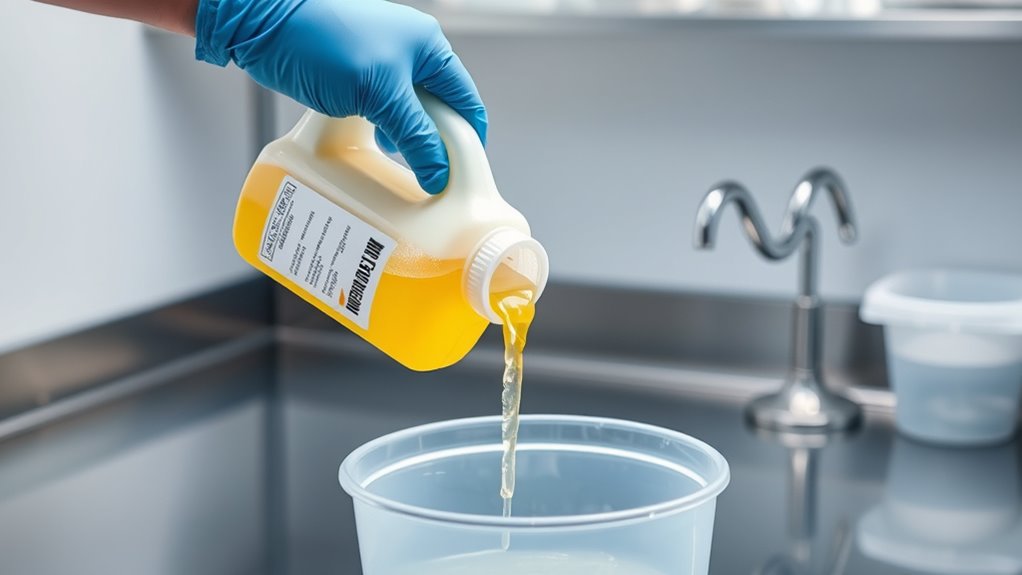

When using bleach for system sterilization, always wear gloves, goggles, and a mask to protect yourself from splashes, fumes, and skin contact. Guarantee the area is well-ventilated by opening windows or using exhaust fans, and avoid confined spaces. Follow manufacturer instructions for dilution and contact time precisely. Keep bleach containers sealed and stored away from heat or sunlight, and be cautious not to mix bleach with other chemicals. Continue exploring these safety tips to keep both yourself and your equipment safe.

Get garden gear delivered free with Prime
- Fast, free delivery on millions of items
- Prime Video, Amazon Music and more included
- Member-only deals all year
Key Takeaways
- Always wear gloves, goggles, and masks to prevent skin contact, eye injury, and inhalation of fumes during bleach use.
- Conduct sterilization in well-ventilated areas, opening windows and using exhaust fans to disperse harmful fumes.
- Store bleach properly, keep containers sealed, and avoid mixing with ammonia or acids to prevent hazardous gas formation.
- Follow manufacturer instructions for dilution and contact time, and double-check workspace safety before starting.
- Take regular breaks outside to breathe fresh air and use respirators in enclosed spaces to minimize health risks.
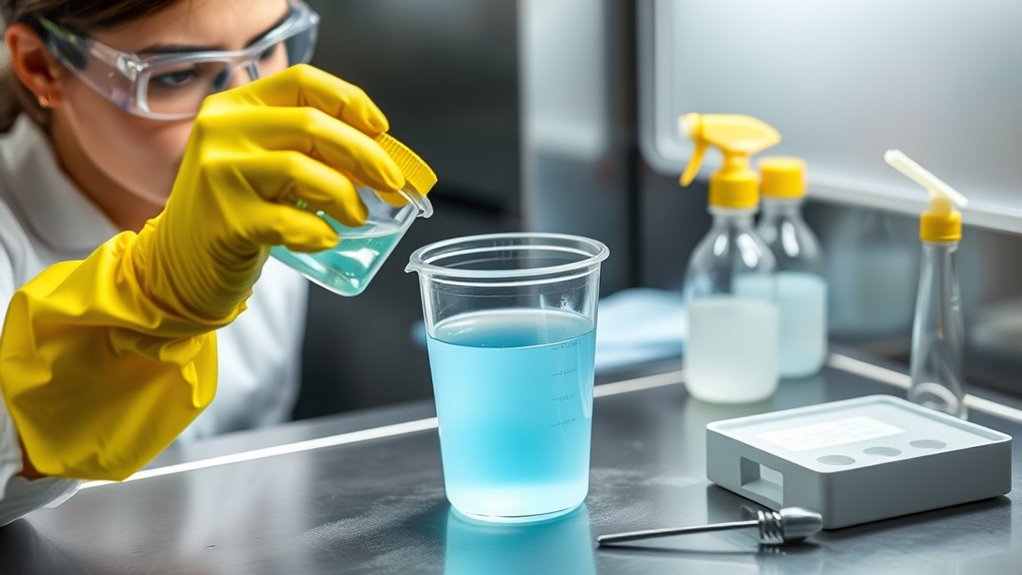
Using bleach for system sterilization can be effective, but it’s essential to prioritize safety to prevent health hazards and equipment damage. When handling bleach, always wear appropriate protective gear, including gloves, goggles, and a mask. Gloves protect your skin from corrosive contact, while goggles shield your eyes from splashes that can cause irritation or injury. A mask helps prevent inhaling fumes that can irritate your respiratory system. Never skip on this protective gear, even if you think you’re experienced, because bleach fumes are potent and can cause harm with prolonged exposure. Proper protective measures minimize health risks and ensure that you’re safely managing a chemical that’s highly effective yet hazardous.
Equally important are ventilation practices. Always perform bleach sterilization in well-ventilated areas to disperse fumes quickly and reduce inhalation risks. Open windows and doors if possible, and consider using exhaust fans to improve airflow. If you’re working indoors, avoid confined spaces where fumes can accumulate, and take breaks outside to breathe fresh air. Good ventilation not only protects your lungs but also prevents the buildup of fumes that could cause headaches, dizziness, or respiratory irritation. When using bleach in enclosed spaces, consider wearing a respirator designed for chemical fumes. Never underestimate the power of proper ventilation; it’s a simple but critical step in keeping your workspace safe.
Before starting, double-check that your workspace is prepared for safe handling. Clear the area of unnecessary personnel and inform others about your work to prevent accidental exposure. Keep bleach containers tightly sealed when not in use and store them away from direct sunlight or heat sources. Mixing bleach with other chemicals, like ammonia or acids, can produce dangerous gases, so stick to recommended dilutions and avoid mixing unless specified. Follow manufacturer instructions carefully, paying attention to recommended contact times and dilution ratios. These precautions help ensure that your sterilization process is both effective and safe. Additionally, choosing the right projector technology can influence how well your home sterilization setup works, especially if you’re using visual cues or instructional videos to guide your process.
chemical resistant gloves for bleach handling
As an affiliate, we earn on qualifying purchases.
As an affiliate, we earn on qualifying purchases.
Frequently Asked Questions
Can Bleach Be Reused After Sterilization?
You shouldn’t reuse bleach after sterilization because it loses its effectiveness and can pose recycling concerns. Reusing it may also increase environmental impact, as leftover bleach can release harmful chemicals. Instead, dispose of used bleach properly and use fresh solutions for sterilization. This guarantees safety, maintains sterilization efficiency, and minimizes environmental risks. Always follow guidelines for disposal and avoid recycling bleach to protect both health and the environment.
How Long Does It Take for Bleach to Sterilize a System?
They say “patience is a virtue,” and when sterilizing with bleach, it’s true. Typically, you need a 10% concentration and a contact time of at least 10 to 30 minutes to effectively sterilize a system. Ensuring proper contact time and correct concentration levels is essential for thorough sterilization. Rushing the process can leave bacteria behind, so give bleach enough time to do its job properly.
What Are Alternative Sterilization Methods to Bleach?
You can consider chemical alternatives like hydrogen peroxide or quaternary ammonium compounds for sterilization, which are effective and often less harsh. UV sterilization is another great option; you expose the system to ultraviolet light, which kills bacteria and viruses without chemicals. Both methods can be efficient, but make sure to follow proper procedures and safety guidelines to guarantee thorough sterilization and avoid damage or health risks.
How Do I Dispose of Leftover Bleach Safely?
Imagine your leftover bleach as a wild river needing careful guiding. To dispose of it safely, you should never pour it down the drain or onto the ground, as it can cause chemical hazards and harm the environment. Instead, dilute it with plenty of water or take it to a designated hazardous waste facility. This way, you protect both yourself and the environment from potential chemical hazards and negative environmental impact.
Is Bleach Effective Against All Types of Bacteria?
Bleach is effective against many bacteria, but it doesn’t cover the entire antibacterial spectrum. It works well on common pathogens like E. coli and Salmonella, but some bacteria, especially resistant strains, may survive or develop resistance over time. To guarantee thorough sterilization, it’s best to follow proper procedures and combine bleach use with other disinfection methods when necessary. Always remember, overuse can contribute to resistance development.
protective goggles for chemical use
As an affiliate, we earn on qualifying purchases.
As an affiliate, we earn on qualifying purchases.
Conclusion
Remember, when you wield bleach like a vigilant guardian, you’re the shield protecting your system’s health. Handle it with care, respecting its power like a fierce yet controlled storm. Follow safety tips diligently, and you’ll steer clear of dangers lurking in the shadows. By treating bleach with respect, you turn potential hazards into a well-orchestrated dance of safety and cleanliness. Keep your system shining bright—your careful stewardship makes all the difference.
As an affiliate, we earn on qualifying purchases.
As an affiliate, we earn on qualifying purchases.
Evergreen bestsellers Picks
bestsellers
As an affiliate, we earn on qualifying purchases.