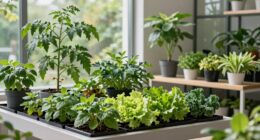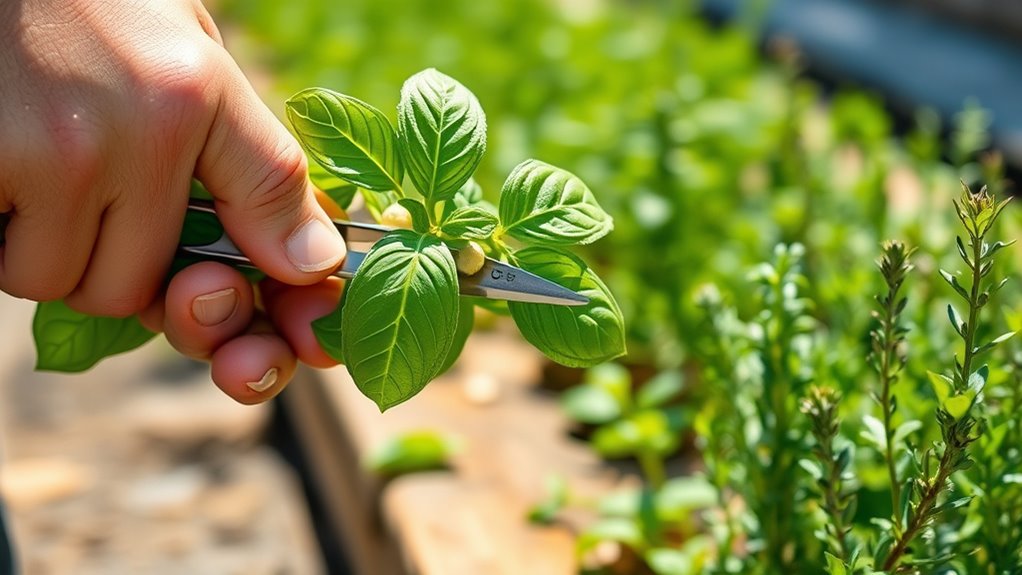

To harvest herbs without killing the plant, pick the right time—just before or during flowering—and use clean, sharp tools to make cuts above leaf nodes. focus on mature, healthy parts, removing no more than one-third of the plant at once. Handle the herbs gently and prune regularly to encourage continuous growth. Following these steps helps your herbs stay lively and productive, and there’s more to discover for keeping your plants thriving long-term.

Get garden gear delivered free — and shop member deals
- Fast, free delivery on millions of items
- Access to Prime Big Deal Days deals on October 6–7
- Prime Video, Amazon Music and more included
Key Takeaways
- Harvest only up to one-third of the plant at a time to prevent overharvesting and ensure continued growth.
- Use sterilized, sharp pruning tools to make clean cuts that promote quick healing and reduce plant stress.
- Make cuts just above leaf nodes or pairs of leaves to encourage bushier, healthy regrowth.
- Harvest during the flowering stage or just before to maximize flavor while supporting plant vitality.
- Regularly prune roots when overgrown and handle herbs gently to maintain healthy soil and prevent damage.
As an affiliate, we earn on qualifying purchases.
Choose the Right Time to Harvest
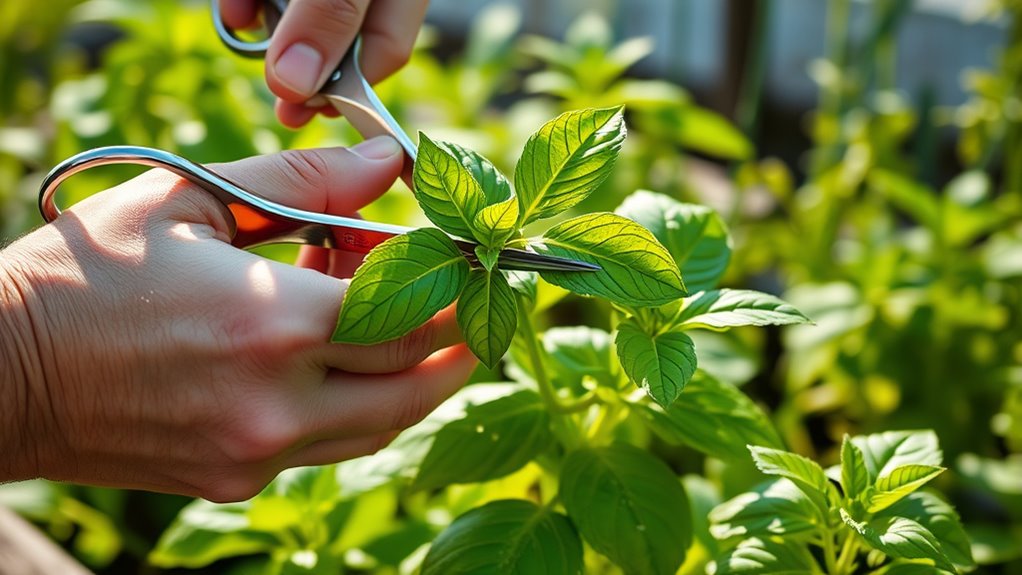
Choosing the right time to harvest your herbs is essential to guarantee they develop their full flavor and potency. Pay close attention to the flowering stages, as this is when herbs often contain their strongest oils and aromas. Typically, harvest just before or during flowering to maximize flavor. Seasonal changes also influence the best timing; in spring and early summer, herbs are more vigorous and flavorful, while late-season harvests might yield milder tastes. By observing your herbs regularly, you’ll notice signs like buds forming or flowers blooming, indicating the ideal harvest window. Harvesting at the right moment ensures you collect the most potent leaves and stems without stressing the plant, helping it thrive for future growth. Additionally, understanding the plant’s essential oil production cycle can guide you to optimal harvesting times for maximum aromatic benefits.
As an affiliate, we earn on qualifying purchases.
Use Clean and Sharp Tools

Using clean and sharp tools is essential to harvesting herbs without damaging the plants. Dull or dirty tools can tear stems, leading to infections and weakening soil quality over time. Before harvesting, sterilize your scissors or pruning shears with rubbing alcohol to prevent disease spread. Sharp tools ensure clean cuts, which promote quick healing and healthy growth. Proper watering schedules keep plants strong, making them more resilient during harvest. When cutting, avoid removing too much at once, as over-harvesting stresses the plant. Regularly inspect your tools for sharpness and cleanliness to minimize plant trauma. Maintaining these practices supports a healthy root system and soil quality, ensuring your herbs stay vigorous and productive for future harvests. Practicing proper harvesting techniques helps maintain the overall health and longevity of your herbs.
As an affiliate, we earn on qualifying purchases.
Focus on the Healthy, Mature Parts
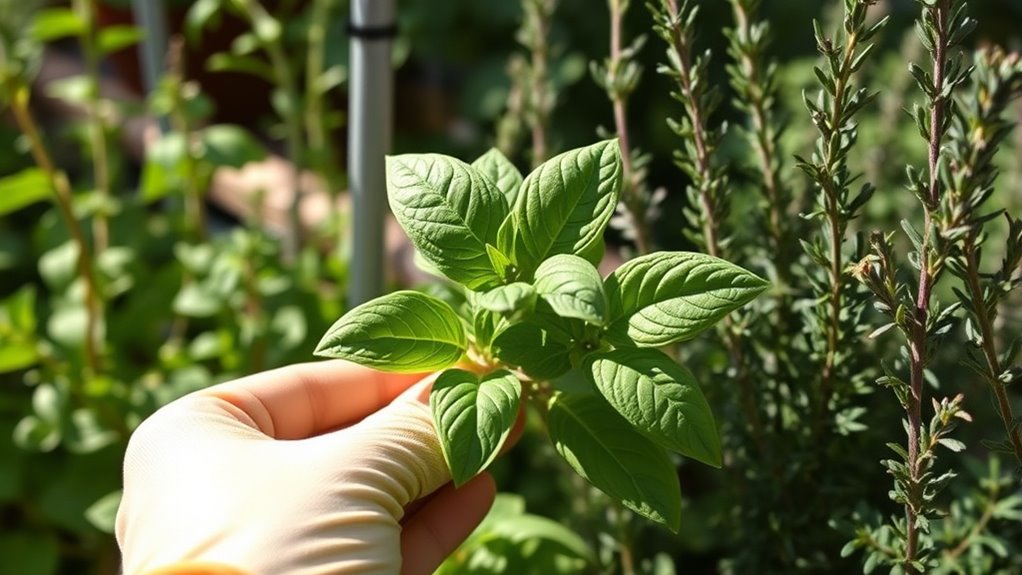
To guarantee your herbs stay healthy and continue to thrive, focus on harvesting only the healthy, mature parts of the plant. Mature leaves and stems are richer in plant nutrition, providing the best flavor and medicinal qualities. Look for vibrant, firm growth without signs of wilting, discoloration, or pests. By selecting only these parts, you prevent stress on the plant and promote continuous growth. Proper soil preparation supports this process by ensuring your herbs have the nutrients they need to develop strong, healthy foliage. Avoid removing young, tender growth, as it’s essential for the plant’s energy reserves. Consistently harvesting mature parts encourages a balanced, sustainable cycle, helping your herbs flourish season after season without risking their health or resilience. Maintaining optimal soil health is crucial for supporting vigorous, healthy growth.
As an affiliate, we earn on qualifying purchases.
Harvest in Moderation to Allow Regrowth
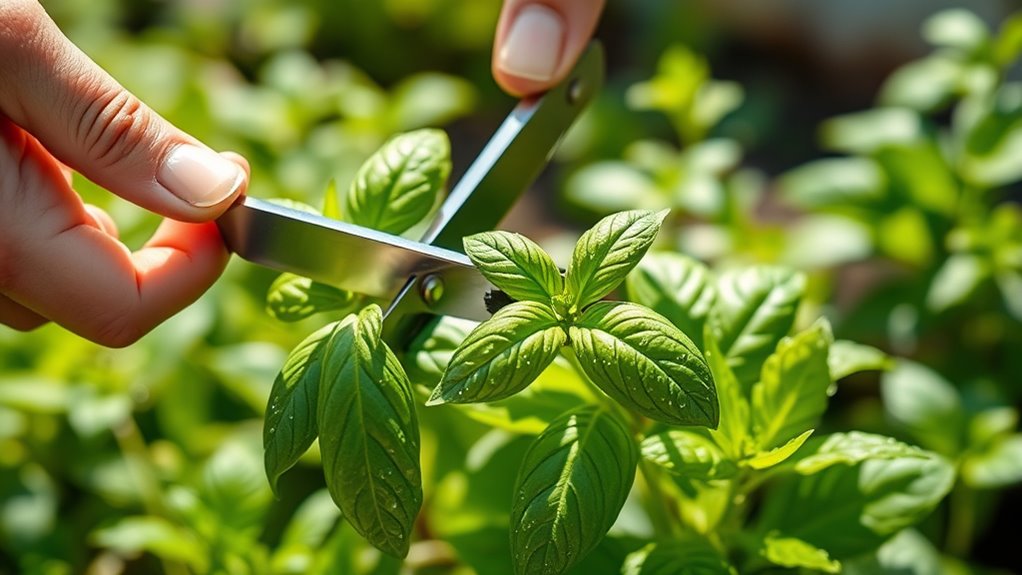
Harvesting in moderation guarantees your herbs stay healthy and productive over time. When you pick only what you need, you give the plant time to recover and continue growing. This practice supports soil enrichment by encouraging nutrient cycling and maintaining soil health. Incorporating companion planting can also boost regrowth, as certain plants improve soil conditions and protect herbs from pests. Use the table below to understand how different herbs benefit from moderate harvesting and companion planting:
| Herb | Best Practice | Companion Planting Benefits | Soil Enrichment Tips |
|---|---|---|---|
| Basil | Snip regularly but don’t overharvest | Marigolds deter pests, benefiting basil | Add compost after harvest |
| Mint | Harvest leaves in moderation | Partner with cabbage to suppress pests | Mulch to improve soil |
| Rosemary | Pick sprigs sparingly | Plant near thyme for mutual growth | Rotate crops annually |
| Parsley | Cut leaves often but leave roots | Grow with carrots to improve soil | Use organic fertilizers |
Additionally, understanding auditory processing can help optimize your herb care routine, ensuring you recognize signs of stress or overharvesting in your plants.
Cut Above a Leaf Node or Pair of Leaves
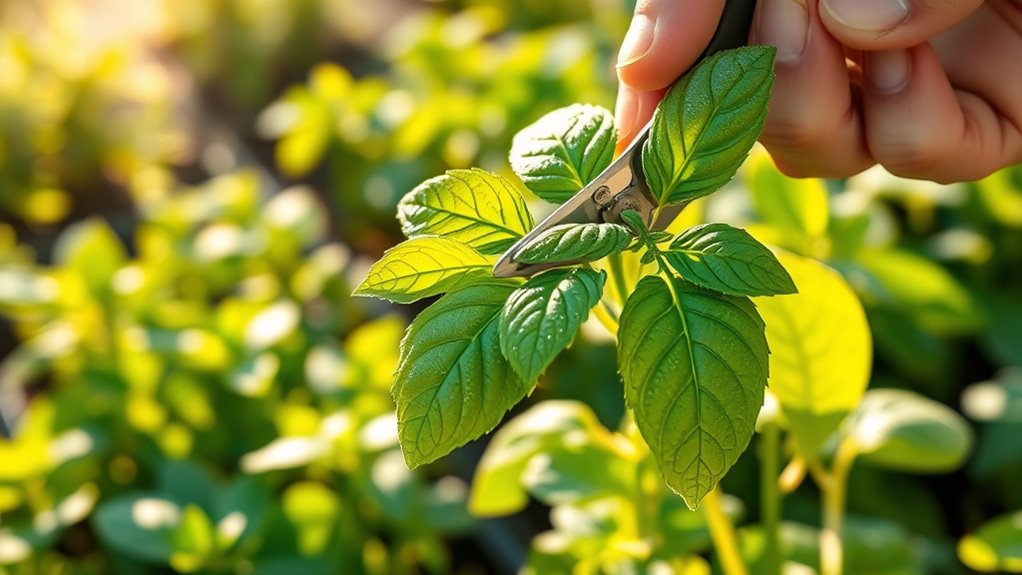
When you prune herbs, always make your cuts above a leaf node or a pair of leaves to guarantee healthy regrowth. This technique is essential for encouraging new growth through stem cutting and leaf pruning. By cutting just above a leaf node, you leave a point where the plant can develop new stems and branches, promoting bushier growth. This method helps prevent damage to the main stem and ensures the plant stays healthy. When harvesting, focus on removing sections just above these nodes, which allows the plant to redirect energy into producing fresh foliage. Properly timing your cuts and making them at the right spot supports vigorous regrowth and maximizes your herb yield without harming the plant’s overall health. Necessary cookies and other categories help ensure that your harvesting practices are supported by a well-functioning and user-friendly site environment.
Avoid Removing More Than One-Third of the Plant

When harvesting, make sure you don’t remove more than one-third of the plant. This helps preserve its liveliness and keeps it healthy for future growth. Overharvesting can weaken the plant and hinder its ability to recover. Additionally, practicing proper pruning techniques encourages healthy development and sustained yield.
Preserve Plant Vitality
To keep your herbs healthy and vigorous, it’s essential not to remove more than one-third of the plant at a time. This helps preserve their overall vitality and prevents stress. When harvesting, pay attention to your watering schedule; well-hydrated plants recover faster and stay strong. Also, maintaining good soil nutrition ensures your herbs have the nutrients needed for rapid healing and growth. Avoid overharvesting, which can weaken the plant’s defenses and reduce future yields. Regularly monitor your herbs and harvest only what’s necessary, always leaving enough foliage to support photosynthesis. By respecting these limits and caring for your soil and watering practices, you’ll keep your herbs lively, resilient, and ready to provide fresh flavor season after season. Incorporating mindful decluttering strategies into your gardening routine can also help you stay organized and attentive to your plants’ needs, promoting healthier growth.
Encourage Healthy Growth
Removing no more than one-third of your herbs during each harvest encourages healthy, sustained growth. By limiting how much you cut, you give the plant enough foliage to photosynthesize and stay vigorous. To support this, incorporate soil amendments that boost nutrient levels and improve soil structure, helping your herbs recover faster. Regular pest management is also essential; pests can weaken plants and hinder growth. If you keep pests under control, your herbs remain healthy and resilient. Avoid overharvesting, which stresses the plant and slows down new growth. Instead, focus on gentle, strategic cuts that stimulate fresh, vigorous shoots. With proper soil care and pest management, your herbs will thrive, providing continuous harvests without risking their health. Sound vibrations are also believed to enhance cellular regeneration, further supporting your herbs’ recovery and vitality.
Prevent Overharvesting Damage
Overharvesting can weaken your herbs and slow their growth, so it’s important to harvest carefully. To prevent overharvesting damage, only remove up to one-third of the plant at a time. This ensures the herb can continue to grow and maintain its vitality. Consistently taking too much can compromise herb preservation, making plants more vulnerable to pests and disease. Additionally, avoid removing too many leaves or stems from a single area, which can disturb soil health and soil structure. Healthy soil supports vigorous herb growth and helps the plant recover quickly. By practicing mindful harvesting, you protect the plant’s root system and promote sustainable growth, guaranteeing you’ll have herbs available for future use without risking their longevity. Utilizing community support features can also provide helpful tips on sustainable harvesting practices.
Practice Gentle Handling During Harvesting

Handling herbs gently during harvest is essential to maintain the plant’s health and ensure they continue to thrive. Using gentle handling prevents damage to stems and leaves, promoting faster recovery and ongoing growth. When pruning, employ proper techniques to avoid tearing or bruising. Always cut just above a leaf node to encourage new growth. Use sharp, clean scissors or pruning shears to make clean cuts. Be mindful of the plant’s overall structure, supporting delicate stems. Proper pruning techniques also help prevent disease and pests. Remember, gentle handling isn’t just about avoiding harm; it’s about fostering healthy, resilient herbs that will flourish season after season. Additionally, understanding GMC tuning can help you optimize your plant’s growth conditions for better health and yield.
Regularly Prune for Continuous Growth
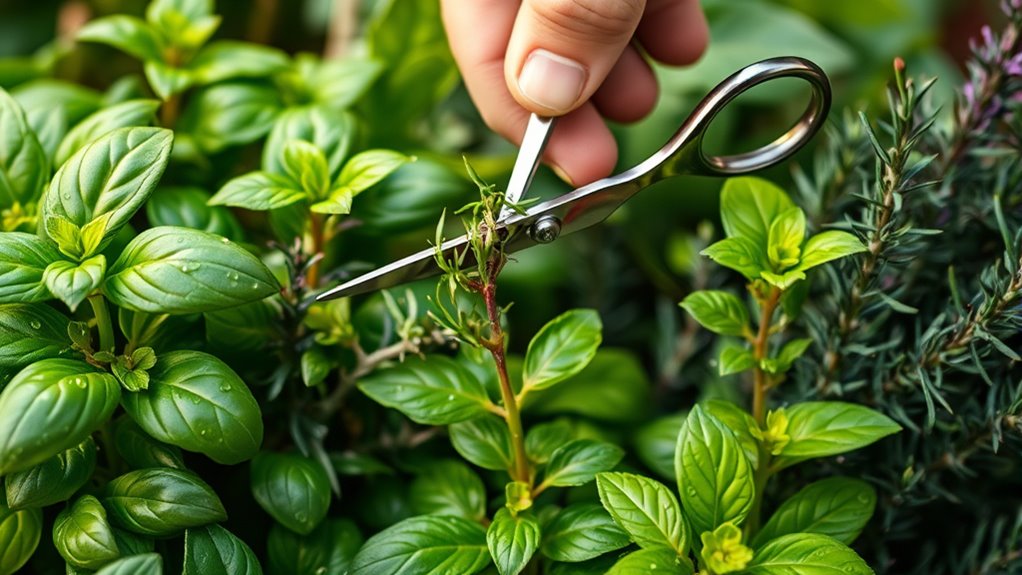
To keep your herbs growing strong, you need to prune them regularly using proper cutting techniques. Timing matters—prune at the right moments to encourage new growth without stressing the plant. Make sure you use sharp, clean tools to avoid damaging your herbs and guarantee healthy regrowth. Incorporating self watering plant pots can also help maintain consistent moisture levels, promoting healthier and more resilient herbs.
Proper Cutting Techniques
Regularly pruning your herbs encourages healthy, continuous growth and prevents them from becoming woody or leggy. When cutting, use clean, sharp scissors or pruning shears to make precise cuts just above a leaf node. Focus on removing the top leaves or stems to stimulate new growth without over-harvesting. To keep roots healthy, consider root pruning periodically, which promotes better soil aeration and prevents plants from becoming root-bound. Proper cutting techniques also include avoiding cutting into old, woody stems, which can hinder regrowth. Remember to:
- Trim above a leaf node for bushier growth
- Avoid cutting more than one-third of the plant at once
- Use sterilized tools to prevent disease
- Incorporate root pruning when repotting for ideal soil aeration
A thorough understanding of float mounting textile art techniques can help in creating visually striking displays that highlight the texture and depth of your herbs’ presentation.
Timing of Pruning
Consistent pruning is vital for keeping your herbs healthy and productive. Timing your cuts around flower timing ensures you encourage continuous growth instead of letting your plants go to seed prematurely. Regularly removing spent flowers redirects energy back into foliage and new growth. Keep in mind that root pruning also plays a fundamental role; if your herbs become crowded or overgrown, trimming the roots promotes healthy expansion and prevents disease. Pruning at the right time prevents stress and encourages vigorous development. Avoid waiting too long to prune, as overgrown plants can become woody or produce fewer leaves. By staying attentive to flower timing and incorporating strategic root pruning, you’ll maintain robust herbs that thrive season after season. Incorporating risk assessment strategies can help you identify and mitigate potential issues before they impact plant health.
Tools for Pruning
Using the right tools makes pruning easier and more effective, ensuring your herbs stay healthy and grow vigorously. Sharp, clean tools prevent plant damage and reduce the risk of pests, supporting pest control naturally. Invest in quality pruning shears, scissors, and small saws designed for herbs. Having the right tools helps you make precise cuts that promote new growth and boost your garden decor. Remember to disinfect tools regularly to avoid spreading disease. Proper tools also allow you to prune without tearing stems, which is essential for healthy, continuous growth. For a tidy herb garden, consider tools like:
- Sharp pruning shears
- Small hand scissors
- Precision snips
- Compact pruning saws
These tools make maintaining your herbs straightforward and efficient. HEPA filtration can help keep the air around your garden free of dust and allergens, promoting a healthier environment for your plants and yourself.
Frequently Asked Questions
Can I Harvest Herbs During Rainy or Humid Weather?
You can harvest herbs during rainy or humid weather, but it’s best to contemplate seasonal harvesting and weather considerations. Wait until the herbs are dry to prevent mold and disease. If it’s very rainy, try to harvest early in the day when plants are less humid. Avoid harvesting during the heaviest rain, as wet conditions can harm the plant’s health and affect the quality of your herbs.
How Do I Store Harvested Herbs to Preserve Their Freshness?
To keep your herbs fresh, start with proper herb drying techniques like air drying or using a dehydrator. Once dried, store them in airtight storage container options such as glass jars or resealable bags, keeping them in a cool, dark place. This prevents moisture and light from degrading their flavor. Regularly check your herbs and replace or reseal containers to guarantee they stay aromatic and fresh longer.
Is It Okay to Harvest Herbs Every Day?
You can harvest herbs daily if you use proper harvest timing and pruning techniques. Regular, light harvesting encourages healthy growth without stressing the plant. Focus on trimming just above a set of leaves or a new growth point, which promotes bushier plants. Avoid over-harvesting, and always leave enough foliage intact to support continued growth. With these practices, you’ll keep your herbs thriving while enjoying fresh, flavorful leaves every day.
What Signs Indicate a Herb Needs Harvesting?
Think of your herbs as busy workers signaling they’re ready for harvest. When leaves look lush and vibrant, and new growth appears, it’s a sign they’re thriving and need harvesting. If plants show yellowing leaves or pests, it could mean they’re stressed and need plant nutrient adjustments or pest management. Harvest gently, avoiding over-pruning, to keep your herbs healthy and ready to grow stronger.
How Does Soil Quality Affect Herb Regrowth After Harvesting?
Soil quality plays a vital role in herb regrowth after harvesting. When your soil is rich in nutrients, it strengthens root health, helping plants recover quickly. Healthy roots absorb essential nutrients more efficiently, promoting new growth. If your soil lacks nutrients, your herbs may struggle to bounce back, so regularly amend your soil with compost or organic matter. This guarantees your herbs stay vigorous and productive after each harvest.
Conclusion
Remember, harvesting herbs is like nurturing a living treasure—you get out what you put in. By choosing the right time, using sharp tools, and being gentle, you keep your plants healthy and thriving. Don’t take more than a third; instead, give them room to grow. Think of each harvest as a gift you give back to your garden. With care and moderation, your herbs will flourish season after season—truly, they’re a gift that keeps on giving.
Halloween Picks
halloween
As an affiliate, we earn on qualifying purchases.