
Growing oyster and shiitake mushrooms indoors using hydroponic methods allows you to cultivate them in a clean, soil-free environment. By using nutrient-rich water solutions and sterilized substrates, you can control humidity, temperature, and nutrients to promote healthy growth. This setup minimizes pests and diseases while maximizing yields. Compact and efficient, hydroponic systems are perfect for small spaces. Keep exploring to discover detailed steps and tips for setting up your indoor mushroom garden.
Key Takeaways
- Hydroponic systems grow oyster and shiitake mushrooms indoors using nutrient-rich water without soil.
- Substrates like sterilized sawdust or straw are inoculated with mushroom spawn for controlled growth.
- Maintaining optimal humidity, temperature, and air circulation is essential for healthy mushroom development.
- Using sterilized water and customized nutrient solutions reduces contamination risks and boosts yields.
- Hydroponic cultivation offers a clean, space-efficient, and highly controllable method for producing high-quality mushrooms indoors.
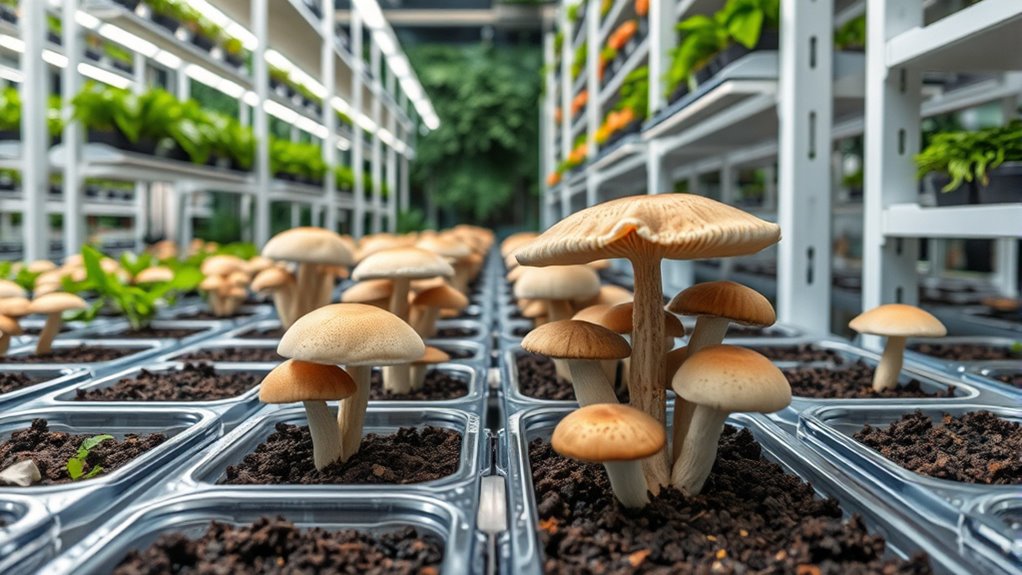
Have you ever wondered how mushrooms can be grown without soil? It might seem unusual at first, but hydroponic cultivation offers a clean, efficient way to grow mushrooms indoors, particularly oyster and shiitake varieties. Unlike traditional methods that rely on soil or wood logs, hydroponic systems use nutrient-rich water solutions, giving you direct control over mushroom nutrition. This approach guarantees that your fungi receive all the essential nutrients they need for healthy growth, without the risk of soil-borne diseases or pests.
To successfully cultivate mushrooms hydroponically, you need to understand the basics of mushroom nutrition. Mushrooms are fungi that thrive on specific organic substrates, which provide the necessary nutrients for mycelium to develop and produce fruiting bodies. In hydroponic setups, you typically start with sterilized substrates like sawdust, straw, or other organic matter. These are inoculated with mushroom spawn, and then placed in a container where they can absorb nutrients from the surrounding water or nutrient solution. This method allows you to fine-tune the cultivation techniques, adjusting factors like moisture levels, pH, and nutrient concentration to optimize growth.
Starting with sterilized substrates like sawdust or straw allows precise control over mushroom growth conditions.
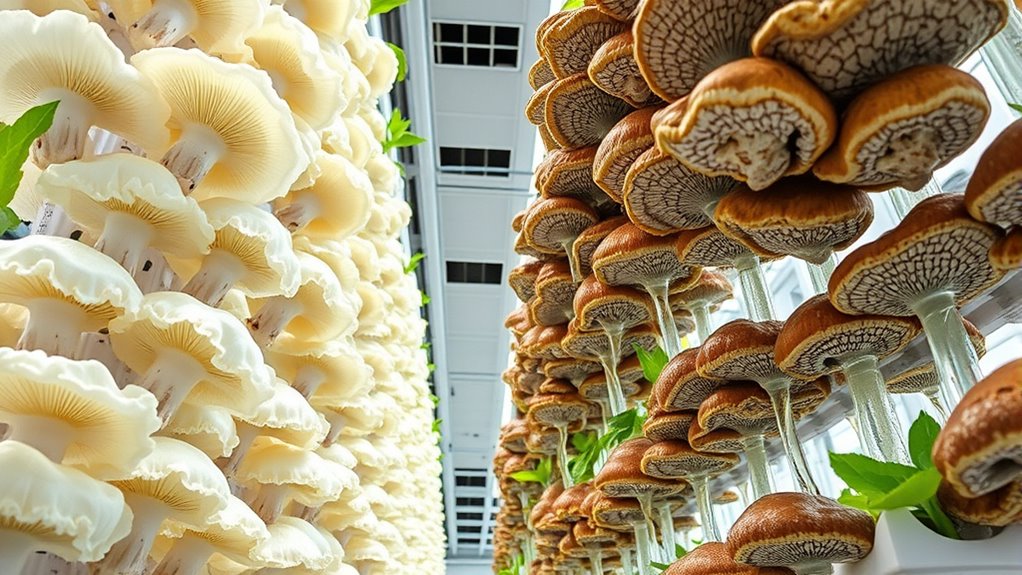
One of the key advantages of hydroponic mushroom cultivation is that it eliminates the need for traditional growing media, making the process cleaner and more controllable. You can set up a small-scale indoor system in your basement, closet, or greenhouse, using trays, jars, or stacked containers. The cultivation techniques involve maintaining a consistent environment with proper humidity, temperature, and ventilation. These conditions mimic the natural habitat of oyster and shiitake mushrooms, encouraging healthy mycelial growth and robust fruiting.
Water quality is vital for mushroom nutrition, so it’s important to use filtered or sterilized water to prevent contamination. The nutrient solutions can be customized with additives like amino acids, sugars, or mineral supplements to enhance mushroom growth and yield. Regular monitoring guarantees that the mushrooms receive the right balance of moisture and nutrients, which promotes healthy development and reduces the risk of mold or other contaminants.

NuBlume Mushroom Grow Kit – All-in-One 4LB Grow Bag with Self-Healing Port – Fast-Colonizing Universal Substrate for Any Mushroom – Multi-Flush High-Yield – USA Made (Just Add Your Own Culture)
HARVEST POUNDS, NOT OUNCES: Our 4LB nutrient-dense grain and substrate blend is engineered for heavy, multi-flush yields —…
As an affiliate, we earn on qualifying purchases.
As an affiliate, we earn on qualifying purchases.
Frequently Asked Questions
How Long Does It Take for Hydroponic Mushrooms to Mature?
You can expect hydroponic mushrooms to reach maturity in about 1 to 3 weeks, depending on the type and growing conditions. During this growth timeline, you’ll notice the mushrooms developing rapidly, and it’s the perfect time for mushroom harvesting. Keep an eye on their size and appearance to guarantee ideal harvest timing. Proper care and monitoring will help you enjoy fresh, healthy mushrooms in a short period.
What Are the Best Lighting Conditions for Indoor Mushroom Growth?
You want ideal indoor mushroom growth, so don’t overlook lighting. While mushrooms thrive in low light, combining LED optimization with natural light integration creates the perfect environment. Use soft, indirect light from LEDs to mimic their natural habitat, and position your setup near windows for natural light boost. This balanced approach encourages healthy growth, ensuring your oyster and shiitake mushrooms reach maturity efficiently and with vibrant quality.
Can Hydroponic Mushrooms Be Grown in Small Apartment Spaces?
Yes, you can grow hydroponic mushrooms in small apartment spaces. With apartment mushroom setups, you can optimize space for effective space-saving cultivation. Use vertical shelving or compact grow bags to maximize your limited area. Keep the environment cool, dark, and humid, and guarantee proper ventilation. This way, you can enjoy fresh mushrooms without needing large setups, making indoor mushroom growing practical and enjoyable even in small apartments.
How Do I Prevent Pests and Diseases in Indoor Mushroom Cultivation?
To prevent pests and manage diseases in your indoor mushroom cultivation, you should keep your environment clean and monitor daily for any signs of trouble. Use pest prevention methods like proper airflow, sterilize tools regularly, and control humidity levels to reduce disease risk. Quarantine new substrates, avoid overwatering, and maintain good hygiene to keep pests out and guarantee healthy mushroom growth.
What Are the Energy Requirements for Maintaining Hydroponic Mushroom Systems?
Many believe hydroponic mushroom systems are energy-efficient, but they actually consume moderate energy for ideal system efficiency. Your setup needs electricity for lighting, climate control, and circulating systems, which can vary based on size and insulation. Expect to allocate enough energy to maintain stable temperature and humidity levels, ensuring healthy growth. Regular monitoring helps optimize energy consumption, making your system both productive and cost-effective.

Smart Growing Chamber for Indoor Mushroom Cultivation Eco Box with Grow Lights & Lighting Lamps Temperature & Humidity Monitoring & Display Monotub Grow Kit with Automatic Humidification & Ventilation
【Automatic Mushroom Fruiting Chamber】Unlike traditional mushroom growing kits, our smart mushroom growing box will replace the traditional manual…
As an affiliate, we earn on qualifying purchases.
As an affiliate, we earn on qualifying purchases.
Conclusion
Now that you know how to grow oyster and shiitake mushrooms hydroponically indoors, you’re ready to create your own mini mushroom farm. Imagine stepping into your home and harvesting fresh, delicious fungi whenever you want—no more store-bought options. Isn’t it satisfying to see your efforts sprout into tasty, nutritious mushrooms right in your living space? With a little patience and the right setup, you’ll enjoy a constant supply of these gourmet treats all year round.

Back to the Roots Organic Mini Mushroom Grow Kit, Harvest Gourmet Oyster Mushrooms In 10 days, Top Gardening Gift, Holiday Gift, & Unique Gift
100% ORGANIC AND NON-GMO: There's no need to worry about intoxicants that may hinder your plant's growth because…
As an affiliate, we earn on qualifying purchases.
As an affiliate, we earn on qualifying purchases.

Premium 100% Oak Pellets – Pure Hardwood Substrate for Mushroom Cultivation | Ideal for Shiitake, Oyster, Reishi & More (20 Pounds)
🌳 100% Pure Oak Hardwood Pellets – Naturally sourced with no added oils or chemicals, providing a clean…
As an affiliate, we earn on qualifying purchases.
As an affiliate, we earn on qualifying purchases.