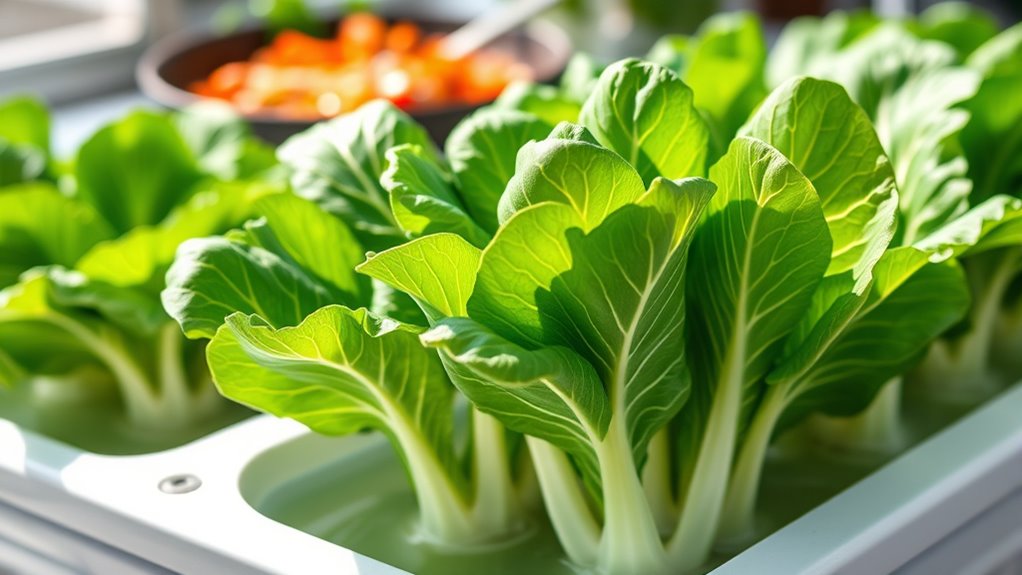
Growing hydroponic bok choy is a fast, easy way to harvest fresh Asian greens perfect for stir-fry dishes. By maintaining a controlled environment, you can get quicker growth, higher yields, and keep pests and soil-borne diseases at bay. Ensuring proper nutrient levels, pH balance, and regular system maintenance help your plants thrive year-round. Keep going to discover expert tips that will maximize your harvest and elevate your stir-fry creations.
Key Takeaways
- Hydroponic bok choy offers fresh, fast-growing Asian greens ideal for stir-fry dishes.
- Maintain proper nutrient levels and pH to ensure healthy leafy growth for culinary use.
- Regular harvesting ensures tender, flavorful greens perfect for stir-fry recipes.
- Use organic pest control methods to keep greens clean and safe for cooking.
- Grow year-round indoors or outdoors with controlled conditions for continuous supply of greens.
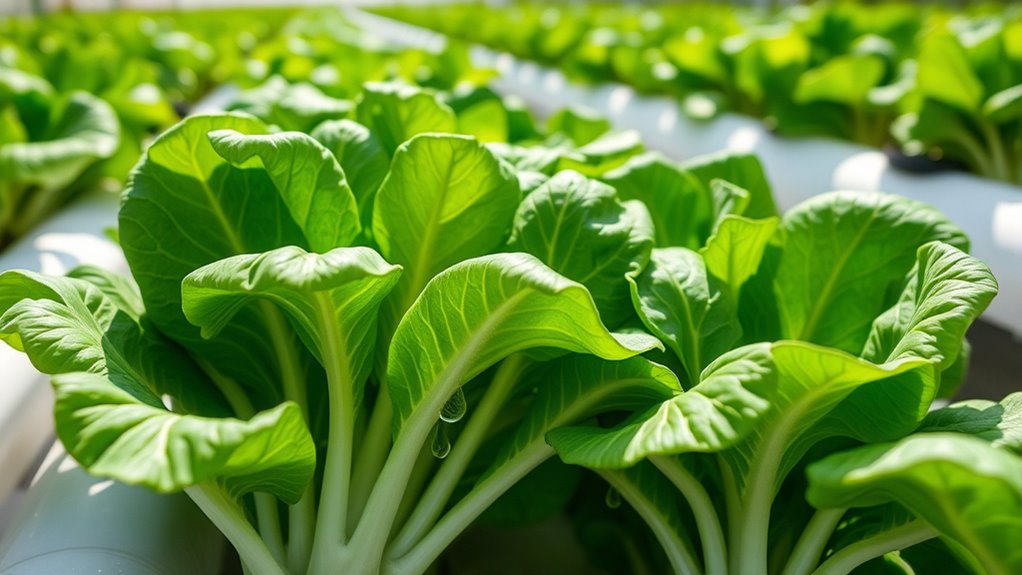
Hydroponic bok choy offers a fresh, fast-growing way to enjoy this nutritious vegetable right at home or in commercial settings. When you grow bok choy hydroponically, you gain control over the environment, which can lead to quicker growth and higher yields. To do this successfully, understanding the fertilizer requirements is essential. Bok choy thrives with a balanced nutrient solution that provides nitrogen, phosphorus, and potassium in appropriate ratios. Since hydroponic systems deliver nutrients directly to the roots, you’ll need to monitor and adjust the fertilizer levels regularly to prevent deficiencies or excesses. A common recommendation is to use a water-soluble, complete hydroponic fertilizer that’s formulated for leafy greens, applying it at half strength during the early stages of growth and gradually increasing as the plants mature. Consistent pH management is also crucial, ideally keeping it between 6.0 and 7.0 to optimize nutrient uptake.
While managing fertilizer requirements, you should also stay vigilant about pest control. Although hydroponic systems reduce soil-borne pests, they aren’t immune to issues like aphids, whiteflies, or fungal diseases. Regularly inspecting your plants helps catch problems early. You can prevent pests by maintaining a clean growing environment, ensuring good air circulation, and avoiding overwatering, which can encourage mold and fungi. If pests appear, organic methods like introducing beneficial insects or applying insecticidal soap can be effective without harming your plants or contaminating your harvest. Proper sanitation, such as removing dead leaves and debris, further reduces pest habitats and disease risk.
Growing bok choy hydroponically means you can harvest sooner than traditional soil methods—often within 30 to 45 days—so staying on top of fertilizer and pest management is vital for maximizing your yield. You’ll want to keep your system free of algae and pathogens by regularly cleaning components and avoiding stagnant water. It’s best to use sterile equipment and fresh water to prevent the spread of pests and diseases. As your bok choy develops, ensure you’re providing adequate lighting, temperature control, and nutrient supply, all of which influence plant health and growth rate.

Liquid Plant Food – Fertilizer for AeroGarden & Hydroponic Systems, 8 oz
- Compatible with AeroGarden systems: Supports AeroGarden and similar units
- Promotes healthy plant growth: Encourages steady growth and strong roots
- Balanced hydroponic nutrients: Provides essential nutrients for indoor hydroponic plants
As an affiliate, we earn on qualifying purchases.
As an affiliate, we earn on qualifying purchases.
Frequently Asked Questions
How Long Does It Take for Hydroponic Bok Choy to Mature?
You can expect hydroponic bok choy to reach maturity in about 30 to 45 days, depending on your growth timeline and environmental conditions. Keep a close eye on leaf size and overall plant health, as these indicators help determine the most favorable harvesting schedule. Typically, you can start harvesting when the greens are about 6 to 8 inches tall, ensuring the best flavor and texture for your stir-fry recipes.
What Are Common Pests or Diseases Affecting Hydroponic Bok Choy?
Imagine your hydroponic bok choy as a vibrant green fortress, but pests like aphids and whiteflies can sneak in, like uninvited guests. To keep them at bay, practice vigilant pest management by inspecting leaves regularly and using organic controls. Disease prevention is key; guarantee proper airflow and cleanliness to stop mold or root rot from taking hold. Staying proactive helps your greens stay healthy and bountiful.
Can Hydroponic Bok Choy Be Grown Indoors Year-Round?
Yes, you can grow hydroponic bok choy indoors year-round. You need to provide adequate indoor lighting, like grow lights, to mimic sunlight, and maintain consistent temperature control, ideally between 55-75°F. Make sure to keep humidity levels in check and monitor nutrient levels. With proper lighting and temperature management, you’ll enjoy fresh bok choy anytime, regardless of outdoor weather conditions.
What Is the Ideal Ph Level for Hydroponic Bok Choy?
A gentle whisper of ideal conditions guides your hydroponic bok choy’s health. Aim for a pH level around 6.0 to 6.5, ensuring the soil nutrients and water temperature harmonize. This slightly acidic range promotes nutrient uptake, keeping your greens vibrant and tender. Regularly monitor and adjust to maintain this balance, supporting lush growth and flavorful harvests. Your attentive care nurtures thriving bok choy in your indoor oasis.
How Do I Harvest and Store Hydroponic Bok Choy Properly?
You should harvest hydroponic bok choy when the heads are firm and about 6-8 inches tall, typically when they reach full size. Use sharp scissors to cut the stalks at the base, and handle gently to avoid bruising. For storage, keep the bok choy in a perforated plastic bag in the refrigerator’s crisper drawer. This preserves freshness and maintains crispness for up to a week.

Lettuce Grow Counterstand Hydroponic Garden, Indoor Gardening System Hydroponics Growing System Kit, Herb Garden Planter Indoor Kit Countertop Vase Style No Grow Light
- Space-Saving Design: Fits under cabinets or narrow countertops
- Year-Round Indoor Harvests: Grow fresh greens and herbs indoors
- Stylish Vase-Inspired Design: Adds modern decor to your kitchen
As an affiliate, we earn on qualifying purchases.
As an affiliate, we earn on qualifying purchases.
Conclusion
Now that you’ve learned how to grow hydroponic bok choy, you can enjoy fresh, nutritious greens anytime. With a little effort and the right setup, you’ll have a steady supply of vibrant Asian greens for your stir-fries and salads. Isn’t it rewarding to nurture your own food and take control of what you eat? Start your hydroponic journey today, and watch your garden thrive—because nothing beats the taste of homegrown, healthy produce.

Natures Good Guys – Green Lacewing Eggs on Hanging Card (2,500 Eggs)
- Live Green Lacewing Eggs: Glued on hanging cards
- Compatible with Beneficial Insects: Release with ladybugs and praying mantis
- Natural Pest Control: Targets aphids, leafhoppers, mites, mealybugs, thrips
As an affiliate, we earn on qualifying purchases.
As an affiliate, we earn on qualifying purchases.
Liquid Plant Food – Fertilizer for AeroGarden & Hydroponic Systems, 8 oz
- Compatible with AeroGarden systems: Supports AeroGarden and similar units
- Promotes healthy plant growth: Encourages steady growth and strong roots
- Balanced hydroponic nutrients: Provides essential nutrients for indoor hydroponic plants
As an affiliate, we earn on qualifying purchases.
As an affiliate, we earn on qualifying purchases.