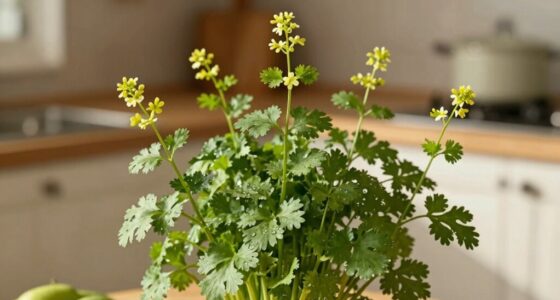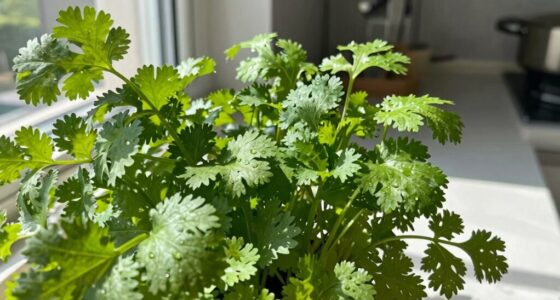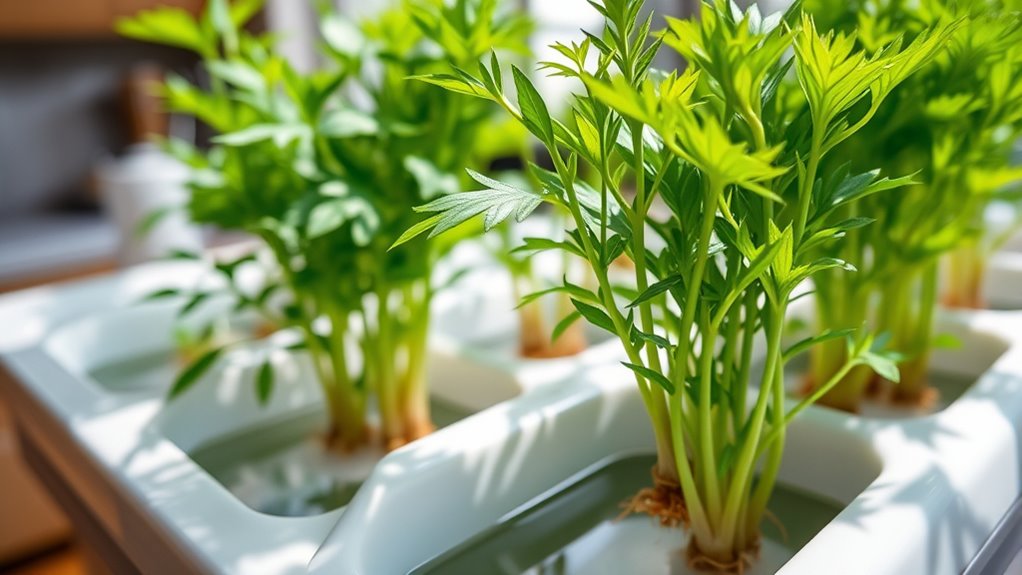

Growing hydroponic tarragon lets you enjoy fresh, aromatic herbs year-round with minimal mess. You control the environment to preserve its delicate, sweet, anise-like flavor while avoiding soil pests and diseases. Using systems like deep water culture or nutrient film technique, you provide constant oxygen and nutrients for lush growth. Proper lighting, temperature, and regular harvesting keep your tarragon vibrant and flavorful. Want to discover more tips to perfect your herb garden? Keep exploring for expert advice.
Key Takeaways
- Hydroponic tarragon offers year-round, soil-free growth with enhanced flavor preservation and purity.
- Proper environmental control (temperature, light, pH) ensures healthy, aromatic tarragon development.
- Suitable hydroponic systems like DWC or NFT provide constant oxygen and nutrient access to roots.
- Regular harvesting promotes vigorous growth and maintains the herb’s delicate, sweet, anise-like flavor.
- Fresh hydroponic tarragon elevates culinary dishes such as salads, marinades, and sauces with its subtle aroma.

Have you ever wondered how to grow fresh tarragon indoors without soil? It’s easier than you might think, especially when you set up a proper hydroponic system. Hydroponic tarragon allows you to enjoy this delicate herb year-round, right in your own home, without the mess of traditional gardening. The key is understanding herb flavor profiles and mastering your hydroponic system setup to nurture healthy, flavorful plants.
Tarragon’s herb flavor profiles are subtle yet distinctive, characterized by a slightly sweet, anise-like aroma with hints of vanilla and pepper. When grown hydroponically, you can preserve these delicate flavors better because your plants aren’t exposed to soil-borne diseases or inconsistent watering. This means your herbs develop cleaner, more intense flavors, perfect for elevating your cooking. To achieve this, pay close attention to your hydroponic system setup. You’ll want a system that offers consistent nutrient delivery and ample light. A simple deep water culture (DWC) or nutrient film technique (NFT) system works well for tarragon, providing the roots with constant access to oxygen and nutrients. Make sure your grow tray is clean, and use quality hydroponic nutrients formulated for herbs to promote lush, aromatic growth.
Controlling the environment is vital. Tarragon prefers a temperature between 65-75°F and moderate humidity. Keep your grow lights on for around 14-16 hours daily, simulating the herb’s natural sunny conditions. Proper lighting not only encourages vigorous growth but also enhances flavor development. As you monitor your system, check the pH levels regularly, aiming for a slightly acidic range of 6.0-6.5. Maintaining this balance guarantees your tarragon absorbs nutrients efficiently, resulting in vibrant, flavorful leaves. Incorporating climate control techniques can further optimize your indoor herb garden.
Maintain 65-75°F, 14-16 hours of light daily, and pH 6.0-6.5 for vibrant, flavorful hydroponic tarragon.
Growing tarragon hydroponically also means you can harvest more frequently. Snip the leaves regularly to encourage new growth and prevent flowering, which can diminish flavor quality. The convenience of an indoor hydroponic setup lets you pick fresh herbs whenever you need them, adding a burst of flavor to your dishes. Plus, since you’re controlling every aspect of the environment, your tarragon stays free from pests and diseases common in soil gardens. This guarantees you a pure, aromatic herb perfect for seasoning salads, marinades, and sauces.
In essence, setting up a hydroponic system for tarragon offers a reliable way to cultivate this flavorful herb all year round. By understanding herb flavor profiles and guaranteeing your setup provides ideal conditions, you’ll enjoy fresh, vibrant tarragon with every harvest. It’s a rewarding process that transforms your kitchen into a mini herb farm, giving you easy access to one of the most delicate and aromatic herbs around.

Environet Hydroponic Herb Growing Kit, Self-Watering Mason Jar Herb Garden Starter Kit Indoor, Windowsill Herbs Garden, New Christmas Grden Gift for Mom (Tarragon)
- Kit Components: Net pot, preseeded plug, mason jar
- Easy Setup: Add water, insert net pot, remove plug in 7 days
- Low Maintenance: Self-watering wick reduces watering frequency
As an affiliate, we earn on qualifying purchases.
As an affiliate, we earn on qualifying purchases.
Frequently Asked Questions
Can Hydroponic Tarragon Be Grown Indoors Year-Round?
Yes, you can grow hydroponic tarragon indoors year-round. You just need to make sure it gets enough indoor lighting, ideally from grow lights if natural light is limited. Keep the plant healthy through proper plant propagation techniques, maintaining the right nutrients and water levels. With consistent care and the right environment, your tarragon will thrive indoors throughout the year, providing fresh herbs whenever you need them.
What Pests Commonly Affect Hydroponic Tarragon?
A stitch in time saves nine, so stay vigilant. Common pests like aphids can affect your hydroponic tarragon, so aphid control is essential. Keep an eye out for tiny green or black insects on your plants. Fungal prevention also matters; guarantee good airflow and avoid overwatering. Regular inspection and natural remedies like neem oil help keep pests at bay, ensuring your delicate herb stays healthy and productive year-round.
How Do I Harvest Tarragon Without Damaging the Plant?
To harvest tarragon without damaging the plant, use proper pruning techniques by snipping stems just above a leaf node. Focus on harvest timing when the herb is lush and before it flowers for the best flavor. Always leave enough foliage so the plant continues to grow strong. Gently cut, avoid tearing, and regularly harvest to promote healthy, sustainable growth.
Is Hydroponic Tarragon More Flavorful Than Soil-Grown?
You might think hydroponic tarragon is more flavorful than soil-grown, but growing methods actually have minimal impact on taste. Nutrient control in hydroponics can enhance herb quality, yet soil-grown tarragon often develops richer, more complex flavors due to natural soil interactions. Taste varies based on care and environment, so experiment with both to discover which method best suits your flavor preferences. Ultimately, personal experience reveals the true difference.
How Often Should I Change the Nutrient Solution?
You should change the nutrient solution every two to three weeks to guarantee ideal growth and flavor. Regularly check the nutrient levels and pH to maintain proper balance. Frequency maintenance of the nutrient solution prevents buildup of salts and ensures your tarragon gets the right nutrients. If you notice sluggish growth or changes in flavor, it’s a good idea to change the solution sooner. Consistent maintenance keeps your herb healthy and vibrant.

Ahopegarden Indoor Garden Hydroponics Growing System: 10 Pods Plant Germination Kit Herb Vegetable Growth Lamp Countertop with LED Grow Light – Hydrophonic Planter Grower Harvest Lettuce
- High Planting Efficiency: Faster, healthier growth with hydroponic system
- 10 Pods & Water Level Window: Includes 10 planting stations and water indicator
- Dual Growing Modes: Switch between vegetable and flower/fruit lighting
As an affiliate, we earn on qualifying purchases.
As an affiliate, we earn on qualifying purchases.
Conclusion
Now that you’ve learned how to grow hydroponic tarragon, you’re all set to add this delicate herb to your culinary arsenal. With a little care, it’ll flourish right in your home, ready to elevate your dishes. Remember, patience is key—you’re planting the seeds for a flavorful journey. Before you know it, you’ll be reaping the rewards and turning your kitchen into a fresh herb haven. It’s truly worth the effort to keep your garden thriving.

Liquid Plant Food – Fertilizer for AeroGarden & Hydroponic Systems, 8 oz
- Compatible with AeroGarden systems: Supports AeroGarden and similar units
- Promotes healthy plant growth: Encourages steady growth and strong roots
- Balanced hydroponic nutrients: Provides essential nutrients for indoor hydroponic plants
As an affiliate, we earn on qualifying purchases.
As an affiliate, we earn on qualifying purchases.

Black Grow Lights for Indoor Plants, 168 LEDs Clip Plant Lights, Full Spectrum LED Plant Growing Lamps with Flexible Gooseneck 4/8/12/18H Timer, 3 Spectral Modes, 10 Dimmable Levels, 2Head x 2 Pack
- Full Spectrum LED Lighting: 5 Red + 37 White LEDs for optimal growth
- Auto Cycle Timer: Sets 4/8/12/18-hour automatic on/off
- Multiple Lighting Modes: Switchable modes with separate control
As an affiliate, we earn on qualifying purchases.
As an affiliate, we earn on qualifying purchases.