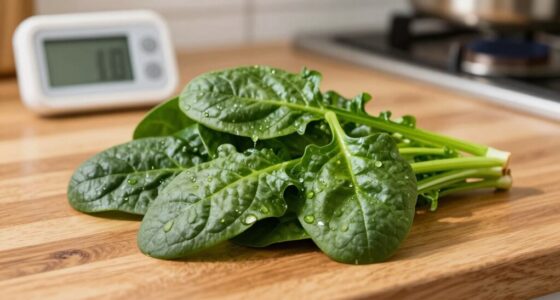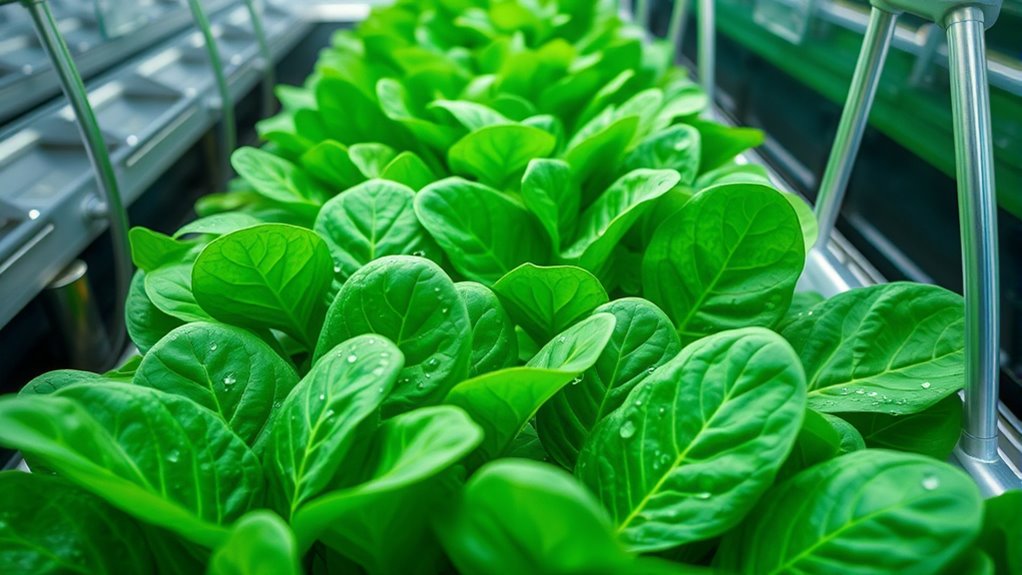

Growing hydroponic spinach lets you enjoy fresh, nutrient-rich greens all year, right in your home or small space. You control the environment, providing ideal conditions for rapid growth and continuous harvest, regardless of the season. With proper nutrient solutions and pest management, your plants stay healthy and productive. Exploring more will reveal tips to optimize your system for sustainable, healthy, and delicious spinach grown effortlessly at any time.
Key Takeaways
- Hydroponic systems enable continuous, year-round spinach harvest in controlled environments.
- Proper nutrient solutions and pH management ensure healthy, nutrient-rich greens for daily use.
- Maintaining optimal conditions reduces pests and diseases, supporting consistent production.
- Fresh hydroponic spinach can be used in healthy recipes like salads, smoothies, and wraps.
- Sustainable practices minimize resource use and pesticide reliance, promoting eco-friendly, healthy eating.
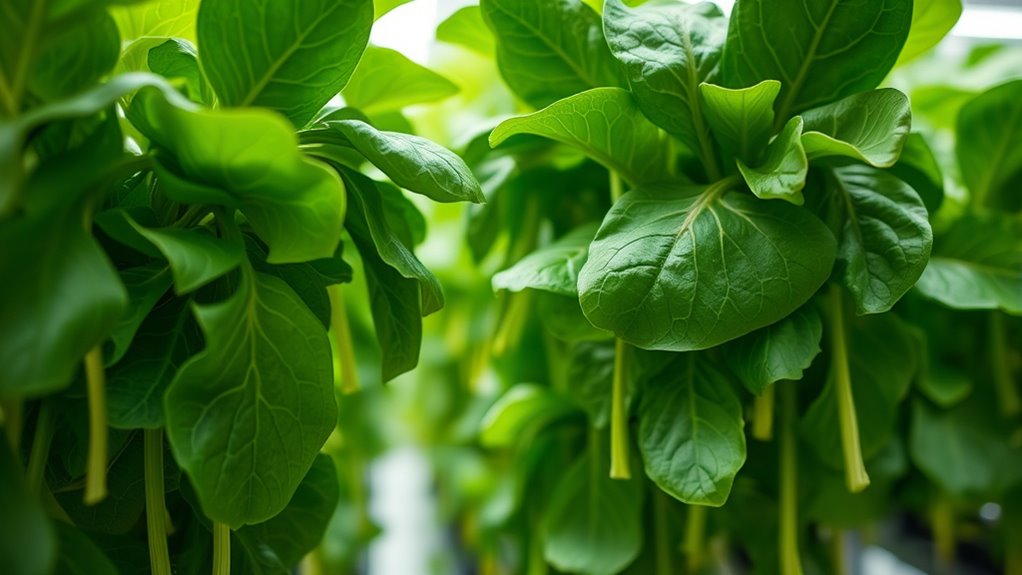
Hydroponic spinach offers a fast and efficient way to grow fresh, nutrient-rich greens indoors or in limited spaces. When you set up a hydroponic system, you control every aspect of the plant’s environment, ensuring ideal growth conditions. One of the key factors in successful hydroponic spinach cultivation is the use of nutrient solutions. These specially formulated mixes deliver essential minerals and nutrients directly to the roots, eliminating the need for soil. You’ll want to choose a balanced nutrient solution tailored for leafy greens like spinach, rich in nitrogen, phosphorus, and potassium. Regularly monitoring and adjusting your nutrient levels ensures your plants remain healthy and vigorous, promoting lush, tender leaves. Investment in technology, such as automated monitoring systems, can help maintain optimal nutrient and environmental conditions more precisely.
Hydroponic spinach grows quickly with tailored nutrient solutions for lush, healthy leaves indoors.
Pest management is another critical part of maintaining a thriving hydroponic spinach garden. Since you’re growing indoors or in controlled environments, you might think pests are less of a concern, but they can still pose problems. Common pests such as aphids, spider mites, and thrips can find their way into your system, especially if you’re bringing in new plant material or if your environment becomes too humid. To prevent infestations, maintain good hygiene around your setup, keep the growing area clean, and inspect plants regularly. Biological controls, like introducing beneficial insects, can help manage pests naturally without chemicals. Additionally, using organic neem oil or insecticidal soaps can be effective for controlling pests if they appear.
Ensuring your hydroponic spinach remains pest-free and well-nourished requires vigilance. You should also consider the pH level of your nutrient solution, as spinach prefers a slightly acidic range around 6.0 to 7.0. Maintaining the correct pH helps your plants absorb nutrients efficiently, preventing deficiencies that can weaken their growth. Good air circulation, proper lighting, and consistent temperature control further support healthy growth and reduce disease risks. Remember, a healthy plant is less susceptible to pests and nutrient imbalances, so regular checks and adjustments are essential. Staying informed about advances in AI in Education, such as intelligent tutoring systems, can also offer innovative ways to learn about optimal hydroponic practices.
Growing hydroponic spinach is not only quick but also sustainable, allowing you to enjoy fresh greens year-round. By paying attention to your nutrient solutions and implementing effective pest management strategies, you set yourself up for a successful harvest. Whether you’re an experienced gardener or just starting out, mastering these fundamentals will help you produce vibrant, nutritious spinach that’s perfect for salads, smoothies, or cooking. With proper care, your indoor or limited-space garden can provide a continuous supply of healthy greens, all while minimizing the use of pesticides and soil-based resources.

Herblink 8-Pod Spinach Seed Pod Kit for Aerogarden, Includes Spinach Seeds – Universal Hydroponic Pods Indoor Gardening Supplies (8-Pod)
- High Germination Rate: Reliable seeds for quick sprouting
- Germination Guarantee: Replacement if seeds fail to sprout
- Universal Compatibility: Fits most hydroponic systems
As an affiliate, we earn on qualifying purchases.
As an affiliate, we earn on qualifying purchases.
Frequently Asked Questions
How Long Does Hydroponic Spinach Typically Last After Harvest?
You can expect hydroponic spinach to last about 5 to 7 days after harvest if stored properly. To maximize its freshness duration, keep it in a perforated bag in the refrigerator’s crisper drawer. Avoid washing until you’re ready to use it, as excess moisture can reduce its storage life. With proper care, you’ll enjoy its crispness and vibrant flavor throughout the week.
Can Hydroponic Spinach Be Grown Indoors Year-Round?
Like Icarus reaching for the sun, you can grow hydroponic spinach indoors year-round with proper setup. Indoor gardening allows you to cultivate fresh greens regardless of the season, providing continuous harvests and flavor. With controlled lighting, temperature, and nutrients, you sustain healthy plants, making year-round cultivation effortless. This method guarantees you enjoy nutritious spinach anytime, transforming your space into a perpetual garden of health and abundance.
What Are Common Pests or Diseases for Hydroponic Spinach?
You’ll want to watch for pests like aphids and spider mites, which can be managed through pest prevention measures like regular inspections and introducing beneficial insects. Diseases such as root rot and downy mildew can also affect your hydroponic spinach, so practicing good disease management—ensuring proper airflow, avoiding overwatering, and maintaining clean equipment—is essential. Keeping a close eye helps you keep your spinach healthy all year round.
Is Hydroponic Spinach More Nutritious Than Soil-Grown?
You might think hydroponic spinach is more nutritious than soil-grown, but studies show the nutritional comparison is quite similar. Imagine lush greens thriving in nutrient-rich water, delivering essential vitamins and minerals just like soil-grown spinach. The key difference lies in control—you can optimize nutrients in hydroponics for better health benefits. So, while both are nutritious, hydroponic spinach offers a consistent, clean source with tailored nutrient levels.
What Are the Most Cost-Effective Hydroponic Systems for Beginners?
You should consider affordable setups like deep water culture or flood and drain systems, which are perfect for beginners. These systems are easy maintenance, helping you avoid costly repairs or complex setups. They use readily available materials, reducing initial costs. By choosing these options, you get a cost-effective way to start hydroponic gardening, enjoy fresh spinach year-round, and learn the basics without overwhelming yourself financially or technically.

Liquid Plant Food – Hydroponics Nutrients for Indoor House Plants, Tomato, Strawberry, Lucky Bamboo, Lettuce, Vegetable Garden & Herbs – Aero Nutrients Liquid Fertilizer for All Growing Systems (8 oz)
- Balanced N-P-K Ratio: 4-3-6 for healthy growth and blooms
- Suitable for All Growing Systems: Optimized for hydroponics and aero systems
- Chelated Micronutrients: Includes Iron, Zinc, Manganese, Copper, Boron, Molybdenum
As an affiliate, we earn on qualifying purchases.
As an affiliate, we earn on qualifying purchases.
Conclusion
With hydroponic spinach, you hold a garden in your hands that’s always in season. Imagine nurturing a lush, green treasure chest that blooms year-round, no matter the weather outside. By embracing this innovative method, you turn your kitchen into a vibrant oasis, where fresh, healthy greens grow effortlessly. So, get ready to harvest your own little slice of paradise—your culinary garden that’s always ready to serve up freshness and flavor.

EZTOCH pH Monitor Hydroponic Continuous 7 in 1 EC pH TDS CF ORP Monitor
- 7-in-1 Monitoring: Measures pH, EC, TDS, ORP, CF, humidity, temp
- Continuous 24/7 Monitoring: Provides real-time data without manual testing
- Dual TDS Modes: Supports ppm500 and ppm700 modes
As an affiliate, we earn on qualifying purchases.
As an affiliate, we earn on qualifying purchases.
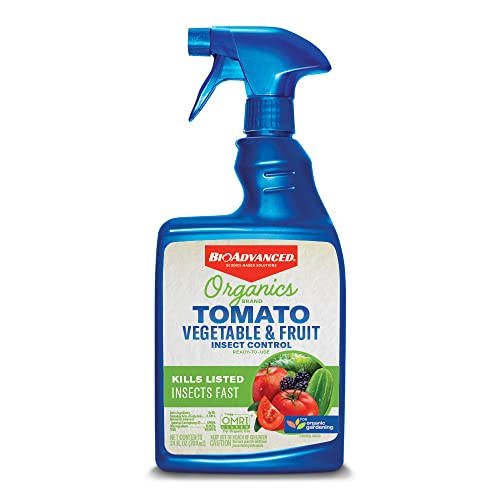
BioAdvanced Organics Brand Tomato, Vegetable & Fruit Insect Control – 24 oz
- Insect Control: Kills pests on edible and ornamental plants
- Powdery Mildew Control: Treats and prevents powdery mildew on plants
- Organic Gardening Approved: OMRI listed for organic use
As an affiliate, we earn on qualifying purchases.
As an affiliate, we earn on qualifying purchases.