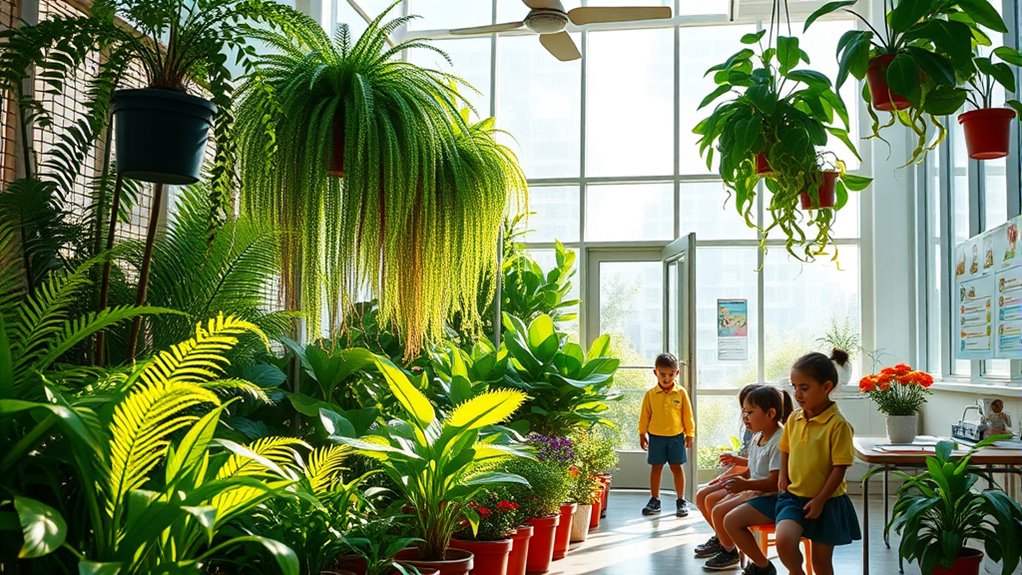

For schools choosing an indoor garden, I would start with the 16-pod hydroponic system for ongoing classroom growing, the Back to the Roots Terrarium Grow Kit for a short, tactile microgreens lesson, or the 52-pod system when a class needs room for many plant starts. Those options serve very different teaching goals: recurring crop care, a quick activity, or higher-capacity group growing. The National Geographic Flower and Herb Gardening Activity Kit offers a fourth path, centered on decorating pots and learning with familiar seeds.

Get garden gear delivered free with Prime
- Fast, free delivery on millions of items
- Prime Video, Amazon Music and more included
- Member-only deals all year
My ranking favors classroom usefulness, ease of demonstrating plant growth, and how clearly each kit suits a school setting. The main tradeoffs are capacity versus footprint, guided electronics versus hands-on simplicity, and whether a kit supports repeat growing or a single activity. Schools should also plan for adult oversight, water care, light placement, and whether they need seeds included from the start.
Complete the kit


Key Takeaways
- Best overall classroom system: The 16-pod hydroponic kit balances adjustable lighting, three growth modes, and separate sprout and mature zones for lessons that continue across planting cycles.
- Best for large groups: The 52-pod system provides the most planting positions, a 4L tank, and a timer, but its size and refilling needs call for a dedicated classroom location.
- Best short activity: Back to the Roots supplies organic microgreen seeds and a terrarium for a simple growing project described as producing greens in about seven days.
- Best creative planting kit: National Geographic includes three pots, seeds, paints, stickers, and tools, but it is a smaller project rather than a full classroom growing station.
- Match the kit to lesson length: Hydroponic systems support ongoing care and comparison; the terrarium and decorated pots suit compact, teacher-led activities.
| Hydroponic Growing System Kit 16 Pods with Smart Herb Garden and Full Spectrum LED Grow Light |  | Best Overall — a balanced, repeatable classroom growing station | Pod capacity: 16 | Grow light: 24W full-spectrum LED | Light height adjustment: Up to 17.7 inches | VIEW ON AMAZON | See Our Full Breakdown |
| 52 Pods Smart Hydroponics Growing System Indoor Herb Garden with Auto Timer |  | Best for Large Groups — high-capacity planting with scheduled lighting | Pod capacity: 52 | Grow light: 24W full-spectrum LED | Water tank: 4L | VIEW ON AMAZON | See Our Full Breakdown |
| Back to the Roots Terrarium Grow Kit – Easy-to-Use DIY Set for All Ages |  | Best for Beginners — a contained microgreens lesson with seeds included | Growing focus: Organic microgreens | Stated growing period: About 7 days | Terrarium: Reusable glass terrarium | VIEW ON AMAZON | See Our Full Breakdown |
| National Geographic Flower and Herb Gardening Activity Kit for Kids |  | Best Creative Starter — decorated pots and familiar flower and herb seeds | Number of pots: 3 | Pot material: Stainless steel | Included seeds: Cosmos, nasturtium, basil | VIEW ON AMAZON | See Our Full Breakdown |
| indoor gardens for school | Pod capacity | Grow light | Included components |
|---|---|---|---|
| Hydroponic Growing System Kit | 16 | 24W full-spectrum LED | Plant stand, 2 plant pots, anti-algae labels, step-by-step guide |
| 52 Pods Smart Hydroponics Grow | 52 | 24W full-spectrum LED | Adapter, clip, system, plant food A&B, grow domes |
| Back to the Roots Terrarium Gr | — | — | — |
| National Geographic Flower and | — | — | — |
More Details on Our Top Picks
Hydroponic Growing System Kit 16 Pods with Smart Herb Garden and Full Spectrum LED Grow Light
This is my best overall pick for schools because its 16 pods give a class enough planting positions to observe several herbs, vegetables, or flowers without stepping up to the large footprint implied by a 52-pod unit. Its defining classroom feature is the split between sprout and mature plant zones: students can start a new batch while watching an older one develop, giving a teacher more than one growth stage to discuss at a time.
The 24W full-spectrum LED adjusts up to 17.7 inches, and the listed veggie, flower/fruit, and sprout modes make it easier to adapt the unit as plants change. Compared with the 52-pod system, this one has lower capacity but a more manageable scale for a typical class project. Compared with the Back to the Roots terrarium, it is better suited to ongoing cultivation, while requiring more setup, power, and regular water care.
There is a notable classroom planning gap: seeds are not included. A teacher needs to source seeds separately and decide how to distribute them among the pods. The kit does include a plant stand, two plant pots, anti-algae labels, and a step-by-step guide, which supports initial setup, but the supplied details do not specify tank capacity. I would choose it for a class that can assign routine care and wants a reusable growing station; I would skip it for a one-session activity or a room without a suitable indoor location.
Pros:- 16 pods offer a useful classroom scale without the stated 52-pod capacity of the larger alternative.
- Separate sprout and mature zones can support comparisons between plant stages.
- Adjustable 24W full-spectrum light and three modes accommodate different growing stages.
- Includes a step-by-step guide, plant stand, two pots, and anti-algae labels.
Cons:- Seeds must be purchased separately, adding a sourcing step before the lesson can begin.
- Requires indoor placement, water maintenance, and access to power.
- Tank capacity is not stated in the supplied product details.
Best for: Teachers seeking a reusable, medium-capacity hydroponic station for observing multiple growth stages and running planting cycles.
Not ideal for: Classes needing an all-in-one seed activity, a very compact project, or a garden that needs no recurring water and equipment care.
- Pod capacity:16
- Grow light:24W full-spectrum LED
- Light height adjustment:Up to 17.7 inches
- Growing modes:Veggie, Flower/Fruit, Sprout
- Growing zones:Sprout and mature plant zones
- Material:ABS
- Included components:Plant stand, 2 plant pots, anti-algae labels, step-by-step guide
Our verdict“I recommend this as the most balanced school option when a teacher wants repeatable hydroponic lessons and can manage seed sourcing and routine care.”
52 Pods Smart Hydroponics Growing System Indoor Herb Garden with Auto Timer
When a school has a dedicated counter or lab surface and wants many planting positions, this 52-pod hydroponic system is the lineup’s capacity leader. It pairs a 24W full-spectrum light with a 4L water tank, adjustable height, and a smart timer, giving teachers a way to organize a larger growing project without treating each seedling as a separate pot-care task. The quiet circulation pump, which has a sleep mode, is also a practical detail for a classroom or shared office where constant pump noise could distract.
Its scale is the key distinction from my 16-pod overall pick: 52 pods can serve broader group work, but the unit may take too much space for a small classroom. The larger reservoir adds capacity, not freedom from upkeep; the listing still calls for regular water refilling. It may also be less immediately approachable for beginners than the simpler terrarium kit, so a teacher should be ready to explain the system and oversee routines.
The included plant food A&B, grow domes, adapter, and clip make this a more supplied hydroponic package than the 16-pod model, whose seeds are explicitly absent. However, the supplied details do not confirm seed inclusion here, either. I would select it for a school that prioritizes a larger shared growing display and can dedicate space and adult attention. For a small class, short unit, or first activity with young learners, the terrarium or three-pot kit is easier to contain.
Pros:- 52 pods provide the largest planting capacity in this comparison.
- A 4L tank and smart timer support a scheduled growing routine.
- Quiet circulation pump includes a sleep mode for shared learning spaces.
- Includes plant food A&B and grow domes along with the system components.
Cons:- Its size may be a poor fit for compact classrooms or crowded counters.
- The tank still needs regular refilling and the system may have a learning curve.
- Seed inclusion is not confirmed in the supplied product details.
Best for: Schools with a stable, roomy growing area and a teacher prepared to oversee a high-capacity hydroponic project.
Not ideal for: Small classrooms, brief one-off lessons, or teachers seeking the simplest possible setup and care routine.
- Pod capacity:52
- Grow light:24W full-spectrum LED
- Water tank:4L
- Water pump:Quiet circulation pump with sleep mode
- Height adjustment:Adjustable
- Timer:Smart timer
- Included components:Adapter, clip, system, plant food A&B, grow domes
- Model number:PARA5215
Our verdict“I would choose this for a well-equipped classroom that needs many planting positions, rather than for a small or low-maintenance school project.”
Back to the Roots Terrarium Grow Kit – Easy-to-Use DIY Set for All Ages
For a teacher who wants a short, hands-on growing activity rather than a permanent classroom appliance, this terrarium kit is the easiest match. It includes a reusable glass terrarium, certified organic microgreen seeds, decorative sand, stickers, and a Discover STEM booklet. The product describes microgreens growing in about seven days with water, which gives a class a relatively quick observation window compared with the ongoing cycles supported by either hydroponic system.
The distinction is scale and lesson style. Unlike the 16- and 52-pod units, this kit is not a multi-crop classroom station; it is a small project focused on creating and observing one miniature growing environment. In exchange, it avoids the grow-light settings, pump, and larger water system that make hydroponic options more involved. Included seeds also remove the separate sourcing step required by the 16-pod kit.
Its all-ages positioning and decoration materials can make setup engaging, but teachers should still plan for water, patience, and age-appropriate handling of a glass container. The small scale limits how many students can participate directly at once, so I would use it with a small group, a rotating station, or as a teacher demonstration. Schools needing regular harvests, a large cohort’s individual planting spaces, or a light-controlled garden should choose one of the hydroponic systems instead.
Pros:- Includes certified organic microgreen seeds and the main project materials.
- The stated growth period of about seven days can fit a short classroom observation unit.
- A reusable terrarium, sand, stickers, and STEM booklet support hands-on learning.
- Avoids the pump, timer, and lighting setup of the hydroponic options.
Cons:- Small-scale growing limits how many students can participate directly at once.
- Requires watering and patience while seeds grow.
- The glass terrarium calls for age-appropriate handling and supervision.
Best for: Teachers introducing seed growth and microgreens through a compact, supplied activity for a small group or rotating station.
Not ideal for: Schools seeking many planting positions, a continuous class food-growing setup, or a project with adjustable grow lighting.
- Growing focus:Organic microgreens
- Stated growing period:About 7 days
- Terrarium:Reusable glass terrarium
- Seeds:Certified organic microgreen seeds
- Other included items:Decorative sand, stickers, Discover STEM booklet
- Age range:All life stages
- Pack count:1
Our verdict“I recommend this for a compact seed-to-microgreen lesson, but not as a substitute for a larger, repeatable classroom garden.”
National Geographic Flower and Herb Gardening Activity Kit for Kids
This kit’s appeal is not automated growing capacity; it is making planting personal. Children get three stainless steel pots, seeds for cosmos, nasturtium, and basil, plus paints, stickers, wooden labels, and gardening tools. That combination can turn a school activity into a sequence of decorating, labeling, sowing, and watching, with the pot itself becoming part of each student’s project.
Compared with the Back to the Roots terrarium, this kit provides three separate containers and a wider creative task, but it does not offer the same microgreens-focused, roughly seven-day growing promise. Against the hydroponic systems, it is simpler and supports indoor or outdoor planting, yet it lacks a grow light, timer, pump, and large pod capacity. It is best understood as a small-group activity kit, not a year-round indoor garden infrastructure choice.
Seeds are included, which makes classroom preparation more direct than with the 16-pod hydroponic model. The tradeoff is that the selection is limited to the listed flowers and basil, and younger children may need adult supervision. The description also notes that the paint variety may be limited, so teachers who plan a large art component should check whether the included materials match the activity. I would pick it for a creative planting session or take-home project; a school aiming to compare crop growth across many plants should choose a hydroponic model.
Pros:- Includes three stainless steel pots, seeds, tools, paints, stickers, and wooden labels.
- Cosmos, nasturtium, and basil provide both flower and herb planting options.
- Decorating and labeling add creative steps beyond sowing seeds.
- Suitable for indoor or outdoor use, unlike the hydroponic kits described as indoor-only.
Cons:- Three pots offer limited scale for a full class or ongoing garden program.
- Seed choices are limited to the supplied cosmos, nasturtium, and basil.
- Younger children may need adult supervision, and paint variety may be limited.
Best for: Teachers planning a small, creative planting activity where children decorate, label, and grow a few flowers and herbs.
Not ideal for: Schools needing a high-capacity indoor growing station, adjustable grow lights, or an extended hydroponic curriculum.
- Number of pots:3
- Pot material:Stainless steel
- Included seeds:Cosmos, nasturtium, basil
- Other materials:Paints, stickers, wooden labels, gardening tools
- Suitable locations:Indoor or outdoor
- Color:Multicolor
- Included planting containers:3 pots
Our verdict“I recommend this as a small creative starter kit, not as the choice for schools seeking capacity, controlled lighting, or repeated indoor harvests.”

How We Picked
I ranked these four options by how well their stated features translate into school activities, not by assuming that the largest or most electronic garden is automatically best. I looked at planting capacity, the amount of setup and recurring care implied, whether growing supplies are included, and how readily a teacher could connect the kit to lessons about seeds, plant needs, or observation.
I also weighed the classroom tradeoffs that product descriptions can obscure. A hydroponic unit may support repeated experiments, but it asks staff to manage water, power, and space. A terrarium kit is more contained and includes seeds, but offers limited planting scale. A pot-decorating kit can engage children creatively, though its three pots are not equivalent to a classroom hydroponic station. The ranking reflects these distinct jobs: the 16-pod system is the strongest all-around teaching setup, the 52-pod model suits bigger planting groups, the terrarium is the clearest short activity, and the National Geographic kit is a creative starter for small groups.
I have used only the supplied product details, and I do not treat claims such as easy setup or quiet operation as independent classroom testing. Schools should check their own age-group policies, available outlets and surfaces, and supervision capacity before selecting a kit.
| indoor gardens for school | Included components |
|---|---|
| Hydroponic Growing System Kit | Plant stand, 2 plant pots, anti-algae labels, step-by-step guide |
| 52 Pods Smart Hydroponics Grow | Adapter, clip, system, plant food A&B, grow domes |
| Back to the Roots Terrarium Gr | — |
| National Geographic Flower and | — |
Factors to Consider When Choosing Indoor Gardens For Schools
I would choose an indoor garden for a school by starting with the lesson and care routine, then matching the kit’s capacity and materials to the students who will use it.Match capacity to the group
Pod counts tell only part of the story, but they are a useful first filter. The 52-pod hydroponic system suits a larger shared project when the school has room for a dedicated growing surface. The 16-pod system offers a more moderate station for comparing several plants or growth stages. The terrarium and three-pot activity kit are better for demonstrations, small groups, or rotating stations than for giving every student an individual plant.
Plan how students will take part: will they sow seeds, observe a shared system, record plant growth, or take a container home? A high pod count does not automatically mean each child can manage a plant independently. Teachers may get more from fewer plants if students take turns measuring, labeling, and keeping a growth log.
Choose the right amount of equipment
Hydroponic gardens bring controlled lighting and scheduled care into the classroom, which can help when natural light is unreliable or the curriculum follows growth over time. They also bring more equipment to manage: lights need a suitable position and power source, and the water system requires attention. The 52-pod model adds a timer and quiet pump; the 16-pod model adds adjustable light and separate sprout and mature zones.
The terrarium and pot kit are more direct projects, but they do not provide the same lighting controls or scale. For a brief unit with young students, a contained activity may be easier to supervise. For recurring science lessons, a hydroponic station may offer more ways to observe plant stages, provided staff can keep up with its routine.
Check what is included before class day
Seeds are an easy detail to miss when ordering a system. The 16-pod kit explicitly excludes seeds, so teachers need to source them and choose varieties that fit the lesson. The Back to the Roots kit includes organic microgreen seeds, while National Geographic lists cosmos, nasturtium, and basil. The 52-pod system includes plant food and grow domes, but the supplied details do not confirm seeds.
Also check the consumables and accessories that support the project: labels help students track varieties, growing media may be required depending on the system, and plant food can become part of an ongoing supply plan. Before a lesson, decide who handles preparation and whether students will share materials or work in assigned groups.
Build care and supervision into the plan
Every garden here needs attention. The product details specifically mention water maintenance for the hydroponic kits and watering for the terrarium; teachers should assign a clear routine rather than assume a timer removes all care. A simple duty schedule can make checking water and observing changes part of the learning activity, while preventing missed care during weekends or school breaks.
Match supervision to age and materials. The terrarium is glass, and the National Geographic kit includes tools and paints, so younger children may need closer guidance. Hydroponic systems add powered lights and water near classroom surfaces. Set a stable location, clarify which parts students may handle, and follow the included instructions for setup and maintenance.
Decide whether the goal is a short project or a continuing garden
A short activity rewards quick setup and a clear observation window: the microgreens kit is described as growing in about seven days, while the three-pot kit emphasizes decorating and planting. A continuing classroom garden favors capacity and stage-by-stage care, making the 16-pod or 52-pod hydroponic unit a closer fit.
Before choosing, map the school calendar. Ask who will water plants during weekends and holidays, where the system can remain between lessons, and whether a class can revisit it often enough to learn from changes. If those routines are uncertain, choose a smaller activity rather than buying a system whose main advantage depends on sustained classroom care.
Frequently Asked Questions
Which indoor garden is the best overall choice for a school?
I rank the 16-pod hydroponic system first for schools seeking a balance of classroom capacity and ongoing learning. Its adjustable light, three modes, and separate sprout and mature zones can support observation at different stages. It does require seeds, water care, power, and indoor space, so it is not the simplest choice for a one-day activity.
Which option suits a large class or group project?
The 52-pod hydroponic system has the largest stated planting capacity, making it the most suitable choice when a school has room for a dedicated growing area. Its 4L tank and smart timer support a managed routine, but the tank still needs refilling and the unit may be too large for a compact classroom. Teachers should confirm seed needs before planning the first planting session.
Which kit is easiest to use for a short science lesson?
The Back to the Roots Terrarium Grow Kit is the clearest fit for a compact seed-growing activity because it includes microgreen seeds and the product describes growth in about seven days with water. It does not offer the capacity or adjustable lighting of a hydroponic system, and its glass terrarium needs appropriate supervision. I would use it for a small group, demonstration, or rotating classroom station.
Do these indoor gardens include seeds?
The Back to the Roots kit includes certified organic microgreen seeds, and the National Geographic kit lists cosmos, nasturtium, and basil. The 16-pod hydroponic kit does not include seeds. Seed inclusion is not confirmed in the supplied details for the 52-pod system, so I would verify that before scheduling a class activity or arrange seeds separately.
What should teachers plan for when maintaining an indoor school garden?
Plan for a stable location, regular observation, and a named person or student group responsible for care. Hydroponic systems require water checks and access to power, while the terrarium and pots need watering and patient monitoring. Teachers should also account for weekends and school breaks, supervise children around glass or tools, and set clear rules for handling the equipment.
Conclusion
My recommendation depends on what the school needs students to do. Choose the 16-pod hydroponic system for the strongest all-around balance of capacity and continuing growth lessons; select the 52-pod system when a larger class has a roomy, supervised growing area. For a compact project with included microgreen seeds, pick the Back to the Roots terrarium. For a small creative session built around decorating pots and planting familiar flowers and herbs, choose the National Geographic kit.
Whichever option fits, I would plan the care routine before the purchase: assign responsibility, confirm seed and supply needs, and check the classroom’s space and supervision requirements. That preparation matters as much as pod count when a garden is meant to support learning throughout the school year.
Fall Picks
fall essentials
As an affiliate, we earn on qualifying purchases.