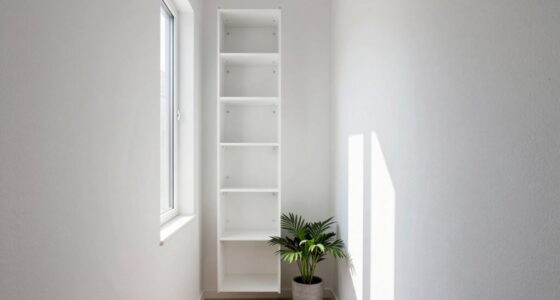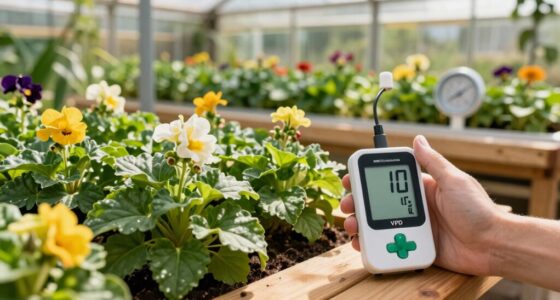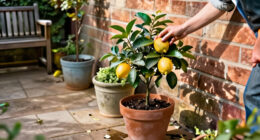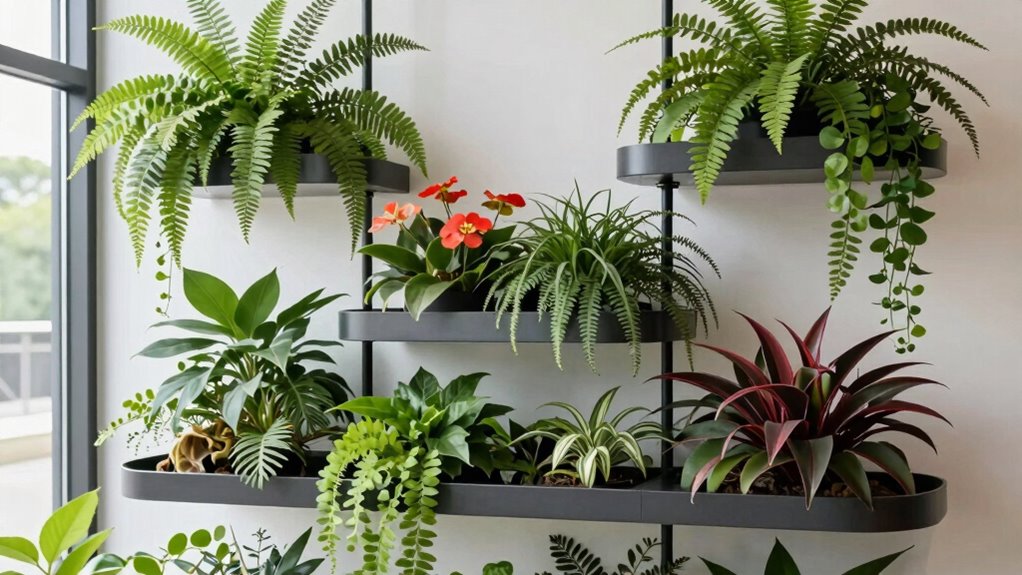

To optimize your multi-level indoor garden, position high-light plants like succulents on top shelves where they get direct, bright light. Shade-tolerant plants should go on lower shelves to prevent light deprivation. Use adjustable shelves to fine-tune heights based on plant response, and group plants with similar watering needs for easier care. This thoughtful setup improves growth, conserves resources, and enhances aesthetics—if you keep exploring, you’ll find even more tips to perfect your garden setup.

Get garden gear delivered free with Prime
- Fast, free delivery on millions of items
- Prime Video, Amazon Music and more included
- Member-only deals all year
Key Takeaways
- Arrange high-light plants on top shelves for maximum exposure, placing shade-tolerant plants on lower levels.
- Use adjustable shelves to customize heights based on plant growth and changing light needs.
- Group plants with similar watering requirements on the same shelves to optimize maintenance tasks.
- Position moisture-loving plants on lower shelves with higher humidity, drought-tolerant ones higher up.
- Regularly evaluate plant health and adjust shelf heights to ensure optimal light and water conditions.
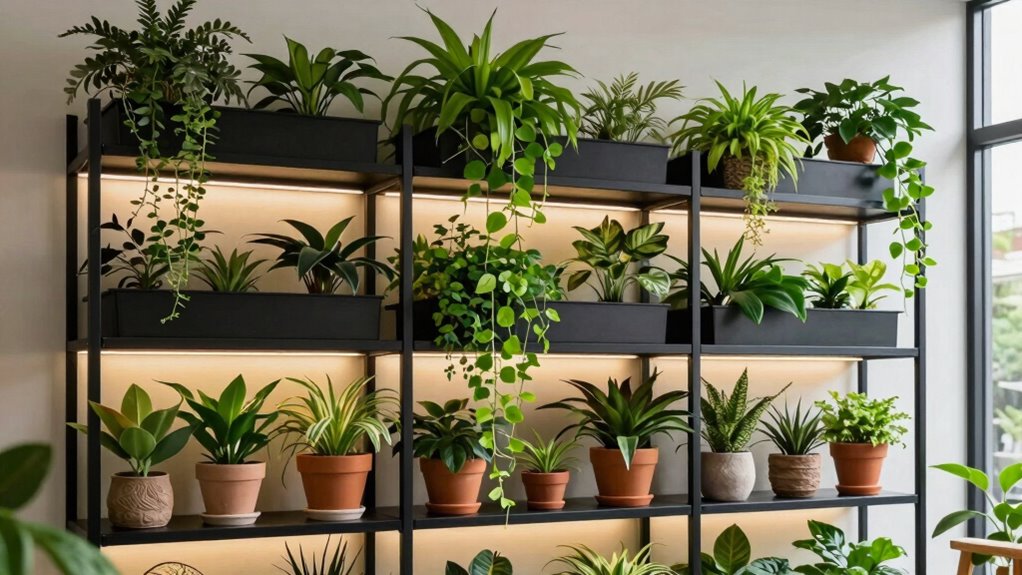
Creating an effective multi-level indoor garden requires more than just selecting plants; it depends on maximizing shelf heights to guarantee each plant gets adequate light and space. When you arrange your plants thoughtfully, you ensure they thrive without competing for resources. Proper shelf height allows you to implement lighting efficiency strategies, making sure each plant receives the right amount of light based on its needs. For example, high-light plants like succulents or herbs should be placed on the top shelves where they can bask in more direct light, while shade-tolerant plants can be positioned on lower levels. This setup prevents light deprivation and promotes healthy growth across your entire garden.
Adjusting shelf heights also simplifies watering schedules. When plants are grouped according to their water requirements, you can tailor your watering routines more efficiently. For instance, moisture-loving plants like ferns should be placed on a lower shelf where humidity tends to be higher, and they can be watered more frequently. Drought-tolerant plants like cacti or succulents go on higher shelves, where they need less water. By maintaining this logical arrangement, you avoid overwatering or underwatering, which can stress your plants or cause root rot. This strategic placement saves you time and effort, making your overall gardening routine more manageable. Additionally, understanding the plant care requirements can help you optimize your setup for healthier growth.
To implement the smart shelf height rule effectively, start by evaluating each plant’s light and water needs. Group plants with similar requirements together and assign them to appropriate levels accordingly. Use adjustable shelves if possible, giving you flexibility to fine-tune heights as your garden evolves. Keep a close eye on how your plants respond; if you notice some seem to stretch toward the light or appear dull, consider adjusting their shelf positions. This adaptive approach ensures each plant gets ideal lighting, which directly impacts their growth rate and overall health. Additionally, spatial arrangement enhances the overall aesthetics of your indoor garden, making it both functional and visually appealing. Understanding the importance of sustainable practices can help you maintain your garden in an eco-friendly way, conserving resources and supporting healthier plant growth. Proper shelf height not only benefits plant health but also contributes to a more organized and efficient gardening space.
As an affiliate, we earn on qualifying purchases.
Frequently Asked Questions
How Do I Measure the Ideal Shelf Height for Different Plant Types?
To measure the ideal shelf height for different plant types, start by considering each plant’s mature height to prevent overcrowding. You should also think about appropriate shelf spacing, ensuring each plant gets enough light and airflow. Use a ruler or tape measure to set shelves at varying heights, keeping taller plants on lower shelves and shorter ones on higher levels. Adjust as plants grow to maintain healthy growth and easy access.
Can the Smart Shelf System Adapt to Changing Plant Growth?
Yes, the smart shelf system can adapt to changing plant growth through dynamic shelf customization. As your plants grow, sensors detect size and growth rate, automatically adjusting the shelf height to optimize light and space. This guarantees your plants stay healthy and receive proper care. By continuously monitoring plant growth, the system offers a seamless, automated way to maintain ideal conditions, making indoor gardening more efficient and hassle-free.
What Materials Are Best for Constructing Adjustable Shelves?
Think of building your shelves as choosing the backbone of a sturdy tree. Opt for materials like stainless steel or high-quality aluminum for durability, ensuring your shelves withstand growth and weight changes. For aesthetic appeal, consider elegant wood or sleek bamboo, which add warmth and style. These materials balance strength and beauty, making your indoor garden both resilient and visually appealing as plants flourish and evolve.
How Energy-Efficient Is the Smart Shelf Lighting?
The smart shelf lighting is highly energy-efficient, thanks to LED technology. LED efficiency means you get bright, effective illumination while consuming minimal power. This reduces overall power consumption, making it cost-effective and eco-friendly. You’ll notice lower electricity bills and less environmental impact. Plus, many smart systems include timers and dimming options, ensuring you use only the energy needed for your indoor garden’s growth, maximizing efficiency and sustainability.
Are There Safety Concerns With Automated Watering Systems?
Think of your automated watering system as a gentle river flowing through your indoor garden. While it’s designed to prevent overwatering, safety concerns like plant toxicities and pest prevention remain. You should regularly check for leaks and guarantee no electrical components contact water, reducing risks. Properly maintained, this system minimizes hazards, keeps your plants healthy, and helps prevent pest issues, creating a safe, thriving indoor oasis.
plant grow light for indoor garden
As an affiliate, we earn on qualifying purchases.
As an affiliate, we earn on qualifying purchases.
Conclusion
So, next time you’re designing your indoor jungle, remember the smart shelf height rule—because nothing screams “green thumb” like a perfectly tiered oasis. With a little planning, your plants will thrive, and you’ll look like a botanical genius, all while secretly knowing it’s just good old-fashioned measurement. Who knew that mastering shelf heights could elevate your gardening game from rookie to connoisseur? After all, in the world of indoor gardens, height truly is everything.
multi-level plant stand for herbs and succulents
As an affiliate, we earn on qualifying purchases.
As an affiliate, we earn on qualifying purchases.
As an affiliate, we earn on qualifying purchases.
Halloween Picks
halloween
As an affiliate, we earn on qualifying purchases.