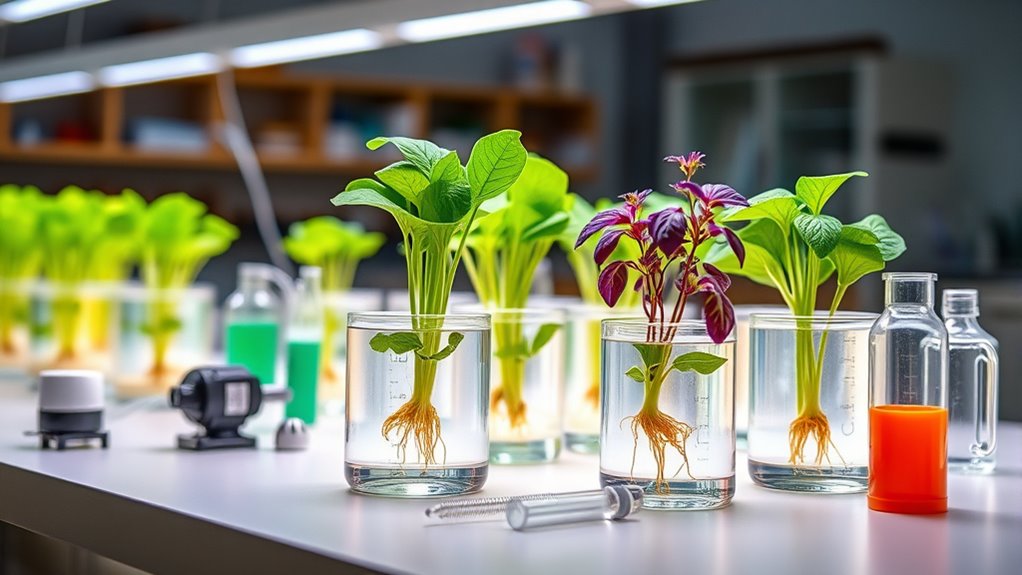

Hydroponic science kits for education make it possible for students to explore plant growth without soil, combining hands-on learning with STEM principles. The best overall pick, JOVA Klever Kits 2-in-1 Root Viewer & Planting Science Kit, offers a versatile experience suitable for a wide age range. The Educational Insights Nancy B’s Science Club Way to Grow Hydroponics Kit stands out for its comprehensive educational content, while the Kids Plant Growing Kit provides a beginner-friendly setup at a lower price point. These kits vary in complexity, durability, and educational value, posing tradeoffs between ease of use and scientific depth. Keep reading for a detailed breakdown to find the best fit for your educational needs.

Get garden gear delivered free with Prime
- Fast, free delivery on millions of items
- Prime Video, Amazon Music and more included
- Member-only deals all year
Complete the kit


Key Takeaways
- The top picks balance educational depth with ease of use, making them suitable for a range of ages and skill levels.
- Durability and quality of materials are critical, especially for classroom use or frequent handling by students.
- Price varies widely, with more advanced kits demanding higher investment but offering richer learning experiences.
- Some kits include comprehensive educational materials and guides, which are essential for structured learning.
- Compatibility with other STEM activities can enhance overall educational value, so consider kits that integrate well with your curriculum.
| JOVA Klever Kits 2-in-1 Root Viewer & Planting Science Kit for Kids | 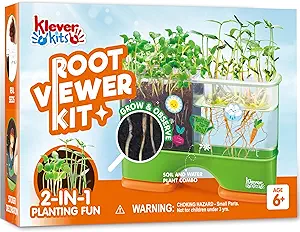 | Best for Hands-On Observation and Young Learners | Includes: Root viewer, label tags, seeds, stickers | Seeds: Mung bean, cherry belle radish | Ages: 6+ | VIEW ON AMAZON | See Our Full Breakdown |
| Educational Insights Nancy B’s Science Club Way to Grow Hydroponics Kit |  | Best for Detailed Experiments and STEM Engagement | Included Components: Seed baskets, flasks with thermometers, trellises, activity journal | Age Range: 8+ | Brand: Educational Insights | VIEW ON AMAZON | See Our Full Breakdown |
| Kids Plant Growing Kit – Greenhouse & Hydroponic System with Tools, Thermometer, Wind Vane, and Educational Materials |  | Best for Complete Indoor Gardening and Emotional Well-being | Includes: Hydroponic system, gardening tools, wind vane, thermometer, educational materials | Suitable For: Indoor gardening, STEM education | Benefits: Supports emotional well-being, teaches plant life cycles | VIEW ON AMAZON | See Our Full Breakdown |
| Thames & Kosmos Hydropower Science Kit |  | Best for Renewable Energy and Physics Exploration | Number of Experiments: 12 | Awards: Parents’ Choice Recommended | VIEW ON AMAZON | See Our Full Breakdown | |
| Plant Growing Science Kit for Kids – 19 Botany Experiments with Hydroponic Growing and Root Science |  | Best for Extensive Botany Exploration and Variety | Number of Experiments: 19 | Age Range: 6-12 | Materials Included: Magnifier, cups, test tubes, hydroponic baskets, seed packets | VIEW ON AMAZON | See Our Full Breakdown |
| Root Viewer Science Kit for Kids – Grow Your Own Plant STEM Toy & Gardening Kit for Ages 6-12 |  | Best for Visual Learners and Small Hands-on Experiments | Ages: 6-12 | Includes: Soil, Hydroponics, Journal, Stickers | Features: Transparent root viewer, 2-in-1 growing system, educational content | VIEW ON AMAZON | See Our Full Breakdown |
| hydroponic science kits for education | Includes |
|---|---|
| JOVA Klever Kits 2-in-1 Root V | Root viewer, label tags, seeds, stickers |
| Educational Insights Nancy B’s | — |
| Kids Plant Growing Kit | Hydroponic system, gardening tools, wind vane, thermometer, educational materials |
| Thames & Kosmos Hydropower Sci | — |
| Plant Growing Science Kit for | — |
| Root Viewer Science Kit for Ki | Soil, Hydroponics, Journal, Stickers |
More Details on Our Top Picks
JOVA Klever Kits 2-in-1 Root Viewer & Planting Science Kit for Kids
This kit stands out for its dual focus on soil and water environments, making it ideal for introducing young children to basic plant science through direct observation. Compared with the Kids Plant Growing Kit, it offers the unique feature of a transparent root viewer, which helps children see roots develop in real-time—an engaging visual that encourages curiosity. However, its scope is limited to specific seed types like mung beans and radishes, and it requires adult supervision for younger children who might need help handling the materials. The inclusion of fun stickers personalizes the experience, but the kit’s simplicity means it may not satisfy older or more advanced learners seeking more complex experiments. Overall, this kit makes the most sense for early elementary classrooms or parents seeking a straightforward, visual introduction to plant growth.
Pros:- Encourages hands-on scientific observation with a transparent root viewer
- Includes engaging stickers for personalization, increasing child interest
- Suitable for a wide age range, ideal for early STEM learning
Cons:- Requires adult supervision for safe handling and setup
- Limited to specific seed types, restricting experiment variety
Best for: Parents and educators working with children aged 6+ who want an accessible, visual science activity.
Not ideal for: Older students or those seeking in-depth hydroponic or botanical experimentation, as the kit’s scope remains basic.
- Includes:Root viewer, label tags, seeds, stickers
- Seeds:Mung bean, cherry belle radish
- Ages:6+
- Experience:Hydroponic and soil planting
Our verdict“This kit is perfect for introducing young children to plant science through simple, visual observation activities.”
Educational Insights Nancy B’s Science Club Way to Grow Hydroponics Kit
This kit makes a strong case for older children interested in hands-on science, combining water-based hydroponic growth with comprehensive tools and an activity journal. Unlike the JOVA Klever Kits, it emphasizes measurement and data collection, making it well-suited for science fair projects or classroom experiments. However, its setup can be more complex, and children may need patience while assembling the components or waiting for plant growth, which could challenge less motivated learners. It’s limited to hydroponic methods, so those interested in soil-based experiments will find it less versatile. This kit is especially useful for students aged 8+ who want a deeper, more structured exploration of plant biology and hydroponics.
Pros:- Includes a comprehensive set of tools and an activity journal for detailed experiments
- Encourages STEM learning through measurement and observation
- Suitable for science fairs and project-based learning
Cons:- Setup can be complex, requiring careful assembly
- Limited to water-based hydroponics, lacking soil experiment options
Best for: Elementary to middle school students interested in detailed, experiment-based plant science.
Not ideal for: Younger children or those looking for quick, simple gardening activities, since setup and patience are required.
- Included Components:Seed baskets, flasks with thermometers, trellises, activity journal
- Age Range:8+
- Brand:Educational Insights
- Model Number:EI-5361
- UPC:086002053619, 065054645799, 018717076300
Our verdict“Ideal for students seeking a structured, experiment-driven approach to hydroponic plant science and measurement.”
Kids Plant Growing Kit – Greenhouse & Hydroponic System with Tools, Thermometer, Wind Vane, and Educational Materials
This kit offers a comprehensive indoor greenhouse experience, perfect for children who benefit from a tactile, multi-sensory activity. Unlike the smaller, more experimental Hydropower Science Kit, this setup emphasizes emotional health and ongoing engagement through building, planting, and observing a full plant cycle. Its all-in-one design, including tools, educational materials, and environmental sensors like a wind vane and thermometer, supports a holistic learning experience. However, the kit’s indoor focus and dependence on environmental factors like sunlight limit its applicability for outdoor or extensive hydroponic projects. Also, some components may need replacement over time, adding to ongoing costs. It suits children aged 6-12 who enjoy gardening with a broader, more immersive setup.
Pros:- All-in-one kit with tools, educational materials, and environmental sensors
- Supports emotional health through hands-on gardening activities
- Teaches plant life cycles and environmental awareness
Cons:- Requires supervision for younger children due to complexity
- Limited to indoor use, dependent on ambient conditions
Best for: Parents and teachers seeking a complete, emotionally enriching gardening experience for children aged 6-12.
Not ideal for: Older students or those wanting highly technical or soil-based experiments, as the focus remains on indoor hydroponics and emotional well-being.
- Includes:Hydroponic system, gardening tools, wind vane, thermometer, educational materials
- Suitable For:Indoor gardening, STEM education
- Benefits:Supports emotional well-being, teaches plant life cycles
Our verdict“A well-rounded kit for children who enjoy indoor gardening with an emphasis on emotional and holistic learning.”
Thames & Kosmos Hydropower Science Kit
This kit emphasizes the physics and engineering behind hydropower, making it a compelling choice for children interested in renewable energy concepts. Compared to the plant-focused kits, it offers a broader exploration of water turbines and energy generation, with 12 experiments that demonstrate how water can produce electricity. While it provides excellent hands-on learning and is recommended by Parents’ Choice, it requires water setup and adult supervision, especially for younger kids. Its focus on turbines and energy physics makes it less suitable for pure botany or plant science, but an excellent choice for combining science and environmental education in a practical way.
Pros:- Engages children with multiple experiments on hydropower and turbines
- Teaches renewable energy principles through hands-on projects
- Award-winning, recommended by Parents’ Choice for quality
Cons:- Requires water setup, which can be messy or challenging
- Potential need for adult supervision for safe operation
Best for: Middle-grade students or older children interested in physics, engineering, and renewable energy projects.
Not ideal for: Young children or those specifically seeking plant growth experiments, as its focus is on mechanical and energy systems.
- Number of Experiments:12
- Awards:Parents’ Choice Recommended
Our verdict“Perfect for energy-focused science enthusiasts eager to understand renewable water power and engineering principles.”
Plant Growing Science Kit for Kids – 19 Botany Experiments with Hydroponic Growing and Root Science
This kit offers a wide array of 19 experiments, making it ideal for children who want to explore botany in depth. Unlike the more focused JOVA Klever Kits or the activity-driven Kids Plant Growing Kit, this set provides diverse activities, including hydroponic growth, root observation, and propagation. Its comprehensive nature encourages detailed observation, scientific recording, and experimentation, suitable for classroom or homeschool settings. However, it requires supervision for younger children, and the seeds used—like dry beans and grass—may limit experiment variety unless additional seeds are purchased. The absence of electronic or digital features means it relies entirely on manual observation and activity guides.
Pros:- Provides 19 interactive, detailed botany experiments
- Includes all necessary materials and activity guides
- Encourages observation, measurement, and scientific tracking
Cons:- Supervision needed for younger children due to small parts
- Limited seed variety—may need more for diverse experiments
Best for: Educators and motivated children aged 6-12 seeking an extensive, varied botany curriculum with hands-on activities.
Not ideal for: Very young children or those seeking quick results, as the 2-5 day sprouting window and manual focus may be less engaging for them.
- Number of Experiments:19
- Age Range:6-12
- Materials Included:Magnifier, cups, test tubes, hydroponic baskets, seed packets
- Growth Time:2-5 days
Our verdict“Ideal for dedicated learners and educators wanting an expansive, hands-on botany experience with multiple experiments.”
Root Viewer Science Kit for Kids – Grow Your Own Plant STEM Toy & Gardening Kit for Ages 6-12
This kit excels in providing a clear window into plant root development, making it ideal for young children who learn best through visual observation. Unlike the Educational Insights Nancy B’s Science Club Way to Grow Hydroponics Kit, which offers a broader hydroponic experience, the Root Viewer Science Kit focuses on real-time root growth, which fosters curiosity about plant biology without overwhelming young users. Its combination of soil and hydroponic options offers versatility, but the small size of plants limits long-term growth and larger plant experiments. Supervision is necessary for safety, especially with younger children, and the kit’s scope may be too narrow for those seeking comprehensive gardening projects. This pick is best suited for teachers or parents seeking engaging, visual STEM activities for early elementary students.
Pros:- Enables real-time observation of root growth, fostering curiosity
- Includes both soil and hydroponic growing systems for versatility
- Interactive journal and stickers boost engagement and record-keeping
- Suitable for young children with simple assembly
Cons:- Requires close supervision to ensure safety for younger kids
- Limited plant size restricts scope of experiments or long-term growth
- Not designed for larger or more complex plant projects
Best for: Parents, teachers, or educators working with children aged 6-12 who want an engaging, visual introduction to plant biology and hydroponics
Not ideal for: Older students or hobbyists aiming for advanced hydroponic systems or larger plant growth, as the kit is limited in scale and scope
- Ages:6-12
- Includes:Soil, Hydroponics, Journal, Stickers
- Features:Transparent root viewer, 2-in-1 growing system, educational content
- Learning Focus:Plant root development and basic hydroponics
- Setup Time:Approx. 15-20 minutes
- Recommended Plants:Small fast-growing plants like beans or radishes
Our verdict“This kit makes the most sense for early learners and educators seeking a hands-on, visual introduction to plant roots and hydroponics in a manageable format.”

How We Picked
These hydroponic science kits were selected based on a combination of factors including build quality, educational content, ease of use, versatility, and value for money. We prioritized kits that cater to different age groups and skill levels, ensuring there are options for beginners and more advanced learners. Each product was evaluated on its scientific accuracy, durability, and the clarity of included instructions or guides. The ranking reflects a balance between affordability and educational richness, aiming to help educators and parents choose kits that foster engagement and learning without overwhelming users.| hydroponic science kits for education | Includes |
|---|---|
| JOVA Klever Kits 2-in-1 Root V | Root viewer, label tags, seeds, stickers |
| Educational Insights Nancy B’s | — |
| Kids Plant Growing Kit | Hydroponic system, gardening tools, wind vane, thermometer, educational materials |
| Thames & Kosmos Hydropower Sci | — |
| Plant Growing Science Kit for | — |
| Root Viewer Science Kit for Ki | Soil, Hydroponics, Journal, Stickers |
Factors to Consider When Choosing Hydroponic Science Kits For Education
When choosing a hydroponic science kit for education, it’s important to consider several key factors that impact usability, learning outcomes, and durability. A well-chosen kit can significantly enhance STEM education, but selecting the wrong one might lead to frustration or limited learning. Here are the main considerations to guide your decision.Age and Skill Level Compatibility
Matching the kit to the age and skill level of your students or children is essential. Kits designed for younger kids often feature simpler setups and fewer components, making them easier to handle but potentially less comprehensive. More advanced kits might include complex experiments and detailed guides, which are better suited for older students or those with prior experience. Choosing the right level ensures engagement without overwhelming users or underwhelming more capable learners.
Educational Content and Curriculum Alignment
Look for kits that come with comprehensive educational materials, experiment guides, and clear instructions. Kits that align with science standards or STEM curricula offer more structured learning, making them ideal for classroom settings. Avoid products that lack detailed guidance, as they can lead to confusion and less effective teaching. The depth of scientific concepts covered also influences how much students learn from each activity.
Durability and Material Quality
Since these kits are often used repeatedly in educational settings, durability matters. High-quality plastics, sturdy containers, and resilient tools prevent damage and ensure safety. Cheaper kits with flimsy components may break easily, leading to additional costs and frustration. Investing in well-made kits can save money long-term and keep students focused on learning rather than fixing broken parts.
Setup Complexity and Ease of Use
Some kits require more assembly, calibration, or prior knowledge, while others are almost ready to use out of the box. Consider the experience level of the user and whether the setup process aligns with your available time and resources. Kits with straightforward instructions and minimal assembly are better for quick classroom integration, while more complex options can provide deeper engagement for dedicated learners.
Price and Value
Budget constraints influence the range of options available. Cheaper kits may lack durability or comprehensive educational materials, but they can be suitable for occasional use. Higher-priced kits usually offer better build quality, more experiments, and richer learning content. Weigh the cost against the educational benefits to find a kit that offers the best value for your specific needs.
Frequently Asked Questions
Are hydroponic science kits suitable for classroom use?
Yes, many hydroponic science kits are designed with classroom settings in mind, featuring durable materials, clear instructions, and educational content aligned with STEM standards. When selecting a kit for a classroom, prioritize options with sturdy components and comprehensive guides to facilitate smooth integration into lesson plans. Proper supervision and safety measures should always be observed, especially with kits that include electrical components or liquids.
Can these kits be used for remote or hybrid learning?
Absolutely, many hydroponic kits are adaptable for remote or hybrid learning environments. Kits with detailed instructions, online resources, and visual guides enable students to conduct experiments at home with minimal supervision. However, consider the complexity of setup and whether students have access to necessary tools or materials outside of school. Clear communication and support from educators can maximize the educational impact in remote settings.
How much maintenance do hydroponic kits require?
Maintenance varies depending on the complexity of the kit. Basic kits typically need simple tasks like refilling water, checking nutrient levels, and cleaning containers. More advanced systems with pumps or automated features may require regular calibration and electrical checks. Choosing kits with low maintenance needs can reduce ongoing effort and keep students focused on the science rather than logistics.
Are these kits safe for younger children?
Many hydroponic kits are safe for children aged 6 and up, especially those with non-toxic materials and enclosed components. Always review the manufacturer’s age recommendations and safety warnings before purchasing. Supervision is recommended during setup and experimentation, particularly with liquids or small parts. Selecting age-appropriate kits ensures a safe and enjoyable learning experience.
What is the typical lifespan of a hydroponic science kit?
The lifespan of a hydroponic kit depends on its build quality and how well it is maintained. High-quality kits with durable components can last several years, especially with proper cleaning and care. Cheaper or lower-quality kits may need replacement parts or can become unusable after a year or two of frequent use. Investing in a sturdily built kit can provide ongoing educational value over multiple school years.
Conclusion
For educators and parents seeking a versatile, all-around solution, the JOVA Klever Kits 2-in-1 Root Viewer & Planting Science Kit offers excellent value and adaptability, making it ideal as the best overall choice. Those on a tighter budget or working with younger children might prefer the Kids Plant Growing Kit for its simplicity and affordability. For a premium experience that provides comprehensive STEM learning, the Thames & Kosmos Hydropower Science Kit is a solid pick. Beginners should look for kits with straightforward setup and guides, while advanced users may prioritize kits with more experiments and scientific depth. Ultimately, selecting the right kit depends on your specific educational goals, budget, and student age group.