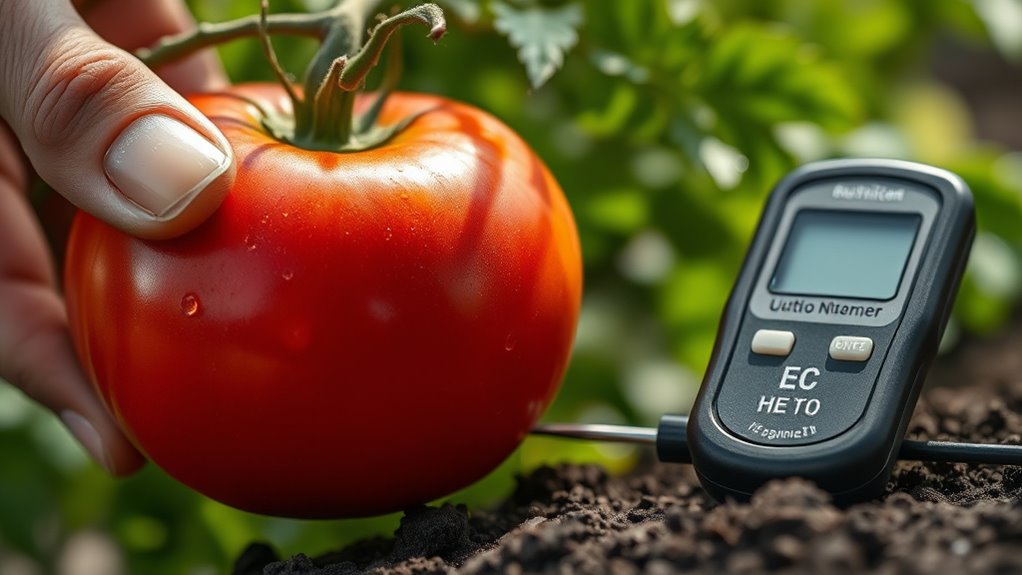

Monitoring your soil’s EC is essential for fine-tuning plant growth. By regularly checking salinity and nutrient levels, you can spot issues early and adjust fertilization or watering accordingly. Maintaining ideal EC supports healthy roots, reduces stress, and enhances productivity. Using this data lets you tailor your management strategies for each growth stage and environmental condition. Keep exploring how precise EC control can boost your plant health and yield.
Key Takeaways
- Regular EC testing helps detect soil salinity changes, enabling timely adjustments for optimal root health.
- Using EC data guides precise fertilization and watering to promote balanced nutrient uptake.
- Monitoring EC throughout growth stages ensures soil conditions support healthy plant development.
- AI-powered analysis of EC readings provides tailored recommendations for soil management strategies.
- Maintaining appropriate EC levels reduces root stress, disease risk, and boosts overall plant productivity.
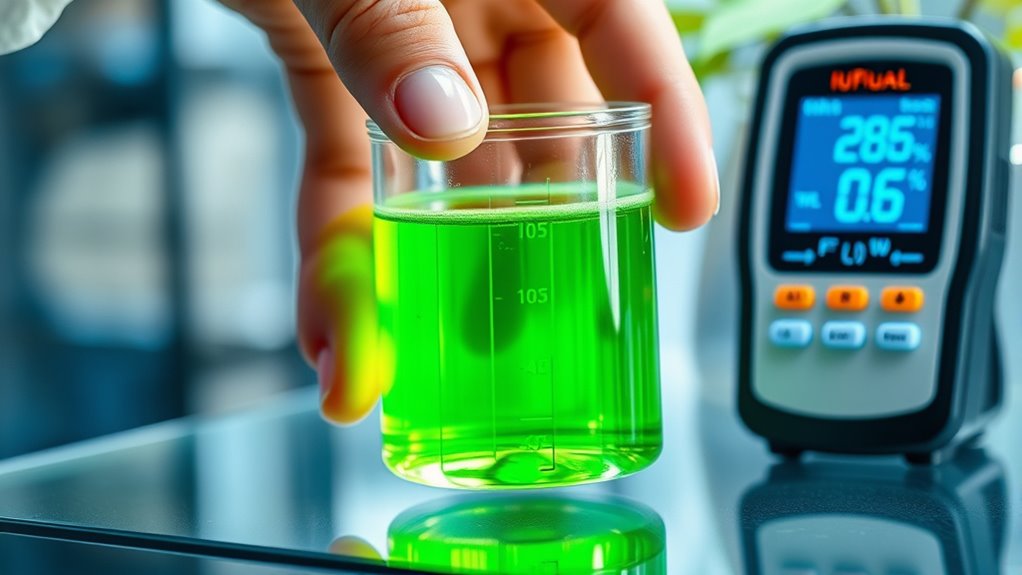
Understanding your soil’s EC also helps safeguard root zone health. Healthy roots thrive in a balanced environment where salts and nutrients are in harmony. Too high or too low EC levels can disrupt this balance, leading to root stress or disease susceptibility. Regular testing and adjusting based on EC readings give you a way to prevent these problems before they escalate. This proactive approach enhances root development, which is fundamental for overall plant vitality and productivity. Incorporating AI-powered analysis can further refine your management strategies by providing precise recommendations based on your EC data. In practice, you should measure EC at different growth stages and under various conditions—before planting, during peak growth, and at harvest—to get a comprehensive understanding of how your soil responds. This data will guide you in customizing your fertilization practices, watering routines, and soil amendments. Ultimately, understanding and managing your soil’s EC readings empower you to optimize nutrient availability, promote robust root zone health, and achieve healthier, more productive plants.

Digital Soil EC Meter 2-in-1 Porfessional Plants EC Temperature Tester Meter with Corded Sensor, Backlight LCD Display, Temperature Compensation, Easy Calibration for Soil Plants Lawn Nutrient Test
【Professional EC Temperature Soil Meter】EC is the conductivity value in soil and is an important indicator of salt…
As an affiliate, we earn on qualifying purchases.
As an affiliate, we earn on qualifying purchases.
Frequently Asked Questions
How Often Should I Check My EC Readings for Optimal Growth?
You should check your EC readings daily, especially during the vegetative stage, to maintain an ideal watering schedule. Regular monitoring helps you catch nutrient lockout early and adjust nutrient levels accordingly. If your EC is too high, it could mean overfeeding, risking lockout; too low, and your plants might not get enough nutrients. Consistent checks ensure your plants stay healthy and grow strong without issues.
What Are the Signs of Over-Fertilization Based on EC Levels?
Over-fertilization often shows through nutrient imbalance and salt buildup, which can harm your plants. You’ll notice slowed growth, leaf burn, or yellowing edges as signs of excess nutrients. High EC levels indicate salt accumulation, stressing your plants and causing root damage. Keep a close eye on your readings; if levels spike unexpectedly, reduce feeding immediately to prevent further damage and restore healthy nutrient balance.
How Do EC Readings Differ Between Soil and Hydroponic Systems?
You’ll notice EC readings differ between soil and hydroponic systems because of soil composition and how nutrients become available. In soil, EC levels tend to be lower since nutrients are released slowly, affecting nutrient availability. Hydroponic systems typically show higher EC readings, as nutrients are directly supplied in water. Understanding these differences helps you adjust your feeding practices, ensuring ideal growth based on your system’s specific nutrient dynamics.
Can EC Readings Predict Plant Stress Before Visible Symptoms Appear?
Like a whisper before a storm, EC readings can hint at plant stress before visible signs appear. You might notice fluctuations indicating nutrient imbalance or declining root health. By monitoring EC levels closely, you catch early warnings, allowing you to adjust nutrient solutions proactively. This foresight helps prevent stress, ensuring your plants stay healthy and vibrant, long before symptoms surface. Trust your readings—they’re your plants’ early alert system.
What Factors Can Cause Fluctuations in EC Readings Over Time?
Fluctuations in EC readings over time can be caused by several factors. You might notice changes due to nutrient imbalance, where uneven nutrient levels affect EC. Water quality also plays a role; contaminants or mineral content can alter EC measurements. Additionally, factors like watering frequency, plant uptake, and evaporation rates influence EC levels. Monitoring these aspects helps you interpret EC readings accurately and adjust your nutrient management accordingly.
Digital Soil EC Meter 2-in-1 Porfessional Plants EC Temperature Tester Meter with Corded Sensor, Backlight LCD Display, Temperature Compensation, Easy Calibration for Soil Plants Lawn Nutrient Test
【Professional EC Temperature Soil Meter】EC is the conductivity value in soil and is an important indicator of salt…
As an affiliate, we earn on qualifying purchases.
As an affiliate, we earn on qualifying purchases.
Conclusion
By mastering your EC readings, you hold the secret weapon to explosive growth—like turning a small spark into a blazing wildfire! When you fine-tune your nutrients, your plants won’t just grow; they’ll skyrocket beyond your wildest dreams. Don’t underestimate the power of those tiny numbers—they’re your ticket to unstoppable success. Get your EC readings right, and watch your garden transform into a lush, thriving paradise that leaves everyone in awe!

EZTOCH Hydroponic pH EC Meter, Water pH TDS PPM Meter with Simultaneous Display for Reservoir Nutrient Solution, pH EC Meter for Water Hydroponic DWC System Setup, Measure Conductivity for Aquaponics
Simultaneously display pH EC Temp or pH ppm Temp: This pH tester can display the measured values of…
As an affiliate, we earn on qualifying purchases.
As an affiliate, we earn on qualifying purchases.

Digital pH Tester for Water, pH Meter for Hydroponic Water, TDS Tester EC PPM Test for Plant Nutrients, 4-in-1 Meter for Conductivity, pH Pen for Drinking Water, DWC, Indoor Plants
Multi-functional 4-in-1 pH Tester: Our GIDIGI digital pH testers are versatile and can measure not only pH values…
As an affiliate, we earn on qualifying purchases.
As an affiliate, we earn on qualifying purchases.