Your seedlings might look healthy at first, but hidden problems like poor soil drainage or improper lighting can secretly weaken them over time. Too much water around roots causes suffocation and rot, while insufficient light makes seedlings weak and spindly. These issues often go unnoticed until the plants suddenly decline. If you keep exploring, you’ll discover how to spot and fix these problems early to keep your seedlings strong.

Get garden gear delivered free with Prime
- Fast, free delivery on millions of items
- Prime Video, Amazon Music and more included
- Member-only deals all year
Key Takeaways
- Seedlings may appear healthy initially but underlying issues like poor drainage or inadequate light can cause sudden decline later.
- Waterlogged soil deprives roots of oxygen, leading to root rot that develops silently before plant collapse.
- Insufficient or excessive light can weaken seedlings over time, making them vulnerable to disease and sudden failure.
- Surface appearance can be misleading; underlying problems often cause abrupt deterioration despite initial health.
- Regular monitoring of soil moisture and light levels helps detect issues early before seedlings suddenly die.
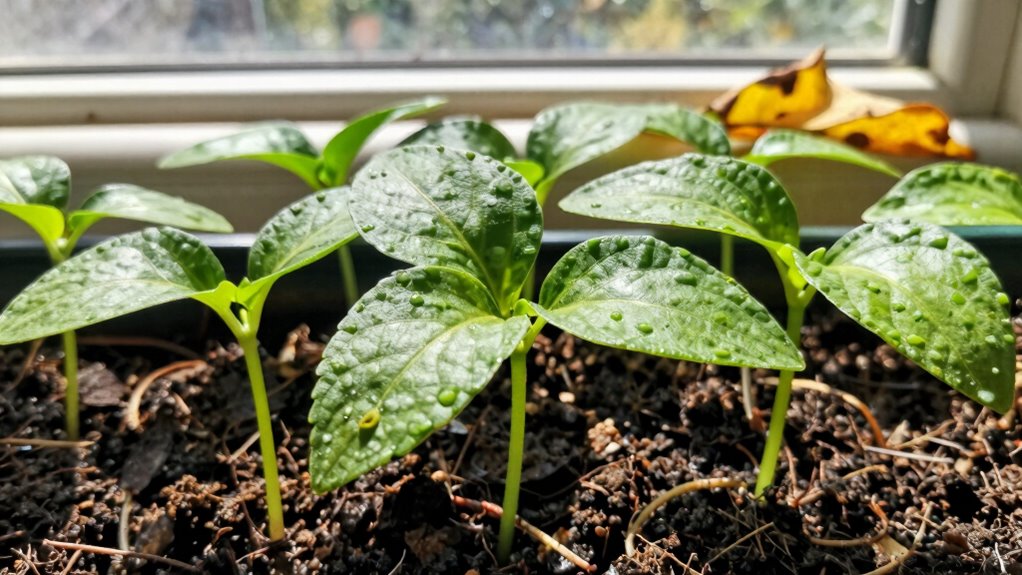
You might think your seedlings are thriving because they look healthy and strong in the beginning, but suddenly, they start to decline without warning. One of the main reasons for this sudden change is often tied to issues with soil drainage. Even if your seedlings initially seem fine, poor soil drainage can cause water to pool around their roots. When water sits in the soil too long, it deprives roots of oxygen, leading to root rot and, ultimately, the plants’ decline. To prevent this, you should guarantee your soil has good drainage by mixing in organic matter like compost or perlite, which helps excess water flow away and keeps roots healthy. Ensuring proper soil drainage is crucial because it directly impacts the oxygen availability to roots and overall plant health. Additionally, monitoring moisture levels regularly can help you catch drainage problems early before they affect your plants.
Another vital factor is understanding the light requirements of your seedlings. Many young plants need a specific amount of light to grow properly. If they’re not getting enough, they may initially appear okay, but their growth will slow, and they might become weak and leggy. On the other hand, too much direct, intense sunlight can scorch tender leaves, causing stress and decline. Pay attention to the specific light needs of your plant varieties. Usually, seedlings do best with bright, indirect light or filtered sunlight. You might need to adjust their placement—moving them closer to a window with sheer curtains or providing a grow light if natural light is limited. Proper lighting encourages strong, healthy growth and helps prevent the plants from becoming fragile or susceptible to disease. Understanding and providing the right light conditions can significantly improve your seedlings’ chances of thriving long-term.
It’s easy to overlook the importance of soil drainage and light requirements at first because seedlings often seem resilient. However, these factors are essential for their long-term health. When the soil retains too much moisture, roots can suffocate and rot, which isn’t always immediately obvious until the plant suddenly wilts or dies. Similarly, improper lighting can leave seedlings weak and spindly, making them more vulnerable to pests and diseases. Checking your soil’s drainage capacity and making sure your seedlings receive the right amount of light can save you from a frustrating cycle of planting and losing plants. Your goal should be to create an environment where roots breathe easily and plants get the energy they need from light. By paying close attention to these aspects, you’ll give your seedlings the best chance to grow into healthy, vigorous plants that won’t suddenly give up on you.
Products Worth Considering

VEVOR Walk-In Tunnel Greenhouse with Watering System, 15 x 7 x 7 ft

Blackstone 22-Inch Tabletop Griddle with Stainless Steel Faceplate

Solo Stove Pi Prime Portable Propane Pizza Oven
As an affiliate, we earn on qualifying purchases.
Frequently Asked Questions
How Often Should I Water My Seedlings?
You should water your seedlings daily, checking the soil for moisture before watering again. Stick to a consistent seedling watering schedule, aiming to keep the top inch of soil moist but not waterlogged. Use ideal watering techniques like watering gently to avoid disturbing roots and ensuring good drainage. Adjust frequency based on weather conditions and soil type, and always avoid overwatering, which can cause root rot and other issues.
What Are Common Pests That Affect Seedlings?
Common pests that affect seedlings include aphids, cutworms, and fungus gnats. To identify these pests, pest identification is essential—you’ll notice tiny insects or chewed leaves. Use natural remedies like neem oil or insecticidal soap to protect your seedlings without chemicals. Regular inspection helps catch infestations early, ensuring your plants stay healthy. Keep an eye out for these pests, and act quickly with natural remedies to maintain thriving seedlings.
When Is the Best Time to Transplant Seedlings?
You should transplant seedlings when they’ve developed strong, healthy roots and their stems are sturdy, usually after they’ve gone through seedling hardening. The best transplant timing is typically when the weather is mild, often a week or two after the last frost. Harden off your seedlings gradually, exposing them to outdoor conditions. This guarantees they adjust well and reduces transplant shock, giving them a better chance to thrive in their new environment.
How Can I Prevent Damping-Off Disease?
In the midst of your garden’s Renaissance, you can prevent damping-off disease by maintaining sterile conditions and practicing fungus prevention. Always sterilize your tools and seed-starting trays, and use fresh, sterile seed-starting mix. Guarantee proper drainage and avoid overwatering, as damp, stagnant soil fosters fungi. Good air circulation and avoiding overcrowding also help. These precautions protect your seedlings, so they grow strong and healthy, just like a well-guarded castle.
What Soil Mix Promotes Healthy Seedling Growth?
Choose a well-draining soil mix with balanced nutrients for healthy seedlings. Use a mix with sterilized compost, peat moss, and perlite, ensuring it’s slightly acidic to neutral pH (6.0-7.0). Avoid nutrient deficiencies by adding a gentle, balanced fertilizer. Regularly check soil pH and adjust as needed, as imbalance can stunt growth. This combination promotes strong, resilient seedlings, reducing risks like damping-off disease.
Conclusion
Remember, even the healthiest-looking seedlings can face unseen struggles beneath the surface. By paying close attention and nurturing them gently, you give them the best chance to flourish. Sometimes, a small change can make all the difference, helping your plants to thrive quietly and beautifully. Trust in your care, and know that with patience and love, your garden can blossom into something truly remarkable, even when the journey feels uncertain.