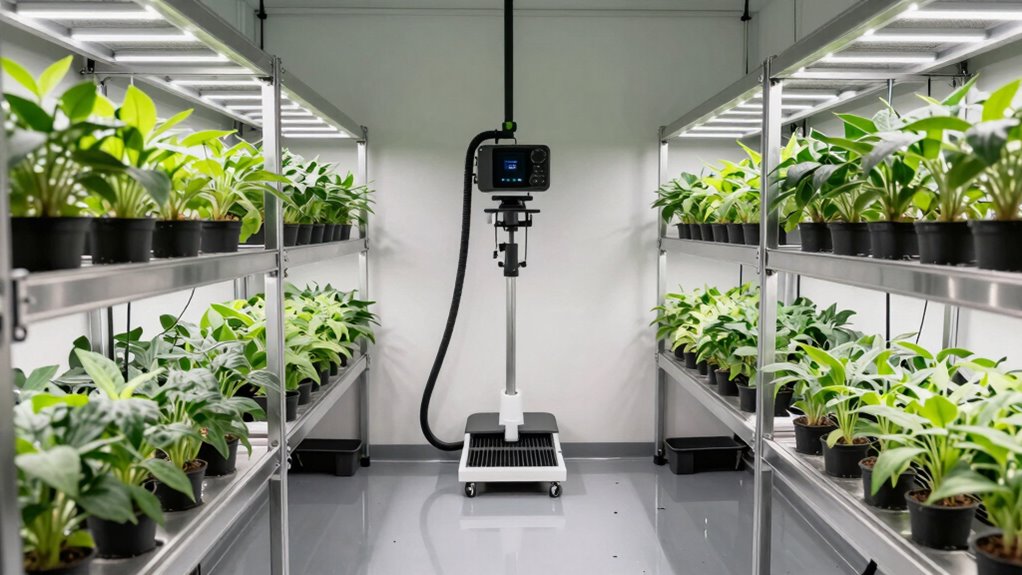

Implementing a daily grow room cleanup routine helps prevent small messes from becoming bigger problems. You should conduct quick walk-throughs to spot debris, remove fallen leaves, and clean spills immediately. Organize tools and sanitize equipment regularly to keep pests away and guarantee good air quality. Wiping surfaces, sweeping floors, and inspecting plants daily keep the environment healthy and tidy. Stay consistent, and you’ll create a more efficient, pest-free grow space—discover more tips to streamline your process.

Get garden gear delivered free with Prime
- Fast, free delivery on millions of items
- Prime Video, Amazon Music and more included
- Member-only deals all year
Key Takeaways
- Conduct daily walk-throughs to promptly identify and remove debris and fallen leaves.
- Use trays and catch basins to contain nutrient runoff and spills immediately.
- Implement end-of-day cleaning routines, including sweeping and surface wiping, to prevent dust and mess buildup.
- Regularly sanitize tools and equipment to maintain hygiene and prevent pest habitats.
- Maintain proper air circulation and environment sanitation to reduce pest attraction and environmental clutter.
Maintaining a clean grow room is vital for healthy plants and ideal yields, but without a systematic approach, it can quickly become overwhelming. Small messes—fallen leaves, spilled nutrients, or discarded plant debris—can accumulate rapidly and disrupt your growing environment. To prevent this, you need a structured cleanup system that keeps your space tidy, promotes ideal plant nutrition, and simplifies pest management. The key is establishing daily routines that address these issues before they spiral out of control.
Start every day with a quick walk-through. Check for any fallen leaves or debris and remove them immediately. This prevents the buildup of organic matter that could harbor pests or mold. Keep your tools, like trimming scissors, nutrient bottles, and watering cans, clean and organized. Dirty tools can transfer pests or diseases from one plant to another, so sanitizing them regularly is essential. Use disinfectants or alcohol wipes after each use, and designate specific storage spaces for your equipment to streamline your workflow. Additionally, implementing smart appliance solutions such as automatic air purifiers can help maintain optimal air quality and reduce airborne contaminants. Regularly monitoring environmental conditions like humidity and temperature also supports a balanced grow environment. Regular inspections and adjustments are crucial for catching issues early before they escalate. Incorporating routine checks into your daily schedule further enhances your ability to address problems promptly.
Start each day by removing debris and sanitizing tools to maintain a clean, pest-free grow environment.
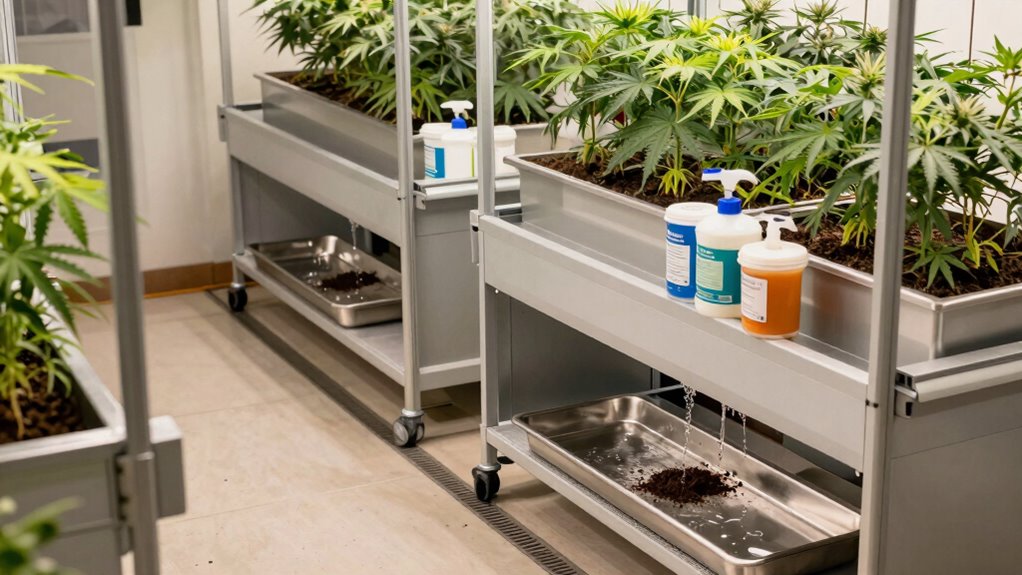
Controlling plant nutrition is closely linked to maintaining a tidy grow room. Overfeeding or spilling nutrients can lead to messy residue on floors and surfaces, attracting pests and creating a breeding ground for mold. To prevent this, measure nutrients carefully and clean up any spills immediately. Use trays or catch basins under containers to contain excess runoff. Regularly check your plants for signs of nutrient deficiencies or excesses, which can also be caused by improper handling or spills. When you keep nutrients contained and monitor plant health, you reduce the chances of messy accidents that could compromise your crop. Proper nutrient management is essential for maintaining a clean and healthy environment. Incorporating spill prevention techniques, such as careful pouring and container handling, can further minimize messes and improve overall cleanliness.
Pest management is another critical aspect of your cleanup system. Keeping the environment clean discourages pests from establishing themselves. Remove dead leaves, fallen plant parts, and debris promptly, as these are prime hiding spots for insects and fungi. Implement a routine of inspecting plants for pests, and take swift action when you notice any signs. Using sticky traps and natural pest deterrents can also help keep infestations at bay. When your grow room stays clean, pests find fewer places to hide, making your pest control efforts more effective. Incorporating preventative measures like proper sanitation and environmental controls can further reduce the likelihood of infestations. Regularly rotating your pest deterrent methods can help prevent pests from developing resistance. Additionally, maintaining proper air circulation can significantly reduce the chances of pest establishment.
Finally, set aside time at the end of each day for a thorough cleaning session. Sweep the floors, wipe down surfaces, and check your equipment. This systematic approach ensures that messes don’t accumulate over time and that your grow room remains a healthy, pest-free environment. Consistent maintenance not only keeps the space functional but also supports ongoing plant health. By integrating these practices into your daily routine, you create a streamlined cleanup system that supports vibrant plant nutrition, effective pest management, and ultimately, a more successful grow operation.
Products Worth Considering

Garvee 6×10 ft Polycarbonate Greenhouse with Aluminum Frame, Lockable Door and Adjustable Roof Vent

Orbit B-hyve XR 8-Zone Indoor/Outdoor Smart Sprinkler Controller

Solo Stove Ranger 2.0 15-Inch Smokeless Fire Pit with Stand
As an affiliate, we earn on qualifying purchases.
Frequently Asked Questions
How Often Should I Perform Deep Cleanings in the Grow Room?
You should perform deep cleanings in your grow room every 4 to 6 weeks. Maintaining a consistent cleaning frequency guarantees your environment stays healthy and free from pests or mold. Incorporate your deep cleaning into your maintenance schedule, dedicating time to scrub surfaces, sanitize equipment, and check airflow. Regular deep cleanings help prevent small messes from becoming bigger problems, keeping your grow room optimized for healthy plant growth.
Can the Cleanup System Be Customized for Different Grow Room Sizes?
Yes, you can customize the cleanup system for different grow room sizes by adjusting it to fit your specific grow room layout. This flexibility helps you maintain ideal cleanliness without overdoing it. By tailoring the system, you can set the right cleanup frequency for your space, ensuring messes stay manageable and your grow environment stays healthy. Customization makes it easier to keep your grow room tidy and efficient.
What Materials Are Used in the Cleanup System?
You’ll find that the cleanup system uses durable cleaning supplies like antimicrobial wipes, spray bottles, and microfiber cloths to keep your grow room spotless. It also includes smart storage solutions, such as wall-mounted bins and labeled containers, making it easy to access and organize supplies. These materials and storage options work together to streamline cleaning, prevent messes, and maintain a hygienic environment, so your grow room stays efficient and clean.
Does the System Require Special Training to Use Effectively?
You don’t need extensive training to use this cleanup system effectively, as it’s designed to be user-friendly. Its simplicity minimizes the system complexity, so you can quickly learn how to operate it without special training requirements. Just follow the basic instructions provided, and you’ll be able to maintain a clean grow room efficiently. This ease of use helps prevent constant small messes without the need for complicated procedures.
How Does the System Handle Organic vs. Synthetic Residue?
Handling organic versus synthetic residue is like sorting through a toolbox—you need the right tools. The system effectively tackles soil residue and chemical buildup by using adaptable cleaning agents designed for both organic and synthetic materials. It quickly breaks down organic matter without damaging surfaces, while also removing stubborn chemical deposits. This guarantees your grow room stays clean, healthy, and optimized, regardless of residue type.
Conclusion
By implementing this grow room cleanup system, you’ll keep your space tidy and efficient, reducing stress and preventing small messes from piling up. It’s a simple yet effective way to stay on top of your cultivation environment. With consistent effort, you’ll find maintenance becomes less of a chore and more of a routine. Isn’t it worth asking yourself if a cleaner, more organized grow room could lead to better yields and peace of mind every day?