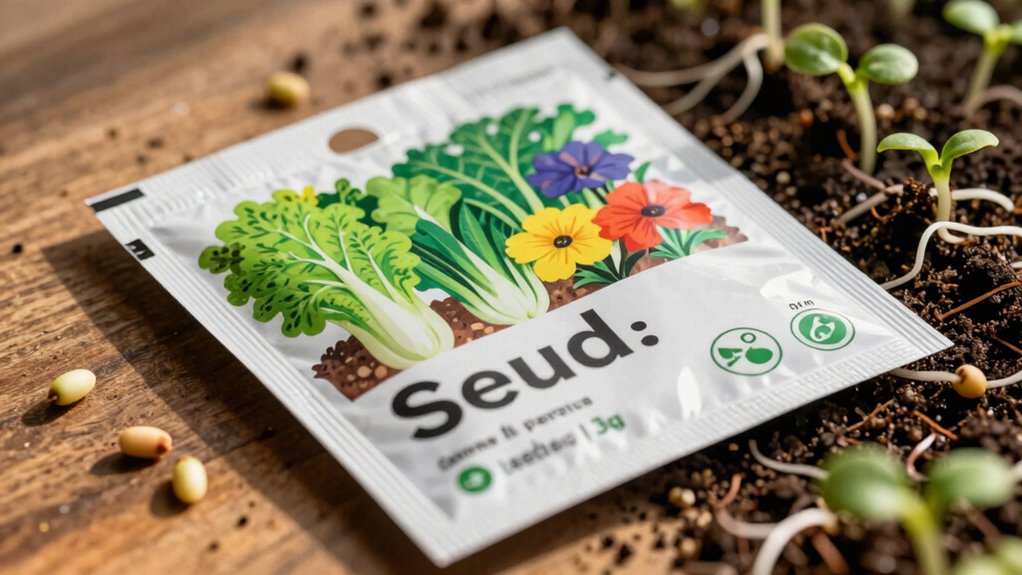

Understanding seed packet terms helps you succeed with your indoor garden. Look for the viability percentage to know how likely seeds are to sprout; higher is better. Check the recommended temperature and storage instructions to keep seeds healthy longer. Remember, seed age and expiration matter—fresher seeds usually germinate better. The more you know about these terms, the easier it is to create the right conditions for strong, thriving plants. Keep going to uncover more useful tips.
Key Takeaways
- Viability percentage indicates the likelihood of seeds successfully sprouting; aim for 80% or higher for better results.
- Proper storage in cool, dry, dark conditions prolongs seed lifespan and maintains high viability.
- Germination temperature details guide optimal conditions to ensure healthy sprouting indoors.
- Seed age affects success; fresher seeds with valid expiration dates have higher germination chances.
- Seed packet information, like viability and temperature needs, helps plan and optimize indoor gardening efforts.

When you’re starting an indoor garden, understanding seed packet terms can make all the difference. Seeds come with a lot of information, but some of it can seem confusing at first glance. One key concept is seed viability. This tells you how likely the seed is to grow into a healthy plant. Look for the seed viability percentage on the packet. A higher percentage means you’ll have a better chance of success, so choosing seeds with a viability rate of 80% or above is usually a good idea. If the viability is low, your seeds might not sprout, wasting time and resources. Knowing this helps you plan better, especially when space or seed quantity is limited. Additionally, understanding the importance of seed storage conditions can help you maximize seed lifespan and viability. Proper storage conditions, such as cool, dry, and dark environments, are crucial in maintaining seed quality over time. Another important term is germination temperature. Seeds need specific conditions to sprout, and temperature plays an essential role in this process. The seed packet will often specify the ideal germination temperature range. For example, some seeds prefer warmer conditions, around 70-85°F, while others might sprout best at cooler temperatures. Maintaining the right temperature guarantees your seeds don’t struggle to break dormancy or fail to sprout altogether. If you’re growing indoors, you can control the temperature more easily than outdoors, but it’s still critical to follow these guidelines. Ignoring germination temperature can lead to poor sprouting rates, even with high seed viability. Additionally, understanding the seed’s lifespan can help prevent the disappointment of poor germination rates due to aging seeds. Seeds stored properly can remain viable for several years, but over time, viability decreases. If you’re using older seeds, check the expiration date or the viability percentage. Using fresh seeds increases your chances of successful germination. Proper storage—cool, dry, and dark—extends seed viability, so keep your seeds in those conditions until you’re ready to plant.

Burpee SuperSeed Seed Starting Tray | 36 Cell Reusable Seed Starter Tray | for Starting Vegetable, Flower & Herb Seeds | Indoor Grow Kit for Plant Seedlings | for Germination Success
EASIER SEED STARTING: Our Burpee SuperSeed tray with 36 flexible pop-out cells is designed to simplify indoor seed…
As an affiliate, we earn on qualifying purchases.
As an affiliate, we earn on qualifying purchases.
Frequently Asked Questions
How Do Seed Packet Terms Vary Between Organic and Conventional Seeds?
Organic seed packet terms often emphasize sustainable practices and higher quality standards, while conventional seeds focus on broader availability. When comparing, you’ll notice differences in seed storage recommendations, which help maintain seed viability longer, and planting depth instructions, ensuring ideal germination. Always read these terms carefully, regardless of seed type, to give your indoor garden the best start. Proper seed storage and planting depth are key to successful indoor gardening.
Are Seed Packet Terms Standardized Across Different Seed Companies?
Seed packet terms aren’t standardized across different seed companies, making it feel like deciphering a secret code. You need to pay close attention to details like seed storage instructions and seed treatment labels, which vary widely. These terms guide how you handle and plant your seeds. Always read each packet carefully, as inconsistent terminology can lead to confusion, but understanding these clues helps guarantee your indoor garden’s success.
What Do Terms Like “Heirloom” and “Hybrid” Mean for Indoor Gardening?
Heirloom seeds are open-pollinated, non-GMO varieties passed down through generations, ideal for preserving genetic diversity. Hybrids result from crossing different varieties, offering traits like higher yields or disease resistance. For indoor gardening, use seed storage tips like airtight containers and cool, dark places to keep seeds viable. When seed planting techniques, guarantee proper depth and spacing, especially with heirlooms or hybrids, to optimize germination and plant health.
How Can I Identify the Best Seed Packet Terms for My Specific Indoor Environment?
You’ll want seed packets that clearly specify their soil moisture and light needs to match your indoor space. Ironically, the best terms often hide in fine print, so read carefully. Look for phrases like “shade-tolerant” or “low moisture,” which guide you to plants thriving in your environment. Trust those labels, and you’ll avoid the disappointment of sprouting something that just doesn’t get enough light or water.
Do Seed Packet Labels Indicate the Seed’s Germination Rate or Longevity?
Seed packet labels often list the germination rate, showing how likely seeds are to sprout successfully, and sometimes include longevity info. To guarantee good results, follow seed storage tips like keeping seeds cool and dry, which helps maintain viability. Consult seed starting guides for ideal timing and conditions, giving your seeds the best chance to grow indoors. Always check the packet for specific details about germination and shelf life.

JLGJ-45 Test Hulling Machine Rough Rice Husker for Grain Inspection, 220V/100W, 5599rpm, 40x45mm Roller, 99%+ Shelling Rate, for Rice Quality & Seed Viability Testing
High Shelling Rate >99% – Performance: One-pass shelling rate exceeds 99% – ensures efficient and complete hull removal…
As an affiliate, we earn on qualifying purchases.
As an affiliate, we earn on qualifying purchases.
Conclusion
Understanding seed packet terms helps you grow with confidence, turning confusing labels into clear instructions. Now that you know what those words really mean, you’re ready to select the right seeds and nurture your indoor garden successfully. Isn’t it rewarding to see your efforts bloom into vibrant, healthy plants? With this knowledge, you’ll make smarter choices and enjoy a thriving indoor garden. So, why wait? Start planting smarter today and watch your indoor oasis flourish!

BN-LINK Reptile Thermostat Temperature Controller, Digital Heat Mat Thermostat for Seed Starting, Plant Germination, Greenhouse, Incubator, Brooder, Brewing, Reptiles Tank,40-108°F, 1000W, ETL Listed
✓ EFFORTLESS SET UP: Easily program your desired temperature or switch between Fahrenheit and Celsius using just 3…
As an affiliate, we earn on qualifying purchases.
As an affiliate, we earn on qualifying purchases.

Hoemwarm Seed Storage Organizer Box, 57 Slots Seed Collection Containers Seed Storage Box with Label Tweezer Funnel,Gardening Seed Keeper Set for Flower Plants Garden(2 Size)
Great Seed Storge: 42 small seed bottles and 15 large seed bottles for storing seed bottles, 1 sheet…
As an affiliate, we earn on qualifying purchases.
As an affiliate, we earn on qualifying purchases.