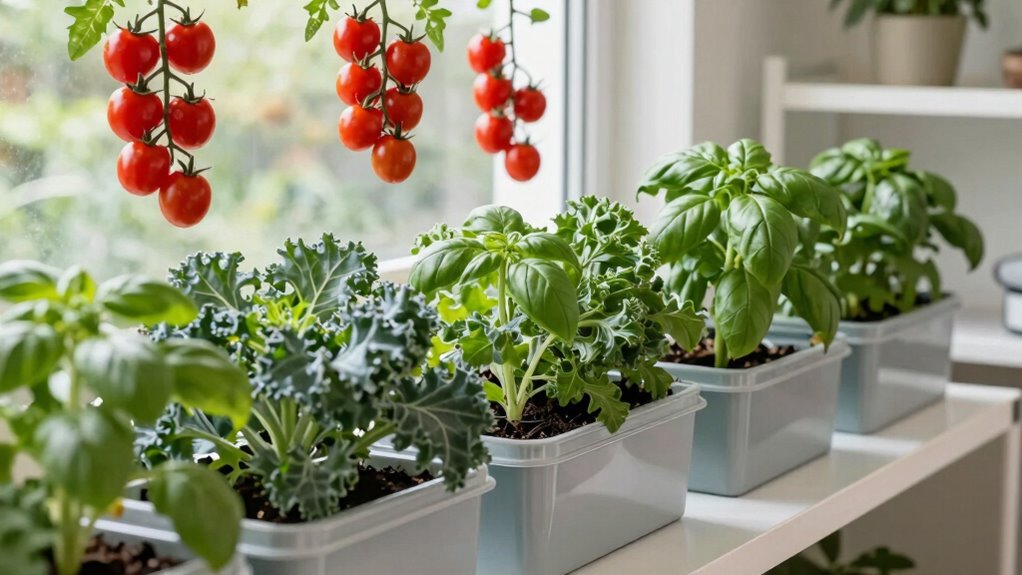

If you want easy-to-grow crops for small indoor systems, choose plants that thrive under artificial light and grow quickly. Leafy greens like lettuce, spinach, and kale are great options because they need minimal space and are low-maintenance. Herbs such as basil, mint, and chives also do well indoors and add flavor to dishes. These crops respond well to consistent lighting and simple care, and if you keep going, you’ll discover how to maximize your indoor garden success.

Get garden gear delivered free with Prime
- Fast, free delivery on millions of items
- Prime Video, Amazon Music and more included
- Member-only deals all year
Key Takeaways
- Choose fast-growing, small, and manageable crops like herbs, lettuce, and microgreens for quick, easy harvests.
- Select plants that thrive under full-spectrum grow lights with 12-16 hours of daily light exposure.
- Prioritize low-maintenance crops that tolerate indoor conditions with minimal care and monitoring.
- Use proper light positioning (12-24 inches above plants) to promote healthy, strong growth.
- Regularly monitor and adjust lighting to prevent stress and ensure consistent nutrient absorption.

Are you looking to start gardening indoors but unsure which crops are easiest to grow? If so, you’re in the right place. Choosing the right plants can make your indoor gardening experience both rewarding and manageable. To succeed, you’ll need to focus on lighting optimization, pest management, and selecting crops that thrive in small spaces. These factors are key to guaranteeing your indoor garden flourishes without overwhelming you with maintenance.
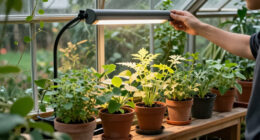
Lighting optimization is critical because indoor spaces often lack natural sunlight. You’ll want to invest in grow lights that provide the full spectrum of light plants need to photosynthesize effectively. Position your lights properly—usually about 12 to 24 inches above the plants—and keep them on for around 12 to 16 hours daily. This ensures your crops get consistent, adequate lighting, encouraging healthy growth. Proper lighting minimizes the risk of leggy or weak plants and helps to prevent pests, which often attack stressed or weak plants. Additionally, understanding light spectrum requirements can help you choose the best grow lights for your indoor setup. Ensuring your plants receive the correct light spectrum helps optimize photosynthesis and promotes vigorous growth.
full spectrum LED grow lights for indoor plants
As an affiliate, we earn on qualifying purchases.
As an affiliate, we earn on qualifying purchases.
Frequently Asked Questions
How Do I Manage Pests Indoors Effectively?
To manage pests indoors effectively, start with pest prevention strategies like keeping your space clean, removing plant debris, and inspecting plants regularly. Use natural pest control methods such as introducing beneficial insects or applying organic neem oil. Guarantee proper airflow and avoid overwatering to prevent pest infestations. By staying vigilant and maintaining a healthy environment, you can keep pests at bay and protect your indoor crops effortlessly.
What Lighting Requirements Are Best for Small Indoor Farms?
For small indoor farms, LED lighting with adjustable light intensity works best. You want to provide enough light to promote healthy growth without wasting energy. Aim for around 12-16 hours of light daily, adjusting the intensity based on your crop’s needs. LEDs are energy-efficient and emit minimal heat, making them ideal for small spaces. Consistently monitor your plants and tweak the lighting to optimize growth and yields.
How Often Should I Water Indoor Crops?
You should water your indoor crops when their soil nutrients start to dwindle—usually every 2-3 days, but it varies. Irony strikes, as you might think more watering keeps plants happy, but overdoing it drowns roots and hampers soil nutrients. Keep a consistent watering schedule, checking soil moisture regularly, so your plants stay happy and healthy without drowning in excess water.
Can I Grow These Crops Year-Round Indoors?
Yes, you can grow these crops year-round indoors with proper indoor climate control. Seasonal crop variations won’t affect your harvest if you maintain consistent temperature, humidity, and lighting. By adjusting your indoor environment, you create ideal conditions for growth regardless of outside seasons. This allows you to enjoy fresh produce all year, avoiding seasonal limitations and ensuring a steady supply of your favorite crops indoors.
What Are the Initial Setup Costs for Indoor Gardening?
You’ll likely spend between $100 and $500 on your indoor gardening setup. Initial costs include soil preparation, choosing quality soil and amendments, and investing in grow lights. Nutrient management is essential, so consider fertilizers or organic supplements. A good setup guarantees healthy plants from the start, reducing long-term expenses. Expect to adjust your costs based on the size of your system and the crops you want to grow.
As an affiliate, we earn on qualifying purchases.
Conclusion
In your indoor garden, these crops are like loyal friends, easy to nurture and dependable in harvest. They’re the steady heartbeat of your green sanctuary, turning small spaces into lush, productive oases. With patience and care, you’ll watch your indoor farm flourish like a well-tuned symphony, each crop playing its part in a harmonious melody of abundance. Trust these simple choices—they’ll transform your indoor space into a vibrant, edible paradise, bursting with life and flavor.
small indoor vegetable grow light
As an affiliate, we earn on qualifying purchases.
As an affiliate, we earn on qualifying purchases.
As an affiliate, we earn on qualifying purchases.
Fall Picks
fall essentials
As an affiliate, we earn on qualifying purchases.