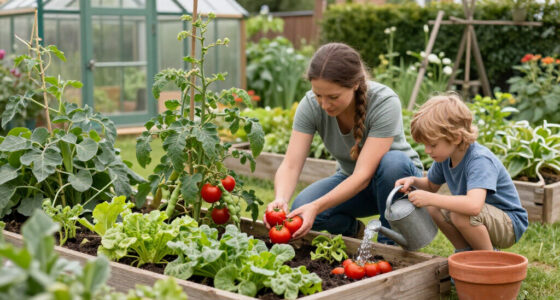
To choose seeds for repeat harvests, focus on selecting healthy seeds from well-adapted, resilient plants that thrive in your climate. Prioritize heirloom or open-pollinated varieties, which offer better genetic diversity, increasing your chances of consistent yields. Save seeds from the best-performing plants to build a strong, adaptable seed stock over time. Proper preservation and seed testing also boost viability. Keep exploring, and you’ll discover more tips for ensuring reliable, ongoing harvests.

Get garden gear delivered free — and shop member deals
- Fast, free delivery on millions of items
- Access to Prime Big Deal Days deals on October 6–7
- Prime Video, Amazon Music and more included
Key Takeaways
- Select seeds from healthy, high-yielding plants that consistently produce desirable crops.
- Focus on heirloom or open-pollinated varieties for reliable seed saving and genetic stability.
- Prioritize seeds that are well-adapted to your local climate and soil conditions.
- Choose seeds from plants with strong traits like disease resistance and pest tolerance.
- Practice proper seed saving techniques to preserve quality and promote repeatable harvests.

Have you ever wondered how to guarantee your garden produces bountiful harvests year after year? The key lies in selecting the right seeds and understanding how to maintain their vitality. When choosing seeds for repeat harvests instead of just a one-time yield, you need to focus on seed preservation and genetic diversity. Seed preservation isn’t just about storing seeds properly; it’s about selecting seeds that maintain their vitality over seasons, ensuring they grow strong and produce reliable crops year after year. Proper seed preservation techniques—like drying, cleaning, and storing seeds in cool, dark places—help you keep your seeds viable. But more than that, you want seeds from plants that have adapted well to your environment, which leads to healthier plants and better yields over time. Embracing biodiversity in your seed selection further enhances your garden’s resilience and productivity.
Genetic diversity plays a crucial role here. When you select seeds from a variety of plants, you promote a broader gene pool, which enhances resilience. This diversity makes your plants more capable of resisting pests, diseases, and environmental stresses, reducing the need for chemical interventions. If your goal is sustainable gardening, you should seek seeds from heirloom or open-pollinated varieties, as they tend to have richer genetic diversity compared to commercial hybrid seeds. These seeds are more adaptable and can be saved from season to season, giving you a stronger foundation for future harvests. Additionally, understanding how to select seed sources that are genetically diverse and well-adapted to your climate is essential for long-term success. Developing seed saving techniques can also help you preserve the genetic traits that perform best in your specific growing conditions. To further improve your seed selection process, consider learning about seed testing to determine seed quality and viability before planting.
Choosing seeds with genetic diversity also allows you to experiment with different plants and cultivars, tailoring your garden’s output to your preferences and local conditions. You’ll notice that plants with diverse genetics often produce more consistent yields over time because they’re better equipped to handle variable weather patterns and pest pressures. When you save seeds from the best-performing plants, you’re essentially selecting for traits that contribute to repeatable success. This process, called seed saving, ensures that you’re continually building on a strong genetic foundation, making your garden more self-sufficient and resilient.
heirloom vegetable seeds for sustainable gardening
As an affiliate, we earn on qualifying purchases.
As an affiliate, we earn on qualifying purchases.
Frequently Asked Questions
How Do I Store Seeds to Ensure Viability for Future Planting?
To guarantee seed viability, start by thoroughly cleaning your seeds to remove debris and mold. Once cleaned, store them in airtight storage containers, such as glass jars or plastic bins, to protect against moisture and pests. Keep the containers in a cool, dark, and dry place like a basement or cupboard. Proper seed cleaning and using the right storage containers help preserve seed quality for future planting seasons.
Are There Specific Seed Varieties Better for Multiple Harvests?
You should focus on seed preservation and variety selection to guarantee multiple harvests. Opt for seed varieties known for their resilience and ability to produce repeatedly, such as certain heirlooms or open-pollinated types. These varieties tend to adapt well over seasons, allowing you to save seeds and plant again. Prioritize seeds from healthy, vigorous plants, and store them properly to maintain viability for future plantings.
How Does Climate Affect Seed Selection for Repeat Harvesting?
Climate substantially influences your seed selection for repeat harvesting. You need seeds with strong climate adaptation and resilience to local weather patterns, ensuring they can withstand droughts, floods, or temperature fluctuations. Opt for varieties proven to perform well in your specific environment, as resilient seeds maintain productivity over multiple harvests. This approach helps you secure consistent yields, even as climate conditions become more unpredictable, making your garden or farm more sustainable.
Can Hybrid Seeds Be Used for Consistent Multiple Harvests?
Think of hybrid seeds as a fleeting romance—they may promise great yields but often lack consistency for multiple harvests. While they produce high-quality initial crops, hybrid seed limitations mean you can’t reliably save seeds for future seasons. To guarantee repeat harvests, you should focus on seed saving techniques, selecting open-pollinated or heirloom varieties that naturally adapt, giving you the stability and predictability you need for ongoing success.
What Are the Common Mistakes to Avoid When Saving Seeds?
You should avoid seed contamination by selecting healthy, disease-free plants and keeping seeds separate from others to prevent cross-pollination. Pay attention to inheritance patterns to guarantee desired traits are passed on reliably. Don’t harvest seeds from overly ripe or damaged fruits, as this can weaken seed quality. Also, avoid saving seeds from hybrid plants, as they may not produce true-to-type plants, leading to inconsistent harvests.
seed saving kits for home gardeners
As an affiliate, we earn on qualifying purchases.
As an affiliate, we earn on qualifying purchases.
Conclusion
By selecting the right seeds, you’re setting yourself up for a steady harvest instead of chasing after a one-hit wonder. Keep in mind that patience and good choices now will pay off in the long run. Think of it like planting seeds in good soil; with care and attention, you’ll reap the rewards season after season. Stick to your plan, nurture your crops, and watch your garden flourish beyond just one harvest.
As an affiliate, we earn on qualifying purchases.
climate-adapted open-pollinated seeds
As an affiliate, we earn on qualifying purchases.
As an affiliate, we earn on qualifying purchases.
Halloween Picks
halloween
As an affiliate, we earn on qualifying purchases.