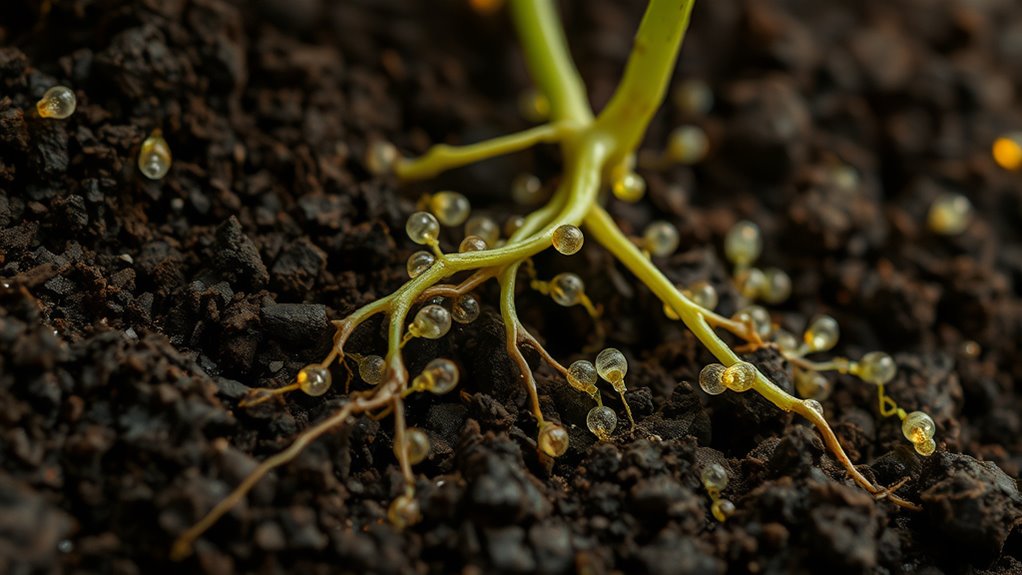

Beneficial bacteria work like magic by boosting your plant roots’ health naturally. They break down organic matter to make nutrients more available, produce growth-promoting hormones, and strengthen root systems. These friendly microbes also fight harmful pathogens and help your plants resist diseases. By supporting a thriving soil ecosystem, they improve nutrient uptake and overall plant robustness. If you explore further, you’ll discover simple ways to harness these powerful microbes for healthier, more resilient roots.
Key Takeaways
- Beneficial bacteria support root health by promoting nutrient breakdown and absorption, enhancing overall plant growth.
- They produce plant hormones like auxins that stimulate root elongation and branching.
- These bacteria help fix atmospheric nitrogen, reducing the need for chemical fertilizers.
- They suppress soil pathogens through competition and antimicrobial production, protecting roots from diseases.
- Introducing beneficial bacteria via soil inoculants fosters a resilient, microbial-rich environment for healthier roots.
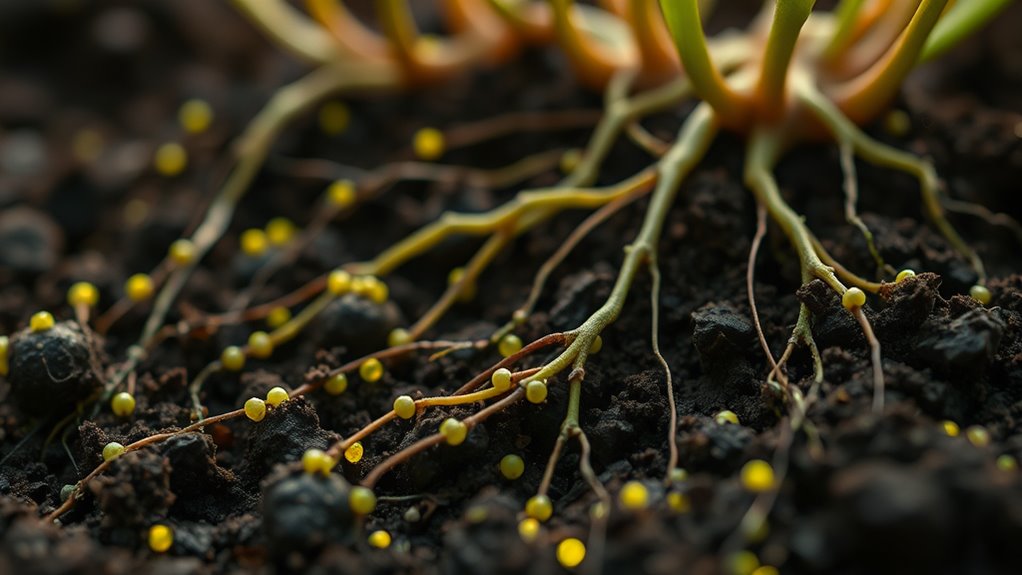
Healthy roots are essential for strong plant growth, and beneficial bacteria play a vital role in maintaining their health. These microscopic allies form a crucial part of the soil microbiome, the diverse community of microorganisms living in the soil around your plants. When the soil microbiome is balanced and thriving, it creates an environment that supports optimal plant health and development. As you nurture your plants, understanding how beneficial bacteria contribute to this ecosystem can help you achieve healthier, more resilient roots and, ultimately, better yields.
Beneficial bacteria for root health work by enhancing nutrient availability and uptake. They break down organic matter, converting complex compounds into simpler forms that plants can absorb easily. This process, known as plant growth promotion, ensures your plants receive essential nutrients like nitrogen, phosphorus, and potassium efficiently. Some bacteria even fix atmospheric nitrogen, transforming it into a form your plants can use, reducing your reliance on chemical fertilizers. By fostering a healthy soil microbiome, you create a natural nutrient cycle that supports vigorous root development and overall plant vitality. Powerful microbial activity can significantly boost your soil’s fertility and resilience.
Beneficial bacteria enhance nutrient absorption, fix nitrogen, and promote vigorous root growth naturally.
These bacteria also produce substances that stimulate root growth directly. For instance, certain strains release hormones like auxins and cytokinins, which encourage root elongation and branching. As a result, your plants develop a more extensive root system, increasing their ability to access water and nutrients from the soil. A robust root network not only boosts growth but also enhances your plant’s resilience to stressors such as drought or disease. Beneficial bacteria can even suppress harmful pathogens by competing for resources or producing antimicrobial compounds, acting as natural biocontrol agents that keep root diseases at bay.
To harness the power of beneficial bacteria, you can introduce them through soil inoculants or compost teas, ensuring your plants’ roots are immersed in a thriving microbial environment right from the start. Regularly maintaining healthy soil with organic matter, avoiding overuse of chemical pesticides, and practicing crop rotation further support the soil microbiome’s diversity. This creates a self-sustaining system where beneficial bacteria flourish, continually promoting plant growth and protecting roots.
In essence, nurturing beneficial bacteria helps you tap into nature’s own root health advocates. By enhancing the soil microbiome, you not only improve nutrient availability and root development but also establish a resilient foundation for your plants to grow stronger and healthier. The magic of beneficial bacteria lies in their ability to naturally support and enhance plant growth promotion, making them indispensable allies in your gardening or farming journey.
Frequently Asked Questions
How Long Does It Take to See Results From Beneficial Bacteria?
You might start noticing soil improvement and microbial colonization within a few weeks of applying beneficial bacteria. Typically, it takes about 2 to 4 weeks for visible changes in plant health and soil quality. Factors like soil conditions, plant type, and application method influence how quickly you see results. Consistent use and proper care support faster microbial colonization, ultimately leading to healthier roots and improved overall plant growth.
Can Beneficial Bacteria Replace Traditional Fertilizers Entirely?
This question’s like asking if a superhero can replace an entire team! While beneficial bacteria are fantastic for boosting soil health and serve as powerful organic alternatives, they can’t fully substitute traditional fertilizers yet. They work best alongside them, enhancing nutrient uptake and root growth. Relying solely on beneficial bacteria might leave plants short on essential nutrients, so combining strategies ensures your plants thrive like never before.
Are There Any Plants That Don’T Benefit From Bacterial Inoculation?
You wonder if any plants don’t benefit from bacterial inoculation. While most plants show positive responses, plant-specific compatibility can limit effectiveness. Some species, like certain cacti or succulents, have limited bacterial inoculation benefits due to their unique root environments. Recognizing bacterial inoculation limitations helps you identify when it’s worthwhile, but for many plants, especially those with healthy roots, it can markedly boost growth and resilience.
How Do Environmental Factors Affect Bacterial Effectiveness?
Did you know that soil pH and moisture levels can impact bacterial effectiveness by up to 50%? You’ll find that when soil pH is too acidic or alkaline, beneficial bacteria struggle to thrive, reducing their benefits. Similarly, if moisture levels are too low or too high, bacteria can become inactive or die off. To maximize root health, you need to monitor and optimize these environmental factors regularly.
Is It Safe to Use Beneficial Bacteria Indoors?
You can use beneficial bacteria indoors safely if you follow proper indoor safety guidelines. Make certain good bacterial monitoring to prevent overgrowth or unintended effects. Keep the area well-ventilated and follow product instructions carefully. While generally safe, it’s wise to wear gloves and avoid ingestion or inhalation. Using beneficial bacteria indoors can promote plant health without risking human safety, as long as you maintain proper precautions and monitor the environment regularly.
Conclusion
By nurturing beneficial bacteria, you can markedly boost your plant’s root health and overall vitality. Did you know that healthy roots can increase nutrient uptake by up to 50%? This means stronger, more resilient plants that thrive naturally. Incorporating probiotic solutions into your gardening routine isn’t just a trend—it’s a smart way to support your plants’ immune system and guarantee lush, vibrant growth. Embrace these tiny helpers, and watch your garden flourish like magic.