TL;DR

Get garden gear delivered free with Prime
- Fast, free delivery on millions of items
- Prime Video, Amazon Music and more included
- Member-only deals all year
Gardening Know How’s report describes eight ways gardeners can reuse household tin cans, including starting seeds, protecting seedlings from cutworms, storing tools and making lanterns. The ideas are low-cost, but cans need careful edge handling and drainage, and some suggested pest deterrents may have limited effects.
Gardening Know How has published eight ways to reuse household tin cans in the garden, from seed-starting containers and cutworm collars to tool holders and lanterns. The report frames the projects as inexpensive ways to repurpose cans otherwise sent for recycling, while warning that sharp edges, drainage and eventual rust need attention.
The guide says cans should be washed with hot, soapy water and scrubbed to remove food residue before outdoor use. Its main safety warning concerns the cut rim: a smooth-edge opener can leave a duller lip, while jagged edges from other openers should be flattened with pliers or filed down. The report advises wearing gloves while handling and fixing sharp edges.
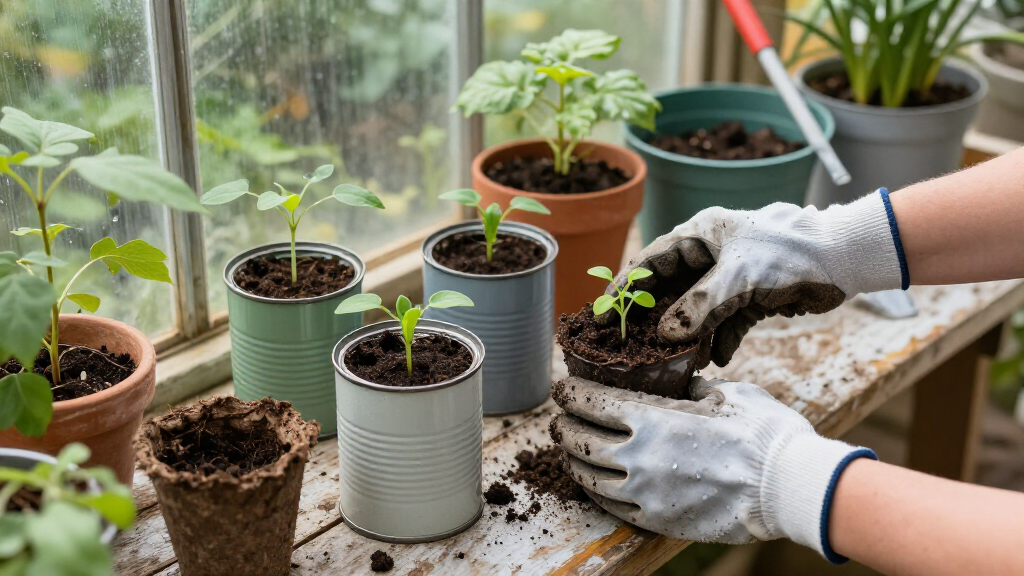
For seed starting, it recommends punching several drainage holes in the can’s base and filling it with a light, sterile seed-starting mix rather than garden soil. Because metal does not breathe like terracotta, gardeners should check moisture before watering. When a seedling is ready to transplant, the guide suggests removing the can’s bottom and pushing the root ball out.
Other suggested uses include a can opened at both ends and partly buried around a young plant as a cutworm collar; hanging cans as a temporary bird-scaring device; and using cans to hold twine, labels and hand tools. A clean can can also scoop compost or granular fertilizer, though the report recommends keeping fertilizer residue out of the kitchen and drying the scoop after use. For herb planters, it calls for drainage holes and notes that cans in hot sun can dry out quickly.
Low-Cost Uses, With Practical Limits
Reusing cans can give gardeners a free alternative to buying some containers and organizers, especially for short-term tasks such as starting seedlings or storing tools at a potting bench. The ideas also make use of a common household item, but they do not remove the need to prepare it safely or check whether it suits the particular plant and conditions.
The guide is careful about the limits of pest control: a can collar may help deter cutworms, while slugs may still climb over one. Hanging cans may startle birds, but birds can become accustomed to the noise. These are possible, limited deterrents, not reliable replacements for other pest-management methods.
Metal cans eventually rust because the tin coating is thin and covers steel, according to the report. For seasonal use, some rust may not stop a can from holding soil or water, but persistent outdoor use may shorten its life. Drainage holes reduce standing water, and the article suggests painting the outside of cans kept outdoors for longer periods.
As an affiliate, we earn on qualifying purchases.
From Kitchen Cans to Garden Projects
The report appears in Gardening Know How’s Dirt Cheap Gardening series and presents the ideas as seasonal reuse projects. It describes saving clean cans during fall and winter, when household cooking may provide a supply, for seed starting later in winter or spring. Cans can also be put to work sooner as lanterns or as shelters for hollow plant stems collected during fall cleanup.
The source lists eight uses, but the supplied report text gives full instructions for only six: seed starting, pest deterrence, organizing supplies, scooping compost or fertilizer, growing compact herbs and making punched-tin lanterns. It also mentions using cans to shelter hollow stems, but the provided material does not give the remaining instructions in full. The available source excerpt is incomplete, so details for all eight ideas cannot be confirmed from the supplied material.
The guide’s basic tools are a hammer, a nail and a can opener. It says an opened can can serve more than one purpose: after a seedling has grown, removing the bottom may allow the same can to be used as a collar around another plant. That reuse depends on the can being safe to handle and suitable for the next job.
“They’re stiff, hold soil and water without leaking, and cost nothing after being discarded.”
— Gardening Know How report
As an affiliate, we earn on qualifying purchases.
How Well the Ideas Work
The report does not provide tests or comparative results showing how well these projects perform, and it does not quantify savings or the lifespan of cans used outdoors. Its pest-control suggestions are described with qualifications: slugs may still cross a collar, and birds may get used to clattering cans. Results may vary by garden and pest.
The source material supplied for this article ends partway through the lantern instructions and omits complete details for two of the eight listed uses. It therefore does not establish the full construction steps or safety guidance for every project. It also does not specify paint products as necessary; where paint is used, the report advises letting it cure and leaving the inside unpainted.
As an affiliate, we earn on qualifying purchases.
Prepare Cans Before Reuse
For gardeners trying the ideas, the guide’s immediate steps are to wash each can, deal with sharp rims while wearing gloves, and add drainage holes before using one as a planter. Check that a can remains stable and free of hazardous sharp edges during use; cans that have deteriorated badly can generally be placed in metal recycling, the report says.
Gardeners should treat the pest uses as temporary or partial measures rather than guaranteed protection, and monitor seedlings and plants directly. The source does not announce a follow-up test or new research; its advice remains a practical collection of reuse suggestions, with the full details for all eight projects not present in the supplied excerpt.
garden tool organizer with tin cans
As an affiliate, we earn on qualifying purchases.
As an affiliate, we earn on qualifying purchases.
Key Questions
How should a tin can be prepared before using it in the garden?
Wash it with hot, soapy water and remove food residue. Check the rim carefully, flatten or file jagged edges while wearing gloves, and punch drainage holes if it will hold a plant.
Can a tin can protect a seedling from cutworms?
The report recommends opening the can at both ends and pressing it 1–2 inches into the soil, with a few inches left above ground. It may help against cutworms, but the source does not describe it as a guarantee against pests.
Will tin cans rust outdoors?
Yes, eventually, according to Gardening Know How. The report says the tin is a thin coating over steel and that exposure to rain and wet soil wears it down. Drainage and exterior paint may help with longer outdoor use.
Are cans suitable for starting seeds?
They can be used if the base has drainage holes and the can is filled with a light, sterile seed-starting mix. The guide advises checking moisture before watering because metal does not breathe like terracotta.
Do hanging cans reliably keep birds away?
No. The report describes moving, clattering cans as a makeshift, short-term deterrent and says birds may become accustomed to them.
Source: rss
Halloween Picks
halloween
As an affiliate, we earn on qualifying purchases.