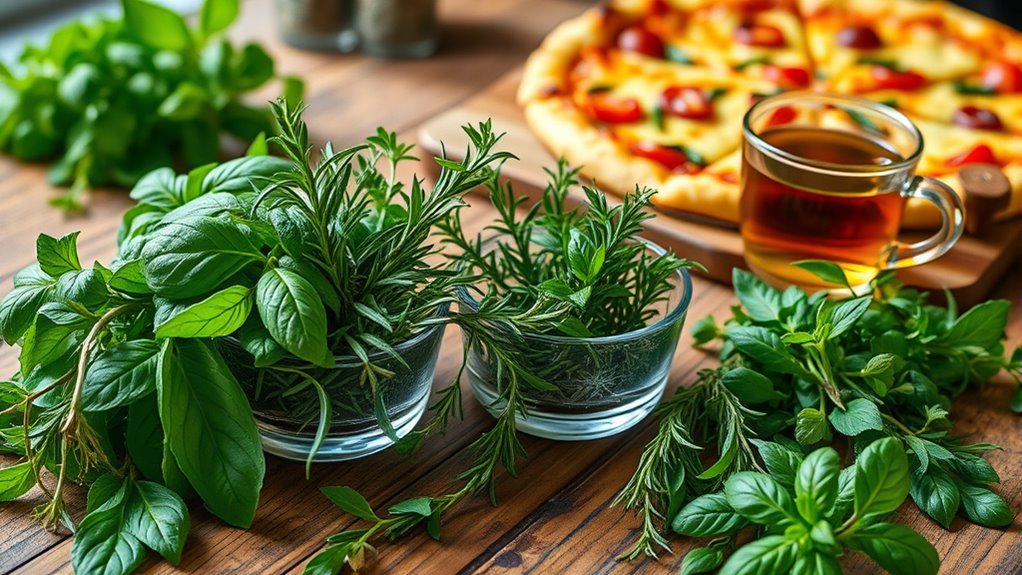

Creating your own indoor herb blends is simple and rewarding. You can mix fresh or dried herbs like basil, oregano, thyme for pizza, or mint, lemon balm, chamomile for calming teas. Regular harvesting and pruning help keep your herbs flavorful and healthy. Experiment with different combinations to discover new tastes and aromas. To optimize your blends, store herbs properly and note the effects of different mixes. Keep exploring nature’s flavors to craft perfect herbal creations tailored just for you.

Get garden gear delivered free with Prime
- Fast, free delivery on millions of items
- Prime Video, Amazon Music and more included
- Member-only deals all year
Key Takeaways
- Combine herbs like oregano, basil, and thyme for classic pizza flavor blends.
- Mix mint, lemon balm, and chamomile for calming herbal teas.
- Experiment with unique pairings such as rosemary with sage or lavender with basil.
- Keep track of your blends to replicate or customize your favorite herb combinations.
- Use grinding or crushing techniques to release essential oils for more aromatic, flavorful mixes.

Creating your own herb blends at home is a simple way to enhance your cooking, teas, and wellness routines. When you grow herbs indoors, you gain easy access to fresh flavors whenever you need them. Growing herbs indoors not only ensures a steady supply of your favorites but also allows you to experiment with different combinations to create personalized blends. To keep your herbs lively and flavorful, it’s essential to follow some herb storage tips. Store your dried herbs in airtight containers, away from sunlight and heat, to preserve their aroma and potency. For fresh herbs, refrigerate or keep them in water like flowers, changing the water regularly. Proper storage prevents spoilage and maintains the herbs’ vibrant flavors, making your DIY blends more aromatic and delicious.
Starting with growing herbs indoors, pick herbs that thrive in containers, such as basil, thyme, oregano, rosemary, and mint. These herbs are easy to cultivate on windowsills, kitchen counters, or under grow lights. When you harvest your herbs, do so in the morning after the dew has dried, and snip only what you need to encourage new growth. Regular pruning helps keep your plants healthy and bushy, ensuring a continuous supply of fresh herbs for your blends. As your herbs grow, you’ll notice how their flavors deepen, making your blends more complex and satisfying. Additionally, understanding indoor herb cultivation can help you optimize your growing conditions for better flavor and yield.
Once your herbs are harvested or dried, it’s time to experiment with different combinations. For pizza, a blend of oregano, basil, and thyme works beautifully, offering a classic Mediterranean flavor. For teas, consider mixing mint, lemon balm, and chamomile for a calming, invigorating infusion. Don’t be afraid to get creative—try blending rosemary with sage for a savory twist or basil with lavender for a floral note. Keep track of your mixes so you can replicate your favorites or tweak them for new flavors. Grinding dried herbs into a powder or crushing fresh herbs enhances their aroma and releases essential oils, making your blends more fragrant and flavorful.
Frequently Asked Questions
How Long Do Homemade Herb Blends Stay Fresh?
Your homemade herb blends stay fresh for about 6 months if stored properly. To maximize freshness, use herb drying techniques like air drying or low heat dehydration, then store your herbs in ideal storage containers such as airtight glass jars. Keep them in a cool, dark place away from sunlight and humidity, which helps preserve flavor and aroma longer. Regularly check for signs of spoilage to guarantee your blends stay vibrant and flavorful.
Can I Grow Herbs Indoors Year-Round?
Growing herbs indoors is like tending a secret garden that blooms year-round. You can indeed grow herbs indoors all year if you provide proper indoor herb lighting, mimicking natural sunlight, and choose plants with diverse herb flavor profiles. This way, you enjoy fresh, fragrant herbs constantly, whether for pizza, teas, or other recipes. Just keep up with watering and lighting, and your indoor garden will flourish through every season.
What Are Common Mistakes When Mixing Herb Blends?
When mixing herb blends, you might make mistakes like ignoring proper herb flavor pairing or blending techniques. You could overdo certain herbs, overpowering others, or not balancing flavors well. It’s important to taste as you go and consider how herbs complement each other. Avoid rushing; take time to experiment with small amounts first. With proper herb flavor pairing and blending techniques, your mixes will be more harmonious and flavorful every time.
Are There Any Herbs to Avoid Blending Together?
You should avoid blending herbs that create toxic combinations or have overpowering flavors. For example, don’t mix potent herbs like sage with delicate ones like parsley, as their strong flavors can clash. Some herbs may cause adverse reactions when combined, so always research their compatibility. By being mindful of these toxic combinations and overpowering flavors, you’ll guarantee your herb blends taste great and are safe to enjoy.
How Do I Store My Homemade Herb Blends Properly?
To store your homemade herb blends properly, focus on herb preservation by keeping them in airtight containers, away from direct sunlight, heat, and humidity. Use spice blending techniques that involve labeling with date and ingredients to maintain freshness. Store your blends in a cool, dark place to conserve flavor and aroma. Regularly check for moisture or mold, and reseal or refresh your herb mixes as needed to make sure they stay vibrant and flavorful.
Conclusion
Now that you’ve mixed your own herb blends, your kitchen becomes a garden of endless possibilities, like a painter’s palette bursting with color. Each sprinkle adds a new splash of flavor, turning simple dishes into flavorful masterpieces. Keep experimenting and let your senses be your guide—your homemade blends will transform everyday meals into aromatic adventures. With a little creativity, your herb garden will blossom into a fragrant paradise right on your countertop.
Fall Picks
fall essentials
As an affiliate, we earn on qualifying purchases.