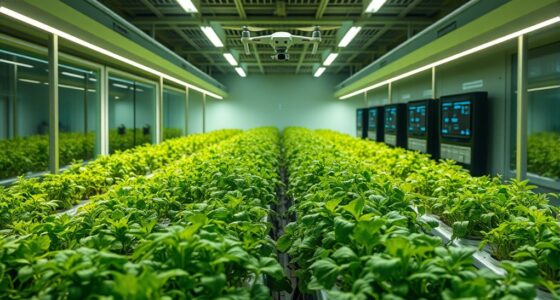
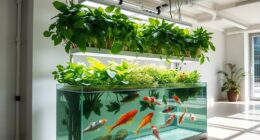
To maximize yields in small spaces with vertical indoor gardens, focus on efficient hydroponic systems like drip or nutrient film techniques that promote faster growth. Use adjustable LED lighting to guarantee plants receive ideal spectrum and intensity. Regularly monitor water quality, control pests early, and group plants with similar needs for easier management. By refining these elements, you’ll boost productivity and space efficiency—exploring these strategies further will help you turn limited areas into lush, productive environments.
Key Takeaways
- Use hydroponic systems like drip or nutrient film technique to boost plant growth and yields vertically.
- Optimize lighting with adjustable LED grow lights tailored to plant stages for healthy development.
- Implement regular pest management and cleanliness to prevent infestations in confined indoor spaces.
- Plan layout by grouping plants with similar water and light needs to enhance efficiency and growth.
- Maintain precise water quality, pH, and good drainage for healthy roots and disease prevention.

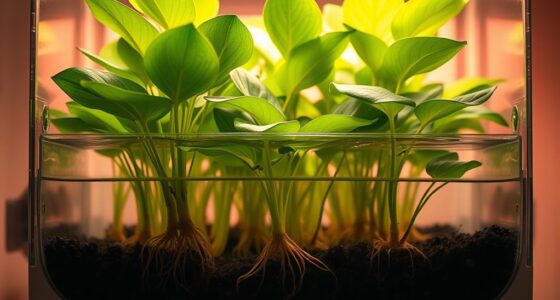
Vertical indoor gardens are an innovative way to bring greenery into small or limited spaces, transforming bare walls into lush, vibrant ecosystems. Whether you’re in an apartment, office, or tiny home, these gardens maximize your growing area without sacrificing precious floor space. To succeed, you need to understand how to use hydroponic techniques effectively. Hydroponics involves growing plants without soil, using nutrient-rich water solutions delivered directly to the roots. This method allows for faster growth, higher yields, and less mess, making it ideal for vertical setups. You’ll want to select systems that suit your space—drip, nutrient film technique, or wick systems are all popular options—and guarantee your plants receive consistent, balanced nutrition.
Vertical indoor gardens use hydroponic techniques to maximize space and grow lush greenery efficiently indoors
With limited space, pest management becomes essential. Unlike traditional gardens, pests in vertical indoor gardens can spread quickly if not controlled early. Regular inspections help you spot problems before they escalate. Use physical barriers like mesh covers to prevent pests from reaching your plants, and keep your garden clean by removing dead leaves and debris. Introducing natural predators or using organic pest control methods can also help keep pests at bay without harmful chemicals. Since your garden is indoors, you have the advantage of controlling temperature and humidity, which can reduce pest issues overall.
Lighting is another critical factor. You need to provide your plants with sufficient light, either through natural sunlight or grow lights. LED grow lights are energy-efficient and customizable, allowing you to tailor the spectrum for different plant stages. Proper lighting encourages healthy growth and maximizes yields, especially in vertical setups where light distribution can be uneven. Additionally, choosing the right lighting spectrum can optimize photosynthesis and boost plant health.
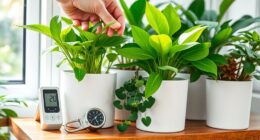
Water management is equally essential. Hydroponic systems require precise control over water quality and pH levels to prevent disease and nutrient deficiencies. Regularly check and adjust your water parameters, and ensure your system has good drainage to avoid root rot. Because water is constantly circulated, it’s easier to monitor and maintain, leading to healthier plants and higher productivity.
Finally, planning your vertical garden layout ensures you utilize your space efficiently. Group plants with similar light and water needs to simplify maintenance. Use modular systems that can be expanded as your skills grow or your space changes. With careful attention to hydroponic techniques, pest management, lighting, and water control, you’ll be able to maximize your yields and enjoy fresh, homegrown produce or lush greenery in even the tiniest spaces.
Frequently Asked Questions
What Are the Best Plants for Vertical Indoor Gardening?
You should choose plants like lettuce, herbs, strawberries, and small peppers for your vertical indoor garden. Focus on plant selection that suits your space and light conditions. Use effective growing techniques like proper watering, lighting, and spacing to maximize yields. Regularly monitor your plants for pests and health, and rotate crops to keep your garden productive. With these strategies, you’ll enjoy fresh produce in even the tiniest indoor spaces.
How Do I Prevent Pests in Vertical Gardens?
Pests can threaten your lush vertical garden like a swarm of locusts! To prevent this, start with pest-resistant plants and incorporate composting tips that boost plant health, making them less appealing to pests. Regularly inspect your garden, remove any bugs, and keep your space clean. Using natural repellents like neem oil also works wonders. With these steps, you’ll keep pests at bay and enjoy thriving, vibrant greenery!
What Lighting Options Optimize Plant Growth Vertically?
You should opt for LED grow lights, as they provide energy-efficient, full-spectrum illumination that promotes healthy vertical plant growth. Look for adjustable, high-quality grow lights with the right intensity and wavelength for your plants’ needs. Position the lights close enough to your plants without causing heat stress, and guarantee you’re providing consistent light exposure—around 12-16 hours daily—to maximize your vertical garden’s yields.
How Often Should I Water Vertical Indoor Plants?
You should water your vertical indoor plants when the soil moisture drops to about 50-75%. Check the watering schedule regularly by touching the soil or using a moisture meter. Typically, watering once or twice a week works, but it depends on your plants’ needs, humidity, and light. Avoid overwatering, as it can cause root rot. Consistently monitor soil moisture to keep your plants healthy and thriving.
Can Vertical Gardens Be Integrated With Automated Irrigation Systems?
Think of your vertical garden as a high-tech oasis—yes, you can integrate automated irrigation systems effortlessly. These systems work seamlessly with hydroponic setups and climate control systems, ensuring your plants get the perfect amount of water and nutrients. Installing timers and sensors simplifies maintenance, so your garden thrives without constant attention. This tech-savvy approach maximizes yields and keeps your indoor space lush and healthy with minimal effort.
Conclusion
By embracing vertical indoor gardens, you turn your tiny space into a lush oasis, much like a modern-day Hanging Gardens of Babylon. With a little ingenuity, you maximize yields and create a thriving green sanctuary right inside your home. So, don’t be daunted by limited space—think of it as your own little Eden, waiting to flourish. Get started today and watch your indoor jungle grow, proving that even in a small apartment, big harvests are just a shelf away!