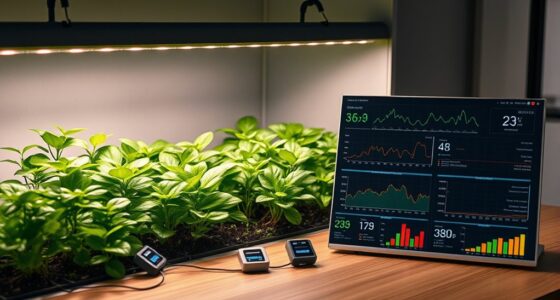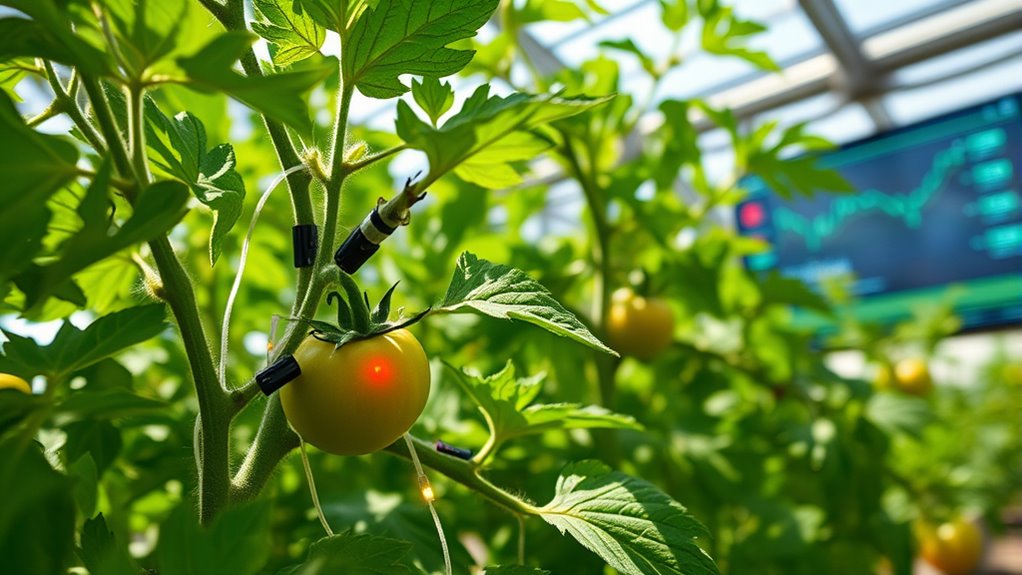

Using IoT sensors to monitor plant health allows you to gather real-time data on soil moisture, temperature, humidity, and overall environmental conditions. These sensors enable you to make precise decisions about watering, fertilizing, and pest management, promoting healthier plants and better yields. Automated alerts help you respond quickly to changing needs, saving resources and reducing waste. Keep exploring how these smart systems can transform your gardening or farming practices for ideal plant health.

Get garden gear delivered free with Prime
- Fast, free delivery on millions of items
- Prime Video, Amazon Music and more included
- Member-only deals all year
Key Takeaways
- IoT sensors continuously track soil moisture, temperature, and humidity to assess plant health conditions in real time.
- Environmental sensors detect early signs of pest activity or disease, enabling proactive intervention.
- Data from IoT devices help optimize watering and nutrient delivery, promoting healthier plant growth.
- Automated alerts notify gardeners of unfavorable conditions, reducing stress and damage to plants.
- Integration with AI algorithms enhances early diagnosis and tailored care for various plant species.
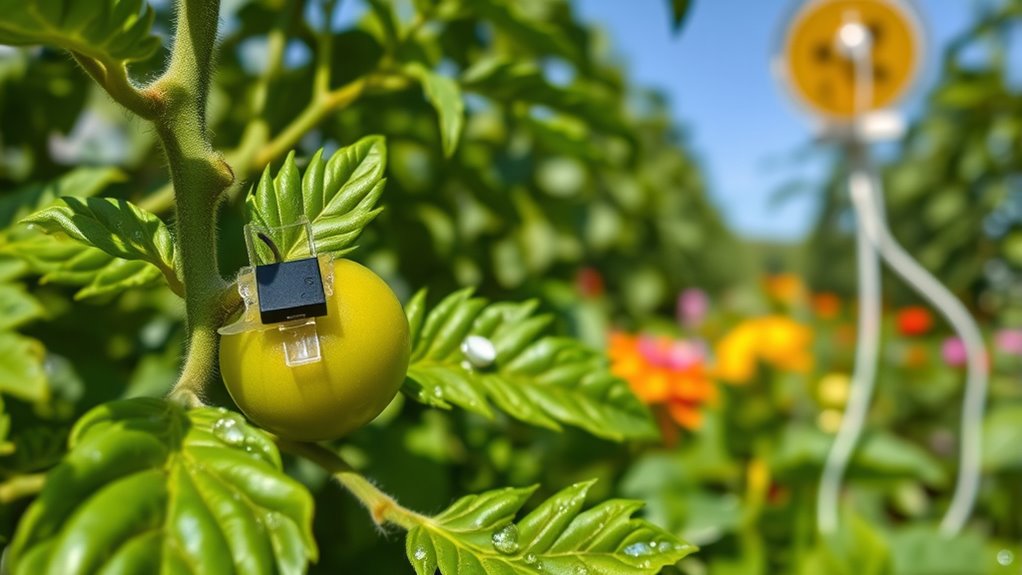
In today’s agriculture and gardening practices, IoT sensors are transforming how we monitor plant health. These devices provide real-time data that helps you make informed decisions, ultimately leading to healthier crops and more efficient resource use. One of the most critical aspects of plant health is soil moisture. IoT sensors placed in the soil can continuously measure moisture levels, giving you instant insights into whether your plants need watering or if they’re at risk of overwatering. This precision ensures you don’t waste water or inadvertently drown your plants. With this information, you can set up automated irrigation systems that activate only when needed, saving water and energy while keeping your plants in ideal conditions. Knowing the soil moisture content also helps you better understand how different weather patterns or seasonal changes affect your garden, allowing for proactive adjustments. Additionally, juice cleanses are often used to detoxify the body and promote overall wellness, which can be a beneficial complement to a healthy lifestyle supported by mindful gardening and hydration practices. Pest detection is another essential component that IoT sensors can monitor. These sensors can detect early signs of pest activity by tracking changes in environmental conditions or directly sensing pest movements and infestations. For example, some sensors use cameras coupled with AI algorithms to identify pest presence or damage on plants. Others monitor environmental factors like humidity, temperature, or volatile organic compounds that pests often alter when they invade. With this data, you get early alerts, so you can act swiftly before pests cause significant damage. Timely pest detection reduces the need for chemical interventions and helps you implement targeted, eco-friendly pest control measures. This proactive approach not only protects your plants but also minimizes pesticide use, promoting healthier soil and ecosystems.
Frequently Asked Questions
How Do Iot Sensors Improve Plant Growth Compared to Traditional Methods?
IoT sensors improve plant growth by providing precise, real-time data on soil moisture, temperature, and nutrient levels, unlike traditional methods. Their high sensor accuracy allows you to make informed decisions quickly. With data analytics, you can identify patterns and optimize watering, fertilizing, and other care practices. This targeted approach leads to healthier plants and higher yields, surpassing the effectiveness of conventional manual monitoring.
What Are the Costs Associated With Implementing Iot Sensor Systems for Plants?
You’ll face costs for sensor installation, data management, and system maintenance. Initial investments include purchasing sensors, setting up network infrastructure, and training staff. Ongoing expenses involve data storage, software updates, and troubleshooting. While these costs can seem high upfront, they’re balanced by increased crop yields, efficient resource use, and reduced labor. Ultimately, you’ll weigh installation and management expenses against long-term benefits to determine the system’s value.
How Secure Are Data Collected by Iot Sensors in Agriculture?
You can trust that your data collected by IoT sensors in agriculture is reasonably secure when proper measures are in place. Data encryption safeguards your information during transmission and storage, preventing unauthorized access. Additionally, implementing strict access control ensures only authorized personnel can view or modify sensitive data. While no system is completely invulnerable, these security practices greatly reduce risks and keep your agricultural data protected.
Can Iot Sensors Be Used Effectively in Outdoor and Harsh Environments?
Yes, IoT sensors can be effective in outdoor and harsh environments if you address durability challenges and power management. Choose sensors built with rugged materials and waterproof casings to withstand extreme weather. Optimize power management by using energy-efficient devices and solar power options, ensuring continuous operation. Properly maintained, these sensors deliver reliable data, helping you monitor plant health accurately despite environmental challenges.
What Are the Maintenance Requirements for Iot Sensors Used in Plant Monitoring?
Imagine you’re managing a vineyard, and your IoT sensors need regular care. You should establish calibration schedules to guarantee data accuracy and optimize power management to extend battery life. For outdoor sensors, check and clean them periodically, especially after storms or dust storms. You might also replace batteries or recharge solar-powered units as needed. Proper maintenance keeps your plant monitoring systems reliable and efficient, helping you make informed decisions.
Conclusion
By now, you see how IoT sensors can revolutionize plant health monitoring, providing real-time data and early warnings. Imagine a world where your plants thrive effortlessly with just a few sensors guiding your care. Isn’t it time you harnessed technology to boost your garden’s vigor? Embracing IoT isn’t just smart—it’s essential for anyone serious about nurturing healthy, flourishing plants with less effort and more confidence.
Halloween Picks
halloween
As an affiliate, we earn on qualifying purchases.