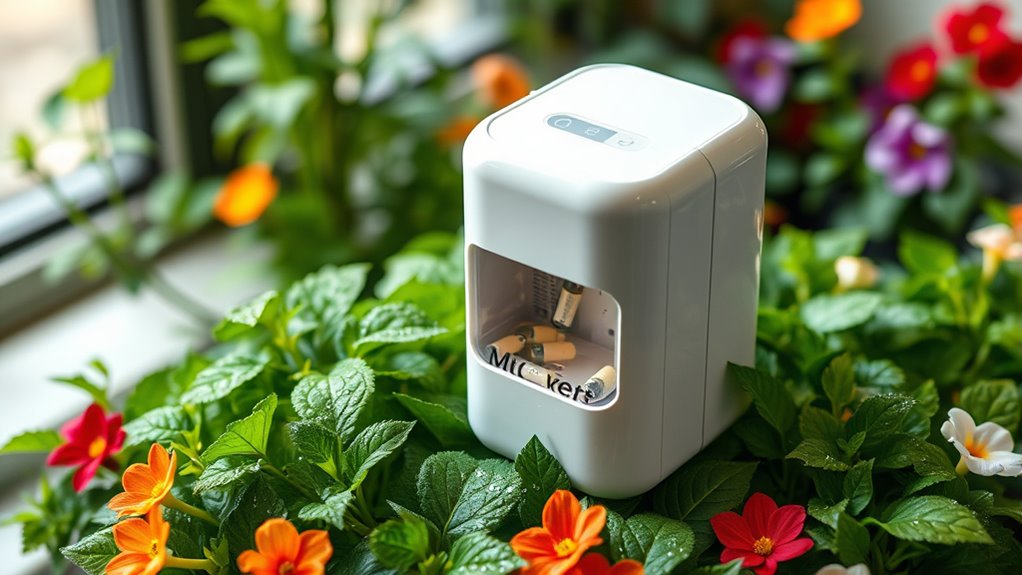

Smart fertilizer dispensers for indoor systems automatically monitor your soil’s moisture and nutrient levels to provide precise, timely feeding. They help you maintain ideal soil conditions, preventing over- or under-fertilizing that can harm your plants. With features like app connectivity, real-time alerts, and easy programming, you’ll enjoy effortless plant care and healthier growth. Keep exploring to discover how these innovative systems can make your indoor gardening more efficient and rewarding.
Key Takeaways
- Automated systems deliver precise, small fertilizer doses based on real-time soil moisture and nutrient needs.
- Integration with smartphone apps allows easy monitoring, scheduling, and system alerts for optimal plant care.
- Features include filter replacement indicators and customizable settings to maintain system efficiency and user convenience.
- Continuous soil moisture control prevents over- or under-fertilization, promoting healthy, resilient indoor plants.
- Automated fertilization reduces manual effort, waste, and guesswork, ensuring consistent, tailored plant nutrition.

Indoor gardening enthusiasts often face the challenge of providing consistent, accurate fertilization to their plants. Without proper care, plants can suffer from nutrient deficiencies or excesses that hinder growth and overall health. Smart fertilizer dispensers are designed to help you overcome these obstacles by automating the process and guaranteeing your plants receive exactly what they need, when they need it. One of the key aspects these systems address is maintaining the right soil moisture levels alongside nutrient balance, which are both essential for healthy plant development.
When you’re dealing with indoor systems, soil moisture can fluctuate due to irregular watering schedules or environmental factors like humidity. Overwatering can lead to nutrient leaching, where essential minerals are washed away, while underwatering can cause nutrients to become unavailable to your plants. Smart dispensers monitor soil moisture levels continuously, adjusting their fertilization output accordingly. This means you don’t have to guess when to water or fertilize, reducing the risk of overfeeding or underfeeding your plants. By keeping soil moisture in the perfect range, the dispenser guarantees nutrients stay available and don’t get flushed out prematurely. Additionally, some systems incorporate filter replacement indicators to alert you when maintenance is needed, ensuring ongoing effectiveness.
Nutrient balance is equally critical, as too much fertilizer can cause root burn and imbalance, while too little leaves your plants weak and undernourished. A smart dispenser uses sensors and programmed algorithms to deliver precise amounts of nutrients based on your plant’s specific needs. It can dispense fertilizer in small, consistent doses that align with the plant’s growth stage, promoting steady, healthy development. This accuracy prevents the common pitfalls of manual fertilization, such as accidental overapplication or neglect. The dispenser’s capacity to adapt to changing conditions means your plants receive a tailored feed that supports their overall health and vigor.
Additionally, these systems often come with user-friendly interfaces that let you customize settings or set schedules, giving you control without the constant manual effort. Some models even sync with smartphone apps, providing real-time updates on soil conditions and fertilization status. This connectivity helps you stay informed about your indoor garden’s needs, so you can intervene if necessary, but generally, the smart dispenser handles it all seamlessly. By automating fertilization while accounting for soil moisture and nutrient balance, these systems help you cultivate healthier, more resilient plants with less hassle.
Ultimately, smart fertilizer dispensers elevate your indoor gardening experience, making it easier to achieve lush, vibrant plants. They take the guesswork out of fertilization, guaranteeing your plants receive the right nutrients at the right time, in harmony with their soil moisture needs. This precision technology empowers you to maintain a thriving indoor oasis while saving time and reducing waste.
Frequently Asked Questions
How Do Smart Dispensers Adjust for Different Plant Types?
You can customize plant nutrients by adjusting the dispenser settings based on each plant’s needs. Smart dispensers use calibration methods, like inputting specific plant types or growth stages, to deliver precise nutrient amounts. This guarantees your plants get the right balance, promoting healthy growth. By selecting the appropriate settings, you optimize nutrient delivery and avoid over- or under-fertilizing, making your indoor gardening more efficient and successful.
Can Smart Dispensers Be Integrated With Home Automation Systems?
Like a conductor with an orchestra, you can seamlessly integrate smart fertilizer dispensers with your home automation system. Many models offer broad integration compatibility and use wireless connectivity, allowing you to control and monitor your indoor garden effortlessly. This setup lets you automate fertilization schedules, receive notifications, and optimize plant health, making your gardening experience smarter, more efficient, and perfectly synchronized with your smart home ecosystem.
What Is the Typical Lifespan of a Smart Fertilizer Dispenser?
You can expect a smart fertilizer dispenser to last around 2 to 5 years, depending on its dispenser durability and how well you maintain it. Regular maintenance, like cleaning and refilling, helps extend its lifespan. Choose a model with sturdy materials and good reviews for durability. Proper care minimizes breakdowns and keeps your indoor garden thriving. Keep an eye on wear and tear to ensure it functions efficiently over time.
Are There Safety Features to Prevent Over-Fertilization?
Over fertilization risks can damage plants, but smart dispensers have safety mechanisms to prevent this. These features include automatic shut-off, dosage limits, and real-time monitoring, ensuring you don’t over-apply nutrients. Studies show that using safety features reduces the risk of plant stress by up to 80%. With these safeguards, you can confidently maintain healthy indoor plants without worrying about over-fertilization.
How Energy-Efficient Are These Smart Dispensers?
These smart dispensers are quite energy-efficient, using minimal energy during operation. They maximize power consumption through smart scheduling and sensors, which help reduce unnecessary usage. By adjusting watering and fertilization based on plant needs, you can achieve significant power savings, lowering your overall energy consumption. This eco-friendly design not only benefits your plants but also helps you save on electricity bills while maintaining ideal indoor plant health.
Conclusion
With smart fertilizer dispensers for indoor systems, you’re revolutionizing plant care like never before. Imagine having the power to nurture your plants precisely, turning your home into a lush paradise with ease. These devices make feeding your plants effortless, efficient, and almost magical—like having a green thumb that never sleeps. Embrace this innovation and watch your indoor garden flourish beyond your wildest dreams, transforming your space into a vibrant, thriving oasis you’ll never want to leave.