
To minimize noise in your indoor garden, choose quiet pumps and fans labeled as “silent” or “low noise,” and opt for models from trusted brands known for noise reduction. Place equipment on vibration-absorbing pads, enclose noisy devices in insulated cabinets, and line with acoustic panels. Use timers or variable speed controls to regulate airflow and turn fans off when not needed. For more peace and efficiency, explore effective soundproofing tips and equipment options tailored for quiet operation.
Key Takeaways
- Choose pumps and fans labeled as “silent” or “low noise” from reputable brands with noise reduction technology.
- Use vibration-absorbing pads and soundproof enclosures lined with acoustic materials to contain noise.
- Implement timers and variable speed controllers to operate equipment only as needed, reducing continuous noise.
- Position equipment away from living or working areas to minimize sound disturbance.
- Regular maintenance and upgrading to quieter models enhance overall noise reduction in indoor gardens.

Creating an indoor garden can bring tranquility and beauty to your space, but it often comes with unwanted noise from equipment like pumps, fans, and aerators. If you’re using hydroponic systems, you might notice that the constant hum from these devices can disrupt the peaceful environment you’re aiming for. While these tools are essential for healthy plant growth rates, their noise can become a distraction or even a disturbance, especially in quiet living areas or home offices. Luckily, there are effective ways to minimize this noise without compromising your garden’s productivity.
One of the key strategies involves selecting quiet pumps and fans specifically designed for indoor gardening. Many manufacturers now produce models that operate at lower decibel levels while still maintaining efficient water circulation and airflow. Look for pumps labeled as “silent” or “low noise,” and consider brands known for noise reduction technologies. High-quality hydroponic systems often come with integrated quiet components, but if not, you can upgrade or replace them with quieter alternatives. These adjustments allow you to maintain ideal plant growth rates by ensuring your plants receive steady nutrient delivery and air circulation—without the accompanying racket.
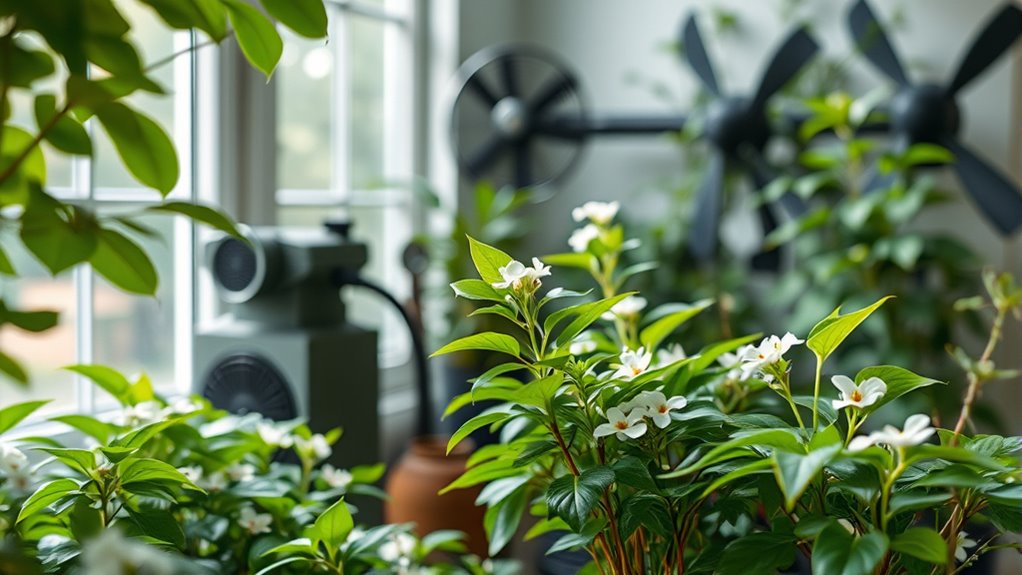
Choose quiet, low-noise pumps and fans to keep your indoor garden peaceful and efficient.
Another effective method is to incorporate soundproofing measures around your equipment. Placing pumps and fans on vibration-absorbing pads or rubber mats can drastically reduce noise transmission. These simple additions dampen vibrations that create loud rattling sounds, translating to a calmer environment. Enclosing noisy devices within insulated boxes or cabinets lined with foam or acoustic panels can further contain the sound, preventing it from traveling throughout your space. Just make sure these enclosures allow adequate ventilation so your equipment doesn’t overheat and your plants remain healthy.
Additionally, controlling airflow can help cut down noise levels. Instead of running fans at maximum capacity constantly, consider installing timers or sensors that activate them only when necessary. Using variable speed controllers allows you to fine-tune fan operation, reducing unnecessary noise during quieter times of the day. Proper placement of fans—such as positioning them away from your sitting or working areas—can also make a noticeable difference.
Balancing effective hydroponic systems with a peaceful environment is easier when you choose quiet pumps and fans, which are increasingly available on the market. Ultimately, balancing the need for effective hydroponic systems with a peaceful environment requires thoughtful choices and adjustments. By selecting quieter pumps and fans, soundproofing equipment, and managing airflow efficiently, you can enjoy the beauty and tranquility of your indoor garden without the disruptive noise. This way, your plants thrive, and your space remains a serene retreat.
Frequently Asked Questions
What Are the Best Materials for Quiet Pump Housings?
You should choose materials like soundproof insulation and vibration damping for quiet pump housings. These materials absorb vibrations and reduce noise, making your indoor garden quieter. Enclosing your pump in a housing made from dense foam or rubber-lined boxes can considerably cut down sound transmission. Combining these materials ensures minimal vibrations and sound, creating a peaceful environment while maintaining ideal pump performance.
How Does Pump Size Affect Noise Levels?
Smaller pumps generally produce less noise because they generate less pump vibration, which reduces sound levels. Larger pumps tend to create more vibration and require better sound insulation to minimize noise. To further reduce noise, guarantee your pump is properly mounted on vibration-absorbing pads and incorporate sound-insulating materials around it. This approach helps keep your indoor garden quiet and comfortable while maintaining ideal pump performance.
Are There Specific Brands Known for Silent Fans?
You’ll find brands like Vortex and AC Infinity are known for silent fans that use ultra quiet technology. They often incorporate soundproof enclosures to further reduce noise, making them ideal for indoor gardens. These brands prioritize quiet operation, so you can enjoy peak airflow without disturbing the peace. Look for models with noise levels below 30 decibels to ensure your indoor garden stays quiet and comfortable.
Can Noise Reduction Techniques Impact Pump Efficiency?
You might worry that noise reduction techniques could compromise pump efficiency, but that’s not necessarily true. When you focus on reducing pump vibration and optimizing fan blade design, you can lower noise without sacrificing performance. Strategic modifications, like dampening vibrations or refining blade angles, can actually enhance efficiency. So, by carefully balancing these techniques, you keep your indoor garden peaceful and productive, no sacrifices needed—just smarter engineering.
How Often Should Indoor Garden Equipment Be Maintained for Noise Control?
You should perform noise level measurement regularly, ideally monthly, to keep noise control in check. Follow a consistent maintenance schedule, checking pumps and fans for debris, wear, or vibrations that cause noise. Regular inspections help you catch issues early, ensuring equipment runs smoothly and quietly. Staying proactive with maintenance not only reduces noise but also prolongs your equipment’s lifespan and maintains *best* indoor garden conditions.
Conclusion
By choosing quiet pumps and fans, you can create a peaceful indoor garden environment. Imagine a hobbyist who replaced her noisy equipment with silent models and now enjoys gardening without disturbing her family or relaxing in the evening. With these simple upgrades, you’ll experience less noise and more tranquility, making your indoor gardening experience enjoyable and stress-free. Start prioritizing quiet equipment today, and transform your space into a serene oasis.