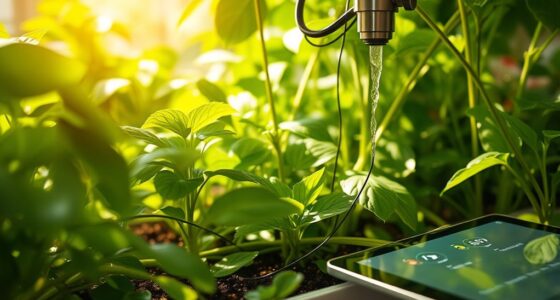
Grow light heat still matters in LED systems because it affects plant growth, health, and light penetration. Excess heat can distort light distribution, cause plant stress, and increase cooling costs, while too little heat may slow metabolic processes. Proper heat management guarantees your plants receive ideal spectral balance, healthy photosynthesis, and consistent growth. By effectively controlling heat, you support energy efficiency and maximize yields. To discover simple ways to better manage heat in your setup, keep exploring these key strategies.

Get garden gear delivered free with Prime
- Fast, free delivery on millions of items
- Prime Video, Amazon Music and more included
- Member-only deals all year
Key Takeaways
- Excess heat from LEDs can distort spectral balance, affecting plant growth and health.
- Proper heat management ensures LEDs operate efficiently and prolong their lifespan.
- Managing heat prevents plant stress, leaf burn, and mold caused by temperature fluctuations.
- Controlling heat enhances light penetration, promoting uniform growth throughout dense canopies.
- Effective heat regulation optimizes environmental conditions, supporting healthy photosynthesis and productivity.

While LED grow lights are praised for their energy efficiency and customizable spectra, the heat they produce still plays an essential role in your indoor gardening setup. Even with advanced LEDs designed to minimize excess heat, the warmth generated affects your plants’ growth, health, and overall environment. It’s important to recognize that heat influences spectral balance—the ratio of different wavelengths your plants receive—and can impact how efficiently your grow lights operate. Too much heat can distort the spectral balance, leading to uneven light distribution or stressing your plants. On the other hand, a carefully managed amount of heat can help create a more natural environment, promoting stronger growth and healthier development.
Proper heat management enhances LED efficiency and promotes healthier, more balanced plant growth indoors.
Energy efficiency is a core benefit of LED technology, but it doesn’t mean heat management becomes irrelevant. In fact, the heat produced by LEDs, although less than traditional lighting, still needs to be controlled. If heat accumulates, it can cause your grow lights to work harder to maintain ideal operating temperatures, decreasing their overall energy efficiency. Excess heat can lead to higher cooling costs or require additional ventilation, which offsets some of the savings gained from using LEDs. Proper heat dissipation ensures that your grow lights operate within their perfect temperature range, maintaining peak energy efficiency and prolonging their lifespan.
Controlling heat also helps you fine-tune the environment for your plants. Too much warmth can cause stress, leading to issues like leaf burn or mold growth, while too little heat might slow down metabolic processes. By managing the heat output from your LED grow lights, you can better regulate ambient temperature and humidity, creating a stable environment that supports healthy photosynthesis and growth. This balance is essential, especially during different growth stages—seedlings, vegetative, and flowering—each requiring specific conditions. Additionally, managing heat can improve light penetration, ensuring that lower leaves and dense canopy areas receive adequate light for optimal growth. Proper heat management also contributes to plant health, helping prevent common issues associated with temperature fluctuations. Maintaining optimal thermal conditions is vital for maximizing plant productivity and overall health.
In essence, heat isn’t just a byproduct; it’s a variable you can manipulate to enhance your indoor garden. Thoughtful placement of your LED fixtures, proper ventilation, and sometimes supplemental heating or cooling can help you maintain the right spectral balance and maximize energy efficiency. Ignoring heat can undermine your setup’s effectiveness, even with the most advanced LEDs. Additionally, understanding the heat output of your lighting system allows you to optimize your environment more precisely, ensuring healthier plant development. Recognizing that heat management is a critical part of LED grow light setup enables growers to create an environment that supports optimal growth conditions and efficient operation. Ultimately, understanding and managing heat ensures your plants receive the right light quality, intensity, and environmental conditions needed for thriving growth.
LED grow light heat dissipation fan
As an affiliate, we earn on qualifying purchases.
As an affiliate, we earn on qualifying purchases.
Frequently Asked Questions
How Does Heat Affect LED Lifespan?
Heat considerably impacts LED lifespan because excess heat accelerates wear and degrades components. Proper heat dissipation and thermal management help maintain ideal operating temperatures, preventing overheating. When you guarantee effective cooling, LEDs run cooler, last longer, and perform better. Ignoring heat can lead to early failure, reduced efficiency, and costly replacements. So, prioritizing thermal management is essential for maximizing your LED grow light’s durability and consistent performance over time.
Can Excessive Heat Damage Plant Roots?
Excessive heat can indeed damage plant roots, especially in the root zone. When heat stress occurs, it can cause dehydration, impair nutrient uptake, and weaken root structures. If your grow lights generate too much heat, the roots may struggle to function properly, leading to stunted growth or even plant death. To prevent this, guarantee proper ventilation and maintain ideal temperature levels in the root zone for healthy root development.
What Safety Precautions Are Needed With Grow Light Heat?
You should implement proper ventilation strategies to prevent heat buildup from grow lights, ensuring your plants stay healthy and your space remains safe. Always wear protective gear, like gloves and eye protection, when handling lights or adjusting setups to avoid burns or eye damage. Regularly inspect your equipment for overheating signs, and maintain airflow to reduce heat stress. These precautions help safeguard both you and your plants effectively.
How Is Heat Generated in LED Grow Lights?
You generate heat in LED grow lights mainly through electrical resistance and inefficient heat dissipation. When electrical current flows through the LED chips, some energy converts into heat instead of light. Proper thermal management and heat dissipation are essential to prevent overheating. Efficient heat dissipation methods, like heat sinks and active cooling, help maintain ideal performance and lifespan by ensuring the heat is effectively managed and doesn’t harm the LEDs.
Are There Differences in Heat Output Among LED Brands?
Think of LED brands like car engines—some run cooler, others hotter. Yes, there are differences in heat output among brands due to design and quality. Brand consistency in heat management guarantees your plants thrive without overheating. Cheaper options might produce more heat, risking damage or energy waste. Choosing reputable brands with effective heat dissipation features helps maintain ideal grow conditions and prolongs your light’s lifespan.
grow light heat management system
As an affiliate, we earn on qualifying purchases.
As an affiliate, we earn on qualifying purchases.
Conclusion
So, next time you marvel at your sleek LED setup, remember that heat isn’t just a fancy accessory. It’s the uninvited guest at your plant party, subtly stealing your precious energy and risking chaos. Don’t get caught off guard thinking LEDs are magic bulbs—without proper heat management, your plants might just throw a temper tantrum. Keep that heat in check, or prepare for a leafy rebellion you didn’t see coming!
As an affiliate, we earn on qualifying purchases.
plant grow light temperature controller
As an affiliate, we earn on qualifying purchases.
As an affiliate, we earn on qualifying purchases.
Fall Picks
fall essentials
As an affiliate, we earn on qualifying purchases.