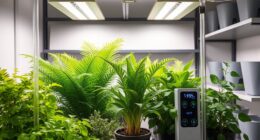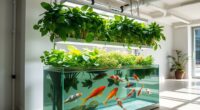
Indoor garden systems make growing herbs, vegetables, and flowers easy by automating light and nutrient management. They use smart features like automated lighting schedules and precise nutrient delivery to keep your plants healthy year-round. These systems require minimal effort, making indoor gardening accessible even for beginners. With optimized growth conditions and low maintenance, you can enjoy fresh herbs or vibrant flowers effortlessly. Keep exploring to discover how these innovative setups can transform your indoor gardening experience.
Key Takeaways
- Indoor garden systems enable year-round cultivation of herbs, vegetables, and flowers with minimal effort.
- Automated light and nutrient management optimize plant growth and health inside your home.
- Smart features like timers and sensors ensure ideal light spectrum and duration for different plants.
- Integrated systems simplify care, reducing manual intervention and promoting lush, thriving indoor gardens.
- These systems support sustainable, energy-efficient gardening suitable for busy lifestyles.
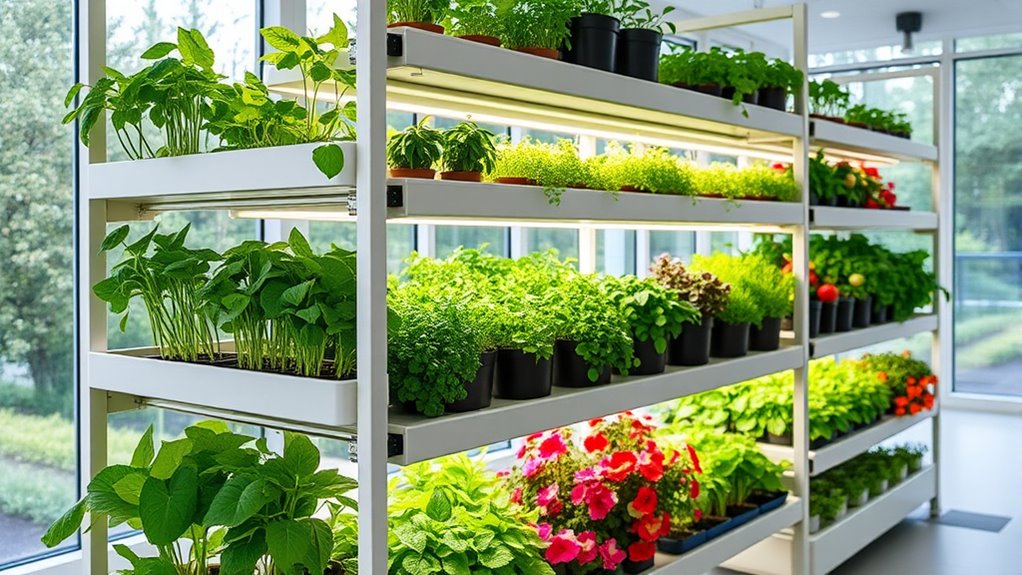
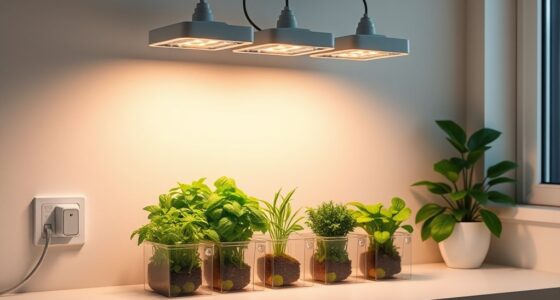
Indoor garden systems offer a convenient way to grow fresh herbs, vegetables, and plants right inside your home. With smart features like light automation, these systems help guarantee your plants receive the ideal amount of light without you having to lift a finger. Instead of guessing when to turn on grow lights, you can rely on automated schedules that mimic natural sunlight, promoting healthy growth day after day. This means your herbs will flourish, your vegetables will develop robust flavors, and your flowers will bloom beautifully, all while fitting seamlessly into your daily routine.
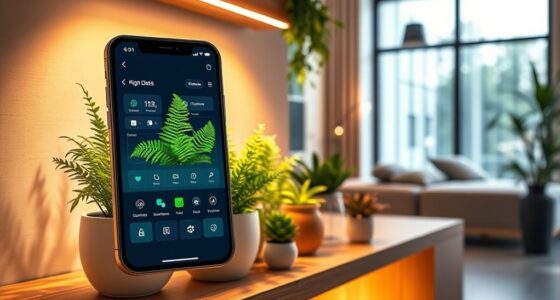
Light automation is a game-changer because it takes the guesswork out of providing consistent illumination. Many indoor garden systems come equipped with sensors and timers that adjust the light spectrum and duration based on the plant’s needs. Whether it’s a bright LED panel or a full-spectrum grow light, you can set it and forget it, knowing your plants are getting just the right amount of light at the right times. This not only enhances growth but also saves energy, making your indoor garden more efficient and eco-friendly. Plus, you can customize the light cycles for different types of plants, ensuring herbs like basil and parsley get ample sunlight, while delicate flowers receive gentle, consistent lighting.
Light automation removes guesswork, providing optimal, customizable lighting that promotes healthy, energy-efficient plant growth indoors.
Nutrient management is equally crucial for maintaining healthy plants indoors. Modern systems often incorporate automated nutrient delivery, which simplifies the process of feeding your plants. Instead of manually mixing fertilizers or guesswork, these systems supply precise doses of essential nutrients through water reservoirs. You simply add nutrient solutions, and the system takes care of delivering them at appropriate intervals. This guarantees your plants receive balanced nourishment, promoting vigorous growth and better yields. Automated nutrient management also reduces waste and prevents overfeeding, which can harm plants or cause algae buildup in the system. With this feature, you can enjoy a lush indoor garden without the hassle of constant monitoring.
Combining light automation with efficient nutrient management makes indoor gardening accessible and low-maintenance. You’ll find that your plants thrive with minimal effort, even if you’re new to gardening or have a busy schedule. These intelligent systems are designed to improve plant health, so you can focus on enjoying your fresh herbs, vibrant vegetables, and beautiful flowers. As you watch your indoor garden flourish, you’ll appreciate how these technological features work together to create a self-sustaining environment that keeps your plants happy and healthy all year round.
Frequently Asked Questions
What Is the Average Cost of Setting up an Indoor Garden System?
The average cost of setting up an indoor garden system ranges from $50 to $500, depending on the size and complexity. For effective budget planning, consider your desired scope and features, like lighting, containers, and automation. Conduct a cost estimation to identify essential components and potential extras. This helps you stay within your budget while creating a thriving indoor garden tailored to your space and needs.
How Much Maintenance Is Required for Indoor Garden Systems?
Maintaining your indoor garden requires moderate, mindful management. You’ll need to monitor watering frequency to prevent overwatering or underwatering, and address pest management promptly to keep plants healthy. Regularly checking soil moisture, trimming dead leaves, and cleaning systems are essential. With consistent care, your indoor garden thrives with minimal fuss, providing fresh herbs, vegetables, or flowers effortlessly while reducing pests and promoting lush, lively plants.
Can Indoor Garden Systems Be Used in Small Apartments?
Yes, you can definitely use indoor garden systems in small apartments. Their compact design makes them perfect for limited spaces like apartment balconies or corners. You can easily integrate them into your living area without clutter, and they help you grow herbs, vegetables, or flowers indoors. Plus, many systems are easy to maintain, so you can enjoy fresh produce or blooms without taking up too much room or effort.
What Are the Best Lighting Options for Indoor Herb Gardens?
Think of your herb garden as a tiny sun, needing the right kind of light to thrive. LED grow lights are your best option, mimicking natural sunlight with energy efficiency and adjustable spectra. While natural sunlight is ideal, it might be restricted indoors. Combining LED grow lights with the available sunlight ensures your herbs stay lush and flavorful, turning your space into a vibrant, green oasis.
Are Indoor Garden Systems Suitable for Beginners?
Yes, indoor garden systems are perfect for beginners. They offer beginner friendly setups that simplify planting and maintenance. With ease of use built in, you won’t need extensive gardening experience to enjoy fresh herbs, vegetables, or flowers. These systems often come with automated lighting, watering, and nutrient delivery, making it easy for you to succeed. Whether you’re new to gardening or want a low-maintenance option, indoor garden systems are an excellent choice.
Conclusion
With the right indoor garden system, you can enjoy fresh herbs, vibrant vegetables, and beautiful flowers year-round. Many believe that plants naturally purify indoor air, boosting your well-being—though scientific evidence varies. Still, tending to your indoor garden can boost your mood and create a calming space. So, whether or not the air benefits are proven, investing in a good system transforms your home into a lush, lively sanctuary you’ll love caring for every day.