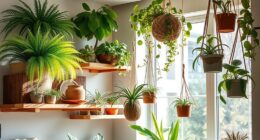
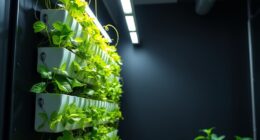
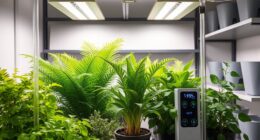
To keep your indoor garden thriving, establish a consistent watering routine based on each plant’s needs, checking soil moisture regularly to prevent over or underwatering. Use containers with proper drainage and inspect plants for pests often, acting quickly if issues arise. Maintain cleanliness by removing debris and pruning affected leaves to promote airflow. Focusing on these basics helps create a healthy environment, and if you pay attention to these details, you’ll find yourself mastering a lush, vibrant indoor garden.
Key Takeaways
- Regularly monitor soil moisture and adjust watering schedules to prevent overwatering or underwatering.
- Use containers with proper drainage and keep soil sterile to minimize pest risks.
- Inspect plants frequently for pests or damage and act quickly to prevent infestations.
- Maintain cleanliness by removing debris and pruning affected leaves to promote healthy growth.
- Create a stable environment with consistent watering, humidity, and pest prevention practices.
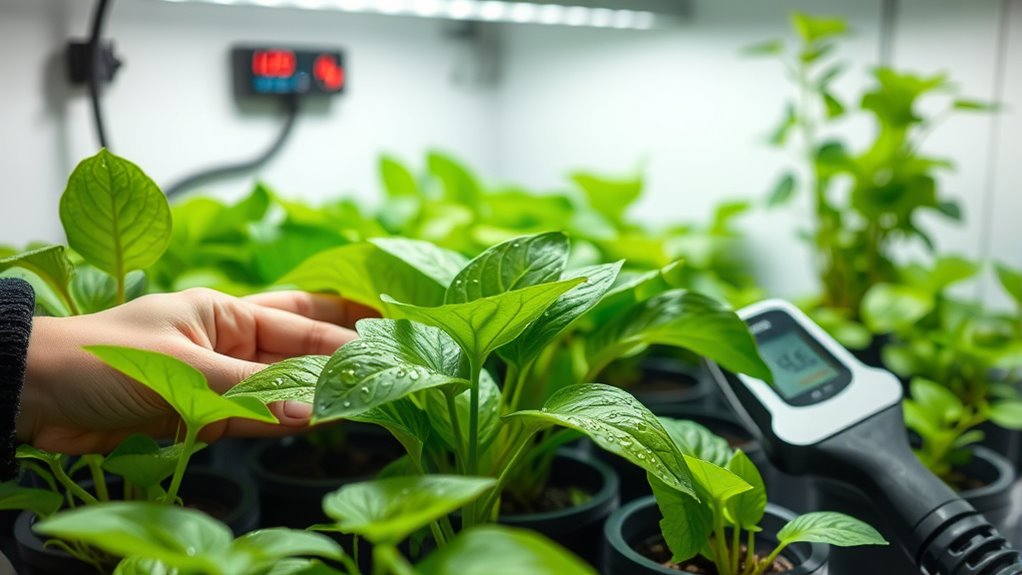
Maintaining an indoor garden requires regular attention to keep your plants healthy and thriving. One of the most important aspects is establishing a consistent watering schedule. You need to understand the specific needs of each plant, as overwatering can lead to root rot, while underwatering causes stress and wilting. To find the right balance, check the moisture level of the soil regularly. Insert your finger about an inch into the soil—if it feels dry, it’s time to water; if it’s still moist, wait a few more days. Using containers with proper drainage is vital to prevent excess water from stagnating at the roots. Setting a routine, such as watering early in the morning or late in the afternoon, helps you stay consistent and avoid neglect. Remember, different plants have unique requirements, so tailor your watering schedule accordingly. Some may need daily watering, while others thrive with less frequent hydration. Incorporating body awareness techniques can help you better understand your plants’ subtle signals for watering needs, making your maintenance more intuitive.
Besides watering, pest prevention plays an essential role in maintaining a healthy indoor garden. Pests like aphids, spider mites, and fungus gnats can quickly infest your plants if you’re not vigilant. To prevent pests from taking hold, start with clean pots and sterile soil when planting new additions. Regularly inspect your plants for signs of pests—look for discolored leaves, sticky residue, or tiny insects crawling on the stems. Keeping humidity levels in check and avoiding overwatering can also deter pests, as many pests thrive in overly moist environments. Introducing natural predators, like ladybugs or predatory mites, can be an effective biological control method if pests appear. Additionally, use organic pest repellents or insecticidal soap when necessary, but always test on a small area first to avoid damage. Maintaining cleanliness around your garden by removing fallen leaves and debris reduces hiding spots for pests and minimizes the risk of infestation.
Consistent monitoring and early intervention are key to pest prevention. The moment you notice any suspicious activity or damage, act swiftly to contain the issue before it spreads. Regularly cleaning your garden space and pruning affected leaves help improve air circulation, making it less inviting for pests. Combining a well-planned watering schedule with diligent pest prevention creates a strong foundation for a thriving indoor garden. With time and effort, you’ll develop an intuitive sense for your plants’ needs, which will keep them healthy and vibrant. Remember, a thriving indoor garden isn’t just about aesthetics; it’s about creating a balanced environment where your plants can flourish, free from pests and stress caused by improper watering. Staying attentive to these fundamentals ensures your indoor garden remains lush, productive, and enjoyable.
Frequently Asked Questions
How Often Should I Replace the Grow Lights?
You should replace your grow lights every 12 to 18 months to guarantee peak performance. Over time, the grow light lifespan diminishes, and bulbs become less effective, which can hinder plant growth. Keep an eye on their brightness and color, and don’t wait until they burn out completely. Regularly replacing grow bulbs helps maintain a healthy indoor garden and guarantees your plants get the right amount of light they need.
What Is the Optimal Humidity Level for Indoor Gardens?
Imagine your indoor garden as a delicate dance—keeping perfect harmony is key. The ideal humidity level for your indoor garden is between 40-60%. Use humidity control tools to maintain consistent moisture levels, preventing plants from drying out or becoming too damp. Regularly monitor and adjust to guarantee your plants thrive, as balancing humidity creates a healthy environment that encourages lush growth and vibrant blooms.
How Can I Prevent Pests in My Indoor Garden?
To prevent pests in your indoor garden, regularly inspect your plants for signs of infestation and keep the environment clean. Use pest prevention strategies like removing dead leaves and avoiding overwatering. When pests appear, apply organic pesticides to control them safely. Introducing beneficial insects, like ladybugs, can also help keep pests in check. Consistent monitoring and natural prevention methods will help maintain a healthy, pest-free indoor garden.
What Are Signs of Nutrient Deficiencies in Plants?
You’ll notice nutrient deficiencies in your plants through symptoms like yellowing leaves, stunted growth, or poor flowering. To confirm, do soil testing to check nutrient levels and pH. If deficiencies are present, adjust your fertilizer application, choosing a balanced fertilizer suited to your plants’ needs. Regular monitoring helps catch issues early, ensuring your indoor garden thrives with healthy, vibrant plants.
How Do I Troubleshoot Inconsistent Plant Growth?
To troubleshoot inconsistent plant growth, first check your watering schedule—overwatering or underwatering can cause uneven growth. Next, assess soil quality; poor or depleted soil lacks essential nutrients, affecting plant health. Make certain your plants receive consistent light and proper temperature. Adjust watering habits and consider repotting with fresh, nutrient-rich soil if needed. Regularly monitor conditions to maintain steady growth and prevent future issues.
Conclusion
With a little care and attention, your indoor garden can flourish like a vibrant oasis in your home. Think of it as tending to a living artwork—each watering, pruning, and monitoring your brushstrokes. When you nurture your green sanctuary daily, it blossoms into a lush paradise, filling your space with life and color. So keep up the good work, and watch your indoor garden thrive like a beautiful symphony played by nature itself.