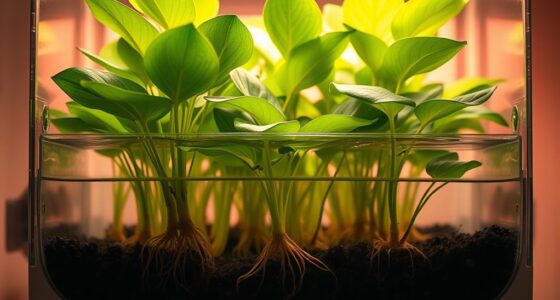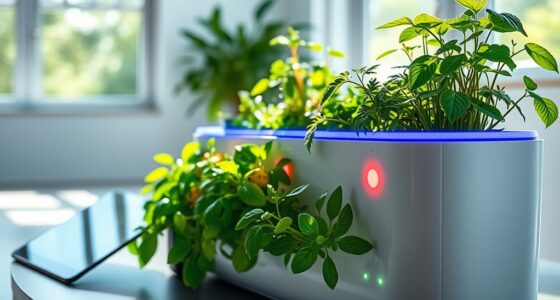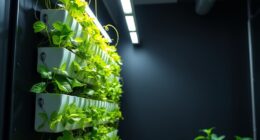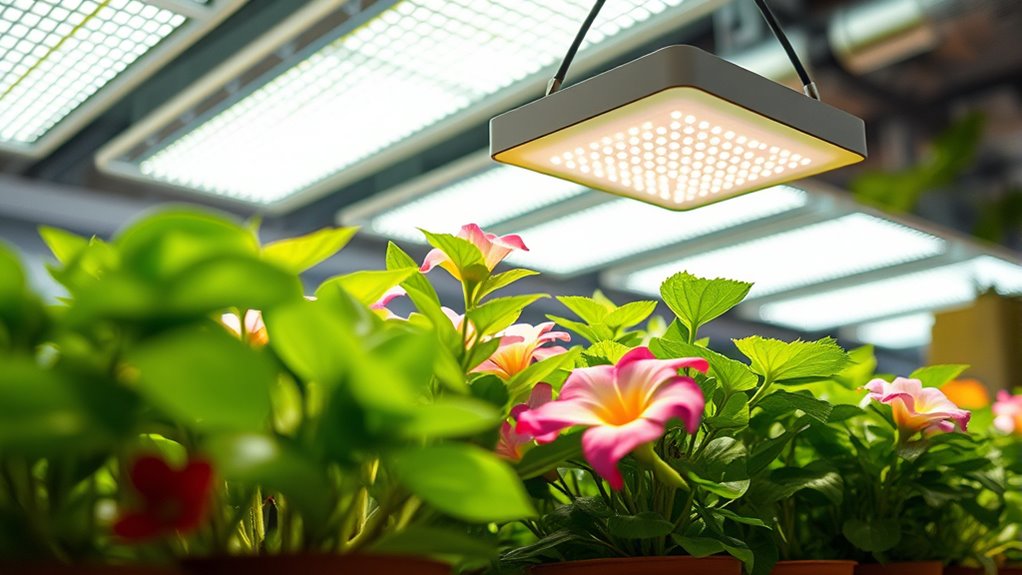

To save energy on your indoor garden lighting, switch to LED lights, which use less power and generate minimal heat. Use a timer to automate the on/off schedule, ensuring lights only run when needed. Adjust schedules seasonally to match natural daylight and prevent unnecessary energy use. Regularly check your lights for any issues and replace faulty units promptly. Keep these tips in mind, and you’ll find even more strategies to optimize your system efficiently.
Key Takeaways
- Use energy-efficient LED grow lights to reduce power consumption and heat output.
- Implement timers to automate lighting schedules, preventing unnecessary energy use during off-hours.
- Adjust lighting duration seasonally to match natural daylight, minimizing artificial light when possible.
- Regularly maintain and replace faulty lights to ensure optimal efficiency and performance.
- Incorporate natural sunlight when available to lower reliance on artificial lighting and save energy.

Indoor garden lighting can substantially impact your energy bills, but with some simple adjustments, you can reduce consumption without sacrificing plant health. One of the most effective ways to do this is by integrating LED lighting into your setup. LED lights use considerably less energy compared to traditional incandescent or fluorescent bulbs, and they produce minimal heat, which helps maintain ideal growing conditions. By switching to LED integration, you guarantee your plants get the right amount of light while keeping your electricity costs in check. LEDs are also long-lasting, meaning you’ll replace bulbs less often, further saving money over time.
Switch to LED grow lights to save energy and extend bulb lifespan.
Beyond choosing energy-efficient bulbs, implementing timer automation plays a critical role in conserving energy. A timer allows you to set precise lighting schedules, ensuring your plants receive light only when needed. This prevents unnecessary light exposure during times when you might forget to turn off the lights manually or when natural daylight is sufficient. With timer automation, you can establish consistent routines that mimic natural sunlight patterns, promoting healthy plant growth while avoiding wasteful overlighting. Additionally, timers reduce the risk of forgetting to turn off lights, which can lead to higher energy bills and potential plant stress.
Combining LED integration with timer automation creates a seamless, energy-efficient lighting system. Once you install LED grow lights and connect them to a timer, you gain control over the daily light cycle without constant manual intervention. You can program the timer to turn lights on and off at specific times, aligning with your plants’ needs and your schedule. This setup not only saves energy but also promotes healthier plants by maintaining consistent lighting conditions, which is essential for photosynthesis and growth.
To maximize savings, consider adjusting your lighting schedule based on the season and natural daylight availability. During longer days, you might reduce the duration of artificial light, relying more on sunlight. Conversely, in darker months, extend your lighting periods slightly but still rely on timer automation to prevent unnecessary energy use. Regularly check your LED lights to ensure they’re functioning properly and replace any faulty units promptly. This proactive approach keeps your system efficient and your energy consumption minimized. Additionally, choosing energy-efficient lighting options can further enhance your overall savings and environmental impact.
Frequently Asked Questions
What Are the Best Energy-Efficient Grow Lights for Indoor Gardens?
The best energy-efficient grow lights for indoor gardens are LED lights because of their advanced LED technology. They consume less power while providing a full light spectrum tailored to plant needs. You’ll notice reduced energy costs and better plant growth. Choose LED grow lights with customizable spectrum settings to guarantee your plants receive the ideal light they need for healthy development, all while saving energy and money.
How Often Should Indoor Garden Lighting Be Turned on and Off?
You should follow consistent timing schedules for your indoor garden lighting, typically 12-16 hours per day, depending on the plant species. Turn lights on in the morning and off at night to maximize energy savings and mimic natural sunlight cycles. Avoid leaving lights on longer than necessary, as this wastes energy and can stress your plants. Regularly adjusting your schedule guarantees ideal growth while conserving power.
Can Natural Sunlight Reduce the Need for Artificial Lighting?
Yes, natural sunlight integration can reduce your need for artificial lighting. By allowing your plants to benefit from natural vs. artificial light, you optimize energy efficiency and promote healthier growth. Position your garden near windows or use reflective surfaces to maximize sunlight exposure. This balance minimizes energy consumption and enhances plant development, making your indoor garden more sustainable and cost-effective. Remember, leveraging natural sunlight is a smart way to save energy while nurturing your plants.
Are There Smart Lighting Systems That Save Energy?
Did you know that smart lighting systems can reduce energy consumption by up to 30%? You’ll find that smart controls and automation scheduling make it easy to optimize your indoor garden lighting. These systems automatically adjust brightness and turn lights on or off based on your schedule or natural light levels, helping you save energy without sacrificing plant health. Embrace smart technology to make your indoor gardening both efficient and eco-friendly.
How Does Light Spectrum Affect Energy Consumption and Plant Growth?
The light spectrum directly impacts both energy consumption and plant health. Using full-spectrum or tailored light enhances plant growth efficiently, reducing energy waste. Blue and red wavelengths are most effective for photosynthesis, so focusing your lighting on these can save energy while promoting healthy plants. Narrow spectrum lights target specific needs, minimizing unnecessary energy use. By choosing the right spectrum, you optimize plant health without increasing your energy bills.
Conclusion
By embracing energy-efficient lighting, you can turn your indoor garden into a lush oasis while saving power. Imagine your plants basking in gentle, sustainable light like a sunrise, brightening your space without draining your resources. Every small change, from switching bulbs to timing your lights, adds up—transforming your garden into a thriving paradise that’s both beautiful and eco-friendly. So, light the way to greener living; your plants—and the planet—will thank you.