
Ebb and flow systems are still a great choice for many indoor gardeners because they’re simple, cost-effective, and easy to maintain. They flood the grow tray with nutrient-rich water, then drain it back into the reservoir, giving your plants both nutrients and oxygen. This recycling process saves water and reduces waste, making it eco-friendly. Plus, the setup works well for various plants and grows easily over time. Stay with us to discover more about why this system continues to stand out.
Key Takeaways
- Ebb and Flow systems offer customizable nutrient and pH control for optimal plant health.
- They efficiently recycle water, promoting sustainability and reducing resource consumption.
- The system’s simplicity provides reliable, low-maintenance operation suitable for all experience levels.
- It ensures excellent oxygenation of roots through regular draining, preventing root rot.
- Versatility allows growing a wide range of plants in various indoor environments.
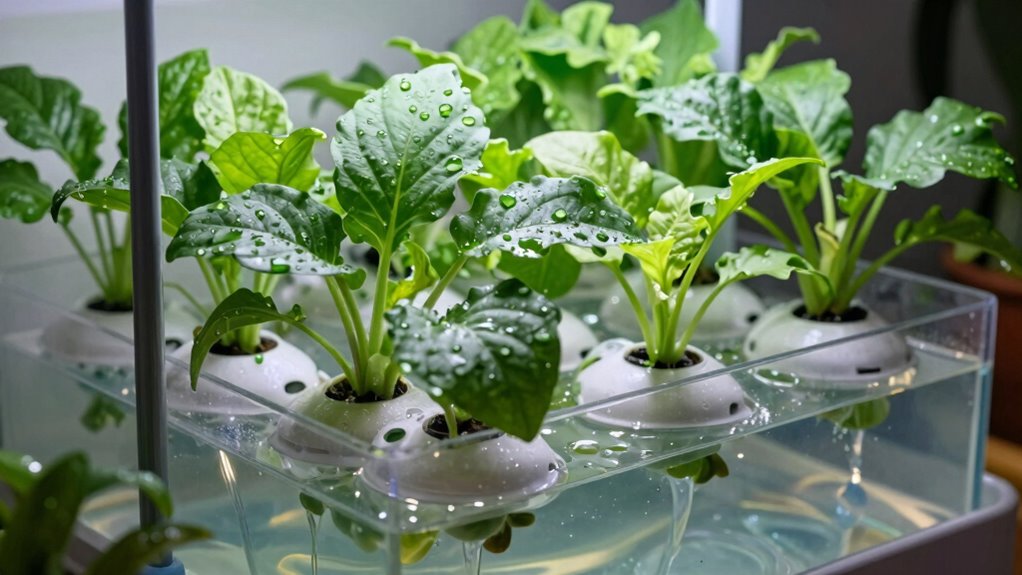
Have you ever considered how an ebb and flow hydroponic system can transform your indoor garden? This method, also known as flood and drain, offers a straightforward yet effective way to grow a variety of plants indoors. Unlike other hydroponic systems, ebb and flow relies on a simple cycle of flooding the grow tray with nutrient-rich water and then draining it back into a reservoir. This cyclical process guarantees your plants get the nutrients they need while providing oxygen to their roots, leading to healthy, vigorous growth. Many indoor gardeners prefer this system because it combines ease of use with reliable results, making it a practical choice whether you’re a beginner or an experienced grower.
One of the biggest advantages of ebb and flow is its exceptional control over nutrient management. You can customize the nutrient solution to match the specific needs of your plants, adjusting the concentration and pH levels as necessary. The periodic flooding ensures that nutrients are evenly distributed and absorbed efficiently, reducing the chances of deficiencies or salt buildup. When the water drains, it also aerates the roots, preventing issues like root rot that can plague other systems. Because you’re managing the timing and volume of each flood cycle, you stay in complete control of your plants’ nutrition, which is vital for maximizing growth and yield. Additionally, the recycling of water in this system aligns with principles of sustainable living, making it an environmentally conscious choice for indoor gardeners. Incorporating water recycling practices can further enhance the eco-friendliness of your gardening setup.
Another reason ebb and flow remains relevant is its versatility. It works well for a wide range of plants, from leafy greens to flowering plants and herbs. The system’s design makes it easy to scale up or down depending on your space and goals. Plus, it’s relatively low-maintenance; once set up, you only need to monitor your water levels, nutrients, and pump operation. This simplicity allows you more time to focus on optimizing your plant care rather than troubleshooting complex equipment or systems. Additionally, because it recycles water rather than continuously using new supplies, it’s eco-friendly and cost-effective in the long run. Understanding hydroponic system types can help you make an informed decision about which setup suits your gardening needs best.
As an affiliate, we earn on qualifying purchases.
Frequently Asked Questions
How Often Should the Ebb and Flow System Be Refilled?
You should refill your ebb and flow system about once a week, but it depends on your plants’ nutrient needs. Regular refilling helps maintain the proper nutrient balance and prevents salt buildup. Keep an eye on plant health and check the system’s reservoir regularly, guaranteeing timely system maintenance. This routine keeps your plants thriving and ensures consistent growth, making your indoor garden more successful and easier to manage.
Can This System Be Used for All Types of Plants?
Think of your ebb and flow system as a versatile garden orchestra that can play many tunes. It accommodates plant diversity, from leafy greens to flowering blooms, thanks to its adaptable design. While not perfect for every plant, especially those with extensive root systems, its system versatility allows you to customize watering schedules and nutrient delivery, making it suitable for a wide range of indoor garden varieties.
What Are the Initial Setup Costs Involved?
The initial setup costs for an ebb and flow system vary, but you should budget for a pump, reservoir, grow trays, and nutrient solutions. Compared to other systems, the cost comparison shows it’s relatively affordable, especially considering its low maintenance requirements. Once installed, you’ll find upkeep minimal, mainly cleaning and refilling nutrients. Overall, it offers a cost-effective, low-maintenance option suitable for many indoor gardeners.
How Energy-Efficient Is the Ebb and Flow System?
Ebb and flow systems are quite energy-efficient because they optimize lighting and nutrient management effectively. You save energy by using timers to control pump cycles, reducing unnecessary power use. Lighting is often synchronized with watering schedules, minimizing excess. Nutrient management is precise, reducing waste. Overall, by fine-tuning these elements, you lower energy consumption while maintaining healthy plant growth, making ebb and flow systems a smart choice for indoor gardeners.
Is There a Risk of Overwatering With This Method?
Yes, there’s a risk of overwatering with ebb and flow systems if you don’t adjust watering frequency properly. Since the system floods the trays regularly, you need to monitor plant compatibility and make certain they don’t stay submerged too long. By tailoring your watering schedule to each plant’s needs and observing their response, you can prevent overwatering and keep your indoor garden healthy.
indoor plant flood and drain system
As an affiliate, we earn on qualifying purchases.
As an affiliate, we earn on qualifying purchases.
Conclusion
If you’re considering an indoor gardening system, ebb and flow still makes sense — it’s efficient and adaptable. Did you know that over 60% of indoor gardeners report higher yields with this method? It’s no surprise why so many thrive with it, thanks to its simple water management and consistent nutrient delivery. Whether you’re a beginner or a seasoned green thumb, ebb and flow can help you grow healthier, more vibrant plants right inside your home.
hydroponic nutrient reservoir kit
As an affiliate, we earn on qualifying purchases.
As an affiliate, we earn on qualifying purchases.
automatic water pump for hydroponics
As an affiliate, we earn on qualifying purchases.
As an affiliate, we earn on qualifying purchases.