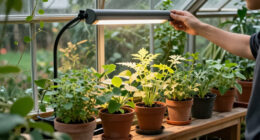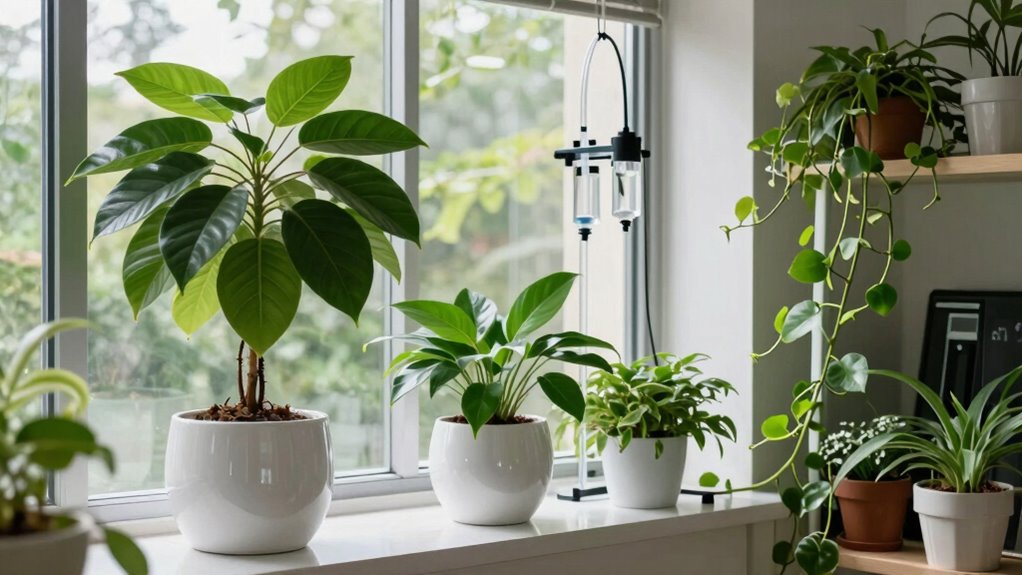

Effortless indoor garden systems feel that way because they automate key tasks like watering, lighting, and nutrient delivery, so you don’t have to worry about daily chores. In contrast, traditional setups require you to water, fertilize, and monitor plants regularly, which can be time-consuming and labor-intensive. If you want to discover how automation can minimize your effort and make gardening more enjoyable, there’s plenty more to explore.

Get garden gear delivered free with Prime
- Fast, free delivery on millions of items
- Prime Video, Amazon Music and more included
- Member-only deals all year
Key Takeaways
- Automated features like self-watering and integrated grow lights reduce manual effort, making systems feel effortless.
- Systems requiring manual watering, fertilizing, and pest management increase perceived effort.
- Biodiversity strategies can decrease pest control workload, simplifying maintenance.
- The level of automation in nutrient and environmental controls directly influences ease of system management.
- Passionate gardeners may find higher-maintenance systems more rewarding, affecting perceived effort levels.
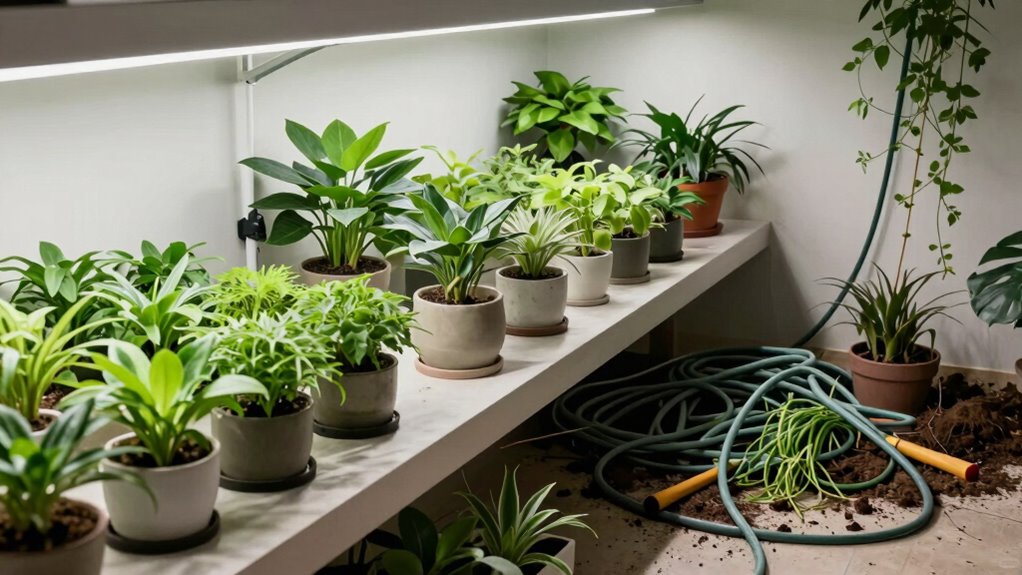
Indoor garden systems have become popular for bringing greenery into your home, but choosing the right setup depends on how much effort you’re willing to invest. Some systems feel almost automatic, thriving with minimal input, while others demand constant attention and work. The difference often comes down to how well the system manages plant nutrition and pest management, two critical factors that influence how effortless or labor-intensive your indoor gardening experience becomes.
Effortless systems usually incorporate automated features, like self-watering reservoirs and built-in grow lights, which take care of basic needs without your daily intervention. These setups often use optimized nutrient delivery, ensuring your plants receive the right amount of plant nutrition without frequent fertilizing. This reduces the guesswork and keeps your plants healthy with minimal effort. Pest management in these systems is also streamlined—many include integrated pest control methods or protective barriers that prevent common indoor pests from taking hold. This means fewer worries about infestations, saving you time and frustration.
Automated features like self-watering reservoirs and integrated pest control simplify indoor gardening with minimal effort.
In contrast, more labor-intensive setups often lack automation. You might need to manually water your plants, monitor light exposure, and adjust environmental conditions. With these systems, plant nutrition isn’t automatically balanced, so you have to regularly fertilize and ensure your plants get the right nutrients, which can be tricky without experience. Pest management becomes a constant concern, as pests like aphids or fungus gnats can quickly take hold if you’re not vigilant. You’ll need to inspect plants regularly, apply organic or chemical controls, and keep your environment clean to prevent infestations. This hands-on approach can be rewarding but also demands ongoing commitment. Additionally, understanding biodiversity within your indoor garden can help you create a resilient ecosystem that naturally controls pests and supports plant health. Incorporating biodiversity strategies can make pest management more sustainable and less labor-intensive over time.
Your choice of an indoor garden system hinges on how much effort you’re prepared to put in. If you prefer a low-maintenance setup, look for systems with automation features that simplify plant nutrition and pest management. These systems handle most of the work behind the scenes, letting you enjoy the greenery without feeling overwhelmed. On the other hand, if you’re passionate about gardening and don’t mind regular upkeep, a more traditional system that requires active management might suit you better. You’ll enjoy the satisfaction of tending to your plants, but be prepared for the extra effort involved.
Ultimately, understanding how your chosen system manages plant nutrition and pest control will help you decide whether indoor gardening feels like a relaxing hobby or an ongoing chore. The key is matching your commitment level with the system’s features, ensuring you get the most enjoyment out of your indoor green space.
As an affiliate, we earn on qualifying purchases.
Frequently Asked Questions
How Do Lighting Requirements Differ Between Effortless and Labor-Intensive Indoor Systems?
Effortless indoor systems usually require lower light intensity and shorter light durations, making setup and maintenance simpler. You might use grow lights with adjustable settings to match plant needs without constant adjustments. Labor-intensive systems demand higher light intensity and longer light durations to promote rapid growth. You’ll need to monitor and tweak these settings frequently to guarantee your plants thrive, which adds to the effort and complexity of the setup.
What Maintenance Tasks Are Involved in High-Effort Indoor Garden Systems?
In high-effort indoor garden systems, you need to regularly check plant health, ensuring they’re growing well and not showing signs of disease. You also perform pest control by inspecting for bugs and applying treatments if needed. Additionally, you must prune plants, replace nutrients, and clean equipment to keep everything running smoothly. These tasks require ongoing attention, making the system more demanding compared to effortless setups.
Are There Specific Plants Better Suited for Low-Maintenance Indoor Gardens?
Sure, if you want to avoid turning your home into a horticultural horror show, stick to succulents and hardy herbs like rosemary or thyme. Succulent selection is perfect for beginners—low water needs and forgiving nature make them practically indestructible. For herb varieties, choose resilient options that thrive with minimal fuss. These plants demand little attention, making your indoor garden feel effortless, not like a full-time job.
How Does System Size Impact the Effort Needed for Indoor Gardening?
Larger indoor garden systems require more effort because managing plant growth and water becomes more complex. You need to monitor water levels carefully and guarantee even distribution, which can be time-consuming. Smaller systems simplify water management, making plant growth easier to control. So, if you want a more effortless experience, choose a compact system that’s easier to maintain, reducing the effort needed for water management and overall plant care.
Can Automation Reduce Effort in Complex Indoor Garden Systems?
Like a modern-day Robin Hood, automation can definitely cut down your effort in complex indoor gardens. Smart watering takes care of hydration, preventing over- or under-watering, while automated pruning keeps plants healthy without manual labor. These features streamline maintenance, letting you enjoy your garden without the constant fuss. With automation, you’re free to relax and watch your indoor oasis thrive—making gardening feel more like a hobby and less like a chore.
As an affiliate, we earn on qualifying purchases.
Conclusion
Choosing an indoor garden system is like picking the right dance partner—you want one that moves effortlessly with your rhythm. When you select a system that fits your lifestyle and needs, gardening becomes a breeze, not a burden. With the right setup, you’ll enjoy watching your plants thrive without feeling like you’re climbing a mountain. Embrace the ease, and let your indoor garden flourish as smoothly as a well-choreographed dance.
indoor grow light with automation
As an affiliate, we earn on qualifying purchases.
As an affiliate, we earn on qualifying purchases.
As an affiliate, we earn on qualifying purchases.
Fall yard work Picks
leaf blowers
As an affiliate, we earn on qualifying purchases.