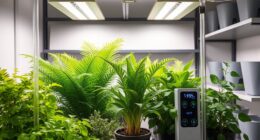
When choosing gardening kits for herbs, vegetables, or fruits, consider their unique soil, nutrient, and pest control needs. Herbs prefer well-draining, moderate fertility soil with simple pest management. Vegetables demand nutrient-rich soil and protection against common pests like beetles and caterpillars, while fruits need deep, well-drained soil and strategies against pests like fruit flies and birds. Selecting a kit tailored to these specific needs makes gardening easier—discover how to pick the perfect kit for your plants as you continue.
Key Takeaways
- Select gardening kits tailored to each plant type’s soil, nutrient, and pest management needs.
- Use kits with integrated pest control strategies suited for herbs, vegetables, or fruits.
- Ensure kits include soil amendments appropriate for the specific plant’s growth requirements.
- Choose kits that facilitate proper soil preparation and drainage for herbs, vegetables, or fruits.
- Opt for kits designed to minimize pest attraction and support healthy, productive plants.

When choosing gardening kits, understanding the specific needs of herbs, vegetables, and fruits is essential to guarantee successful growth. Each plant type has unique requirements that influence how you prepare your soil and manage pests. Starting with soil preparation, you need to make sure the soil provides the right nutrients, drainage, and pH level suitable for your plants. Herbs generally thrive in well-draining soil with moderate fertility, so you might focus on loosening the soil and adding organic matter to improve aeration. Vegetables, on the other hand, often demand richer, more nutrient-dense soil, so incorporating compost or slow-release fertilizers can boost growth. Fruits, especially berry-producing plants or vine crops, usually require deep, well-drained soil with a balanced pH. Before planting, you should test your soil’s condition and amend it accordingly, whether by adding organic compost, adjusting pH, or improving drainage. Additionally, choosing Vetted conversion kits designed for specific plant needs can help optimize your gardening success.
Pest management is another critical aspect to take into account when selecting kits. Different plants attract different pests, and your approach should be tailored accordingly. Herbs tend to be less susceptible to pests, but some, like basil, can attract aphids or whiteflies. Using natural pest control methods such as companion planting or introducing beneficial insects can help keep these pests in check without resorting to chemicals. Vegetables are often more vulnerable to pests like beetles, caterpillars, and aphids, so choosing kits that include integrated pest management (IPM) strategies or pest-resistant varieties can save you time and effort. You might also consider physical barriers like row covers or organic sprays to protect your crops. Fruits are particularly attractive to pests such as fruit flies, beetles, and birds. Protecting fruit plants involves regular monitoring, removing affected foliage, and employing organic pest deterrents. Proper pest management starts with understanding your plants’ vulnerabilities and proactively addressing them through the right combination of cultural practices, natural predators, and organic controls.
Frequently Asked Questions
Which Kit Is Easiest for Beginners to Use?
You’ll find that herb starter kits are the easiest for beginners because they’re straightforward and require minimal maintenance. These beginner-friendly options often include everything you need to get started, like seeds, pots, and soil. Herbs grow quickly, giving you quick results that boost confidence. Plus, they don’t need as much space or complex care, making them perfect for anyone new to gardening or indoor planting.
Can I Grow Herbs, Vegetables, and Fruits Together in One Kit?
Yes, you can grow herbs, vegetables, and fruits together in one kit. Just focus on companion planting, pairing plants that support each other and enhance growth, while also promoting natural pest control. For example, basil with tomatoes or marigolds with strawberries. This approach helps create a balanced, healthy garden, reduces pests, and maximizes space. Keep an eye on each plant’s needs, and you’ll enjoy a thriving, diverse garden in one kit.
Are There Kits Suitable for Small Spaces or Indoor Gardening?
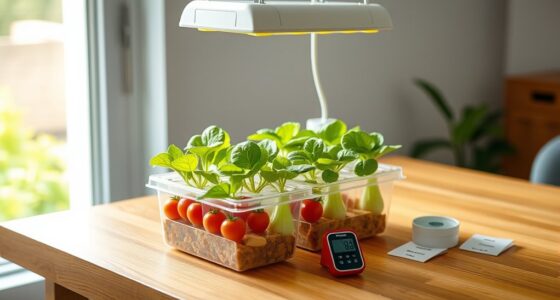
Yes, there are kits perfect for small spaces and indoor gardening. Look for options with a compact design that easily fits on windowsills, countertops, or small shelves. These kits are specifically designed for indoor suitability, often including grow lights and space-efficient containers. They make it simple to cultivate herbs, vegetables, or fruits indoors, maximizing your limited space while giving you fresh produce right at home.
How Often Should I Water Different Types of Plants in the Kits?
Ever wondered how often to water your plants? It depends on their moisture needs. Herbs generally require watering every 2-3 days, while vegetables and fruits may need more frequent watering during hot weather, possibly daily. Check the soil moisture first—if it feels dry an inch below the surface, it’s time to water. Adjust your watering frequency based on the specific plant’s needs and environmental conditions for healthy growth.
Do Kits Include All Necessary Nutrients for Healthy Growth?
Most kits are designed to include nutrient completeness, so you don’t need to buy extra fertilizers initially. They typically provide the essential nutrients needed for healthy growth, covering basic growth requirements. However, you should monitor your plants regularly, as some may need additional nutrients over time. Always follow the kit’s instructions and consider supplementing if you notice signs of nutrient deficiencies, ensuring your plants thrive.
Conclusion
When choosing kits for herbs, vegetables, or fruits, consider your space, your goals, and your experience. Whether you want quick herbs, hearty vegetables, or sweet fruits, select a kit that matches your needs, complements your environment, and inspires your growth. Focus on ease, on adaptability, and on enjoyment. Because the right kit isn’t just about planting—it’s about nurturing your passion, embracing your journey, and harvesting your happiness. Grow with purpose, grow with confidence, grow with joy.