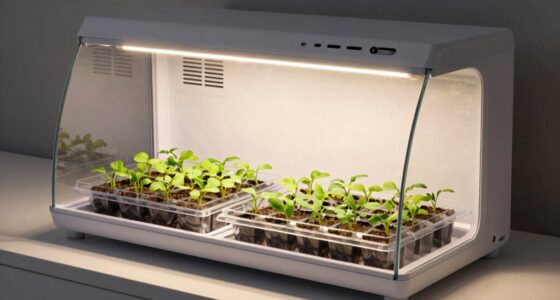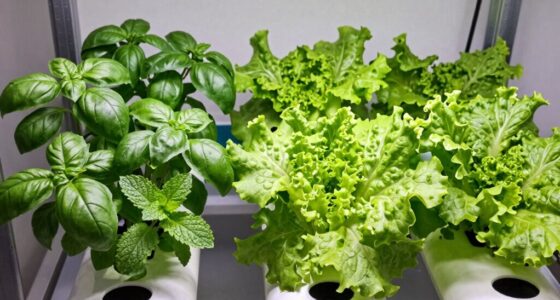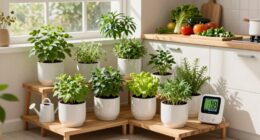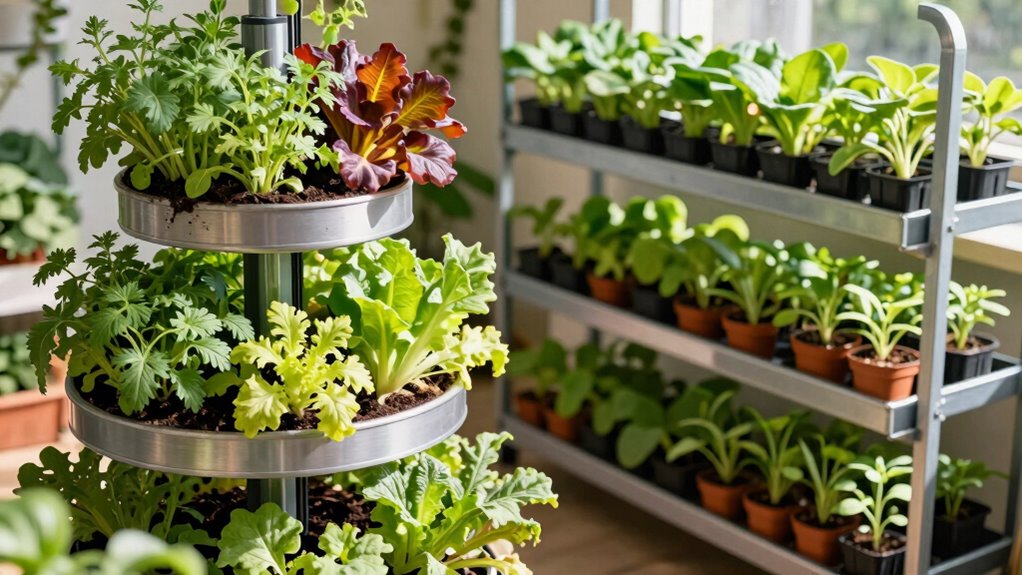

Garden towers are self-contained, spiral structures with integrated soil beds that make soil management easier and reduce pests. Grow racks are open-frame shelves with individual containers, needing regular soil monitoring and pest control. Towers simplify watering and fertilizing, while racks require more hands-on oversight. Each system suits different goals, but understanding their differences helps you choose what’s best. Want to discover more about how these options compare? Keep exploring to find out.

Get garden gear delivered free with Prime
- Fast, free delivery on millions of items
- Prime Video, Amazon Music and more included
- Member-only deals all year
Key Takeaways
- Garden Towers are self-contained with integrated soil beds, while grow racks use individual containers or pockets for soil.
- Soil management in Garden Towers is simpler due to contained, tailored soil, unlike the frequent monitoring needed in grow racks.
- Pest control is more straightforward in Garden Towers due to their enclosed soil environment, whereas pests can spread between grow rack containers.
- Garden Towers conserve water and nutrients efficiently through integrated features, whereas grow racks require careful watering and soil replenishment.
- Maintenance in Garden Towers is more centralized, while grow racks demand regular inspection of each individual container.
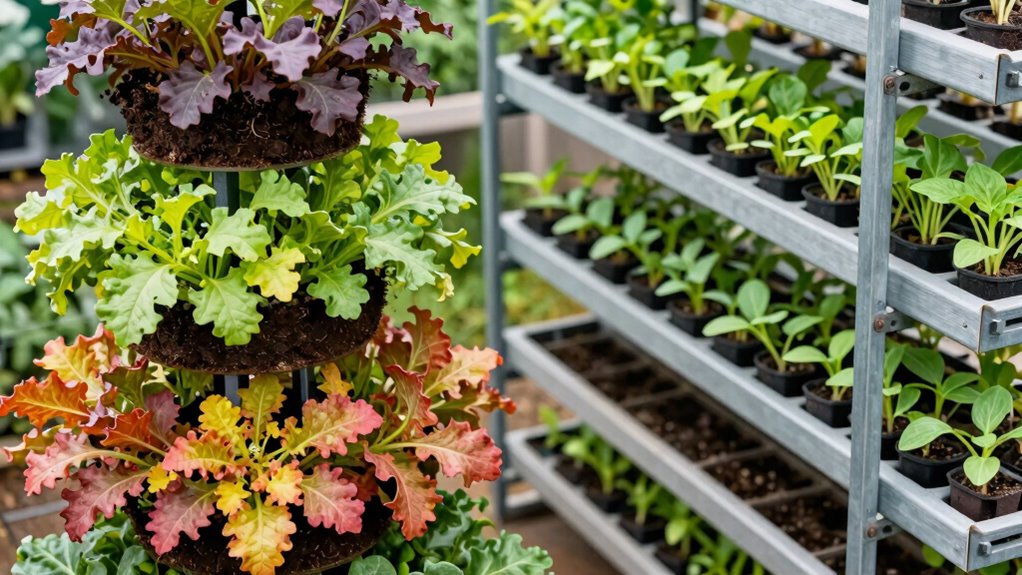
When choosing the best vertical gardening system for your space, it’s important to compare Garden Towers and grow racks. Both options offer efficient ways to maximize gardening in limited areas, but they differ significantly in design, soil management, and pest control. Understanding these differences helps you select the right system for your needs.
Garden Towers are self-contained structures with built-in soil beds, often in a circular or spiral shape. They’re designed to hold a rich, organic soil mixture, which makes soil composition a vital factor. Since the soil is confined within the tower, you can tailor it to suit specific plants, ensuring proper drainage, aeration, and nutrient content. This controlled environment reduces the risk of soil compaction and allows for easier management of soil health over time. You can also add compost or organic amendments directly into the soil, promoting healthy root development. Because the soil is contained, pest management becomes more straightforward. You’re less likely to encounter soil-borne pests or diseases spreading across your garden, and you can implement targeted treatments without affecting other plants. Additionally, Garden Towers often incorporate efficient water use features to conserve moisture and reduce waste. Proper soil enrichment techniques within the tower can further enhance plant growth and yield. Regularly monitoring soil conditions can also help prevent nutrient deficiencies and promote steady growth.
Garden Towers feature built-in soil beds, simplifying pest control and tailored soil management for healthier plants.
Grow racks, on the other hand, are typically open-frame structures with vertical shelves or pockets where plants grow in containers or pockets filled with potting mix. Unlike Garden Towers, they don’t usually have a built-in soil system but rely on the soil within individual pots or pockets. This setup requires regular replenishing and monitoring of soil moisture and nutrients. Soil composition in grow racks can vary widely depending on the pots used, so you need to select high-quality, well-draining potting mixes to prevent root rot and ensure healthy growth. Pest management in grow racks can be more challenging because pests can easily migrate from one container to another. Since each plant is in a separate container, pests may spread quickly if not controlled, and you might need to treat individual pots rather than addressing a systemic problem. Additionally, soil management in these systems often involves more hands-on oversight to maintain optimal conditions. Proper watering techniques are essential to prevent over- or under-watering in container-based systems. Regularly inspecting each container can help catch pest issues early and reduce the risk of infestations spreading. Using appropriate soil mixes tailored for container gardening can also improve plant health and reduce maintenance efforts.
garden tower self-contained vertical garden
As an affiliate, we earn on qualifying purchases.
As an affiliate, we earn on qualifying purchases.
Frequently Asked Questions
Are Garden Towers Suitable for Indoor Gardening?
Yes, garden towers can be suitable for indoor gardening if you provide adequate indoor lighting, like LED grow lights, to mimic sunlight. They also help with pest control by elevating plants, reducing ground pests. Make sure you have enough space and proper ventilation. Regular watering and monitoring for pests are essential. With the right setup, garden towers enhance indoor gardening, making it easier to grow fresh herbs and vegetables inside your home.
How Much Space Do Grow Racks Typically Require?
Grow racks usually require about 2 to 4 square feet per unit, depending on their size and configuration. You can optimize space efficiency by adjusting plant density—placing plants closer together without overcrowding—making the most of limited space. If you want to maximize your indoor gardening, choose a rack that balances plant density with airflow and access, ensuring healthy growth while saving room.
Can Garden Towers Be Customized for Different Plant Types?
Yes, you can customize garden towers for different plant types. With plenty of customization options, you can tailor the tower’s design to support diverse plant needs, enhancing plant diversity. You might add adjustable tiers, specific soil compartments, or different watering systems, allowing you to grow herbs, vegetables, or flowers simultaneously. Customization helps optimize space and plant health, making your garden more versatile and productive.
What Is the Typical Lifespan of a Grow Rack?
A stitch in time guarantees nine — and your grow rack’s lifespan depends on proper care. Typically, a grow rack lasts between 5 to 10 years, depending on plant durability and environmental conditions. Regular maintenance, such as cleaning and protecting it from weather elements, can extend its longevity. Investing a little time now ensures your rack remains sturdy and reliable, so your plants thrive season after season.
Do Garden Towers Require Special Watering Systems?
Yes, garden towers often require specialized watering systems. You’ll want automated watering setups to guarantee consistent moisture, especially for taller towers. Good drainage systems are essential to prevent overwatering and root rot. These features help you maintain ideal plant health with minimal effort. By integrating automated watering and effective drainage, you make caring for your garden tower more efficient and ensure your plants thrive throughout the growing season.
As an affiliate, we earn on qualifying purchases.
Conclusion
So, whether you choose a Garden Tower or grow racks, remember you’re wielding a green thumb like a mighty wizard commanding nature’s magic. The Tower creates a lush, eco-friendly jungle right in your backyard, while grow racks offer compact, high-yield solutions for limited spaces. Both are game-changers, transforming your gardening dreams into reality. Whichever you pick, prepare to turn your garden into an oasis so vibrant, it’ll outshine even the most dazzling rainforest!
vertical garden tower with integrated soil beds
As an affiliate, we earn on qualifying purchases.
As an affiliate, we earn on qualifying purchases.
outdoor plant grow rack with containers
As an affiliate, we earn on qualifying purchases.
As an affiliate, we earn on qualifying purchases.
Halloween Picks
halloween
As an affiliate, we earn on qualifying purchases.