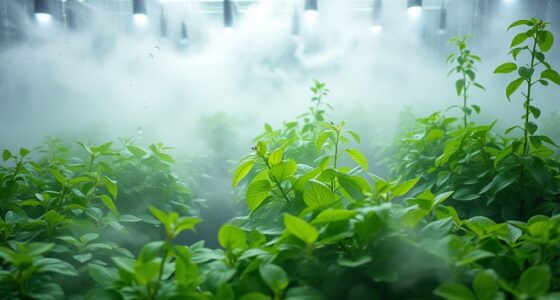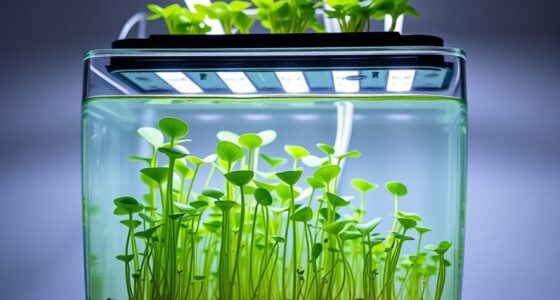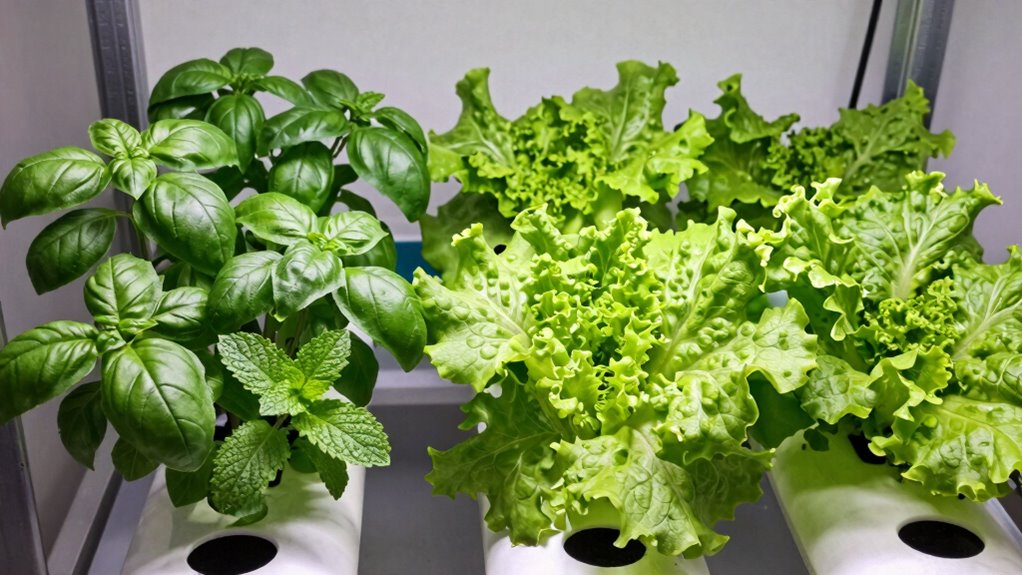

You shouldn’t judge hydroponic kits for herbs and vegetables the same because each plant type has unique needs. Herbs thrive in lighter, well-draining mediums with less maintenance, while vegetables require nutrient-rich solutions and more careful pest control. Systems also differ in complexity and support. Understanding these differences helps you choose the right kit and care routine. Keep exploring to discover how tailoring your setup can lead to healthier plants and better yields.

Get garden gear delivered free with Prime
- Fast, free delivery on millions of items
- Prime Video, Amazon Music and more included
- Member-only deals all year
Key Takeaways
- Herbs thrive in simple, lightweight systems with minimal maintenance, unlike vegetables which need more complex setups and regular adjustments.
- Pest management is easier for herbs due to their smaller size and lower pest impact compared to vegetables.
- Vegetables require nutrient-rich solutions and precise pH control, making their kits more sophisticated than herb-focused systems.
- Growing mediums differ: herbs prefer aeration-focused media like perlite, while vegetables rely on nutrient solutions.
- Suitability depends on grower skill level; herbs suit beginners, whereas vegetables demand more monitoring and support.
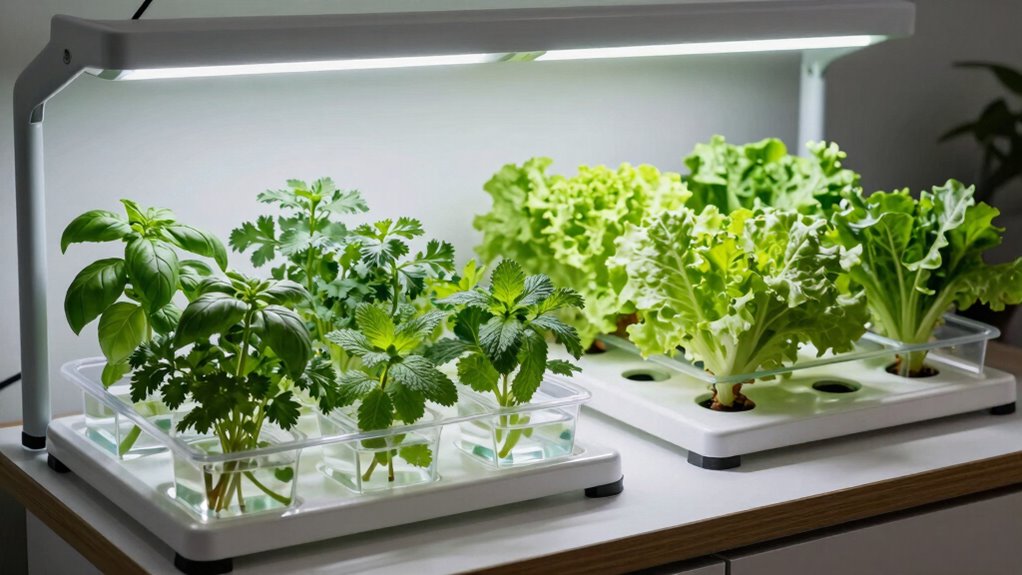
Growing fresh herbs and vegetables at home has never been easier thanks to hydroponic kits. These systems provide a clean, efficient way to cultivate your favorite plants indoors or in small outdoor spaces without the need for traditional soil. However, it’s important to understand that hydroponic kits for herbs and vegetables shouldn’t be judged the same way. Each type of plant has specific needs, and the way you approach their setup and maintenance varies considerably.
Hydroponic kits are perfect for growing herbs and vegetables, but each requires tailored setup and care.
When it comes to hydroponic kits for herbs, you typically deal with plants that thrive in lighter, well-draining environments. Herbs often prefer a slightly different soil compatibility or growing medium, such as coconut coir or perlite, which guarantees good aeration and moisture retention. Because these plants are usually smaller and more delicate, pest management becomes a bit simpler. You can often spot pests early and remove them without disrupting the entire system. Plus, since herbs are normally used fresh and in small quantities, pests don’t usually cause as much damage or spread as rapidly as they might with vegetables. Additionally, the overall plant maintenance for herbs is typically less intensive, making them ideal for beginners. Understanding the specific growing conditions for herbs can help optimize their growth and flavor.
In contrast, hydroponic kits for vegetables tend to require more robust support systems. Vegetables often need a more nutrient-rich environment and a steady supply of water that’s carefully balanced in pH and nutrient content. Soil compatibility in this case refers more to the growing medium and nutrient solution rather than traditional soil itself. You’ll need to monitor and adjust your nutrient levels frequently to guarantee healthy root development. Pest management becomes more critical with vegetables, especially for larger, edible crops. Pests like aphids, beetles, or caterpillars can quickly infest a vegetable garden, causing considerable damage. Consequently, you must be proactive in pest control, using integrated pest management practices that include physical barriers, biological controls, or safe organic pesticides. Additionally, understanding the hydroponic systems suitable for each plant type can significantly influence your success.
Ultimately, these differences mean you shouldn’t treat hydroponic kits for herbs and vegetables as interchangeable. Herbs are generally easier to grow in smaller, less complex systems, and pests tend to be less aggressive. Vegetables, however, demand more attention to nutrient balance and pest prevention. If you approach each with its specific needs in mind, you’ll maximize your success and enjoy a steady supply of fresh, home-grown herbs and vegetables. Recognizing that the systems, maintenance, and challenges differ guarantees you can tailor your approach, making your hydroponic setup more effective and enjoyable.
Products Worth Considering

Orbit B-hyve 12-Zone Indoor/Outdoor Wi-Fi Sprinkler Controller

Orbit B-hyve XR 8-Zone Indoor/Outdoor Smart Sprinkler Controller

Husqvarna Power Axe 350i 18-Inch Cordless Chainsaw Kit
As an affiliate, we earn on qualifying purchases.
Frequently Asked Questions
Can Hydroponic Kits Be Used Outdoors Safely?
Yes, you can use hydroponic kits outdoors safely, but you need to take into account outdoor placement and weather conditions. Place your kit in a shaded or sheltered spot to protect it from harsh sun, wind, or heavy rain. Keep an eye on weather forecasts, especially during storms or frost, to prevent damage. Regularly check your system for leaks or issues caused by outdoor elements, ensuring your plants stay healthy.
How Long Does It Take to Grow Herbs Hydroponically?
You can expect herbs to grow hydroponically in about three to four weeks, and their herb flavor develops quickly. While some worry about a slow growth rate, hydroponic systems accelerate growth compared to traditional soil. With proper lighting and nutrients, you’ll see fresh herbs in just a few weeks, making it a rewarding and efficient way to enjoy flavorful herbs year-round.
Are Hydroponic Systems Energy-Efficient?
Hydroponic systems are generally energy-efficient, especially when compared to traditional farming, because they use less water and optimize space. You’ll find that energy consumption varies depending on the setup, but many systems incorporate energy-saving features like LED grow lights and timers. This makes them a sustainable choice, reducing your environmental impact while giving you fresh herbs and vegetables year-round.
What Maintenance Is Required for Hydroponic Kits?
You need to regularly check nutrient management and pH balancing in your hydroponic kit. For example, if you notice your herbs aren’t thriving, it might be due to imbalanced nutrients or pH levels. You’ll want to clean your system, replace nutrient solutions every couple of weeks, and adjust the pH as needed. Consistent monitoring guarantees your plants stay healthy and grow effectively.
Can Beginners Successfully Grow Vegetables Hydroponically?
Yes, beginners can successfully grow vegetables hydroponically. You avoid soil dependence, which reduces pests and diseases, making pest control easier. Starting with a simple kit helps you learn the basics without feeling overwhelmed. Regularly check nutrient levels and maintain proper water flow. With patience and attention, you’ll see your vegetables thrive, and you’ll gain confidence in your hydroponic gardening skills.
Conclusion
When choosing hydroponic kits, remember that herbs and vegetables have different needs—what works for one might not suit the other. Did you know that herbs can often thrive in smaller, simpler setups, while vegetables require more space and nutrients? By understanding these distinctions, you’ll make smarter decisions and get better yields. So, don’t judge all hydroponic kits the same—tailor your choice to what you’re growing, and enjoy fresh, healthy herbs and veggies all year round.