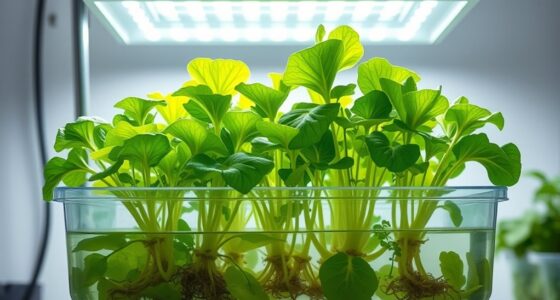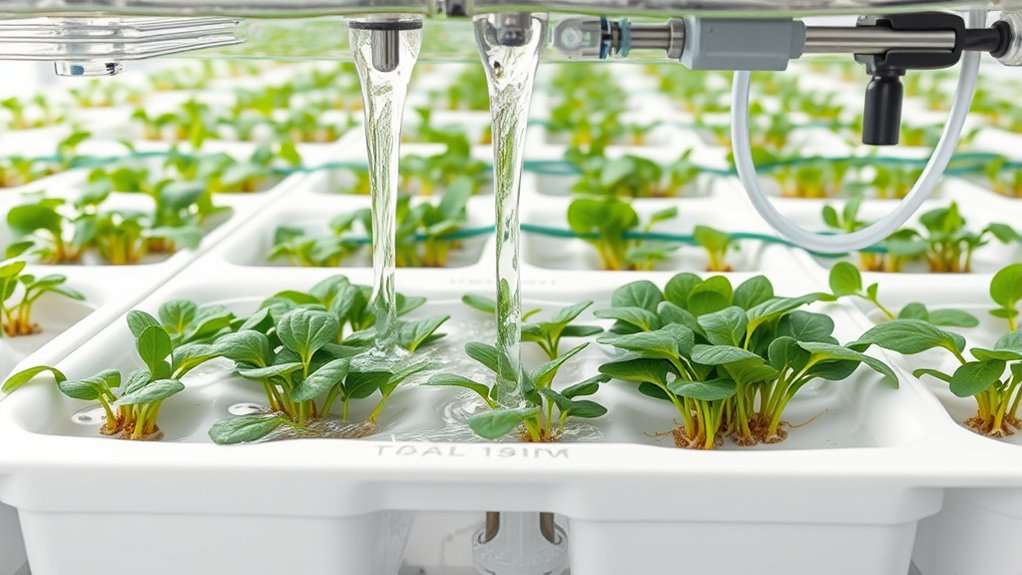
Ebb and flow kits use a timed cycle to flood and drain your grow tray, giving your plants the right amount of water, nutrients, and oxygen. The process involves a pump that fills the tray with nutrient-rich water, then drains it back into a reservoir, ensuring healthy root oxygenation and preventing overwatering. Proper timing and safeguards are essential for success. Keep going to learn how to optimize your system and avoid common issues.
Key Takeaways
- Flood and drain kits use periodic water cycles to supply nutrients and oxygen to plant roots.
- The system relies on timed flooding and drainage to mimic natural water movement.
- Safeguards like float switches prevent overfilling and waterlogging, ensuring system stability.
- Proper timing and flood control optimize plant health and prevent root rot.
- These kits are scalable, energy-efficient, and promote sustainable water use in hydroponic setups.
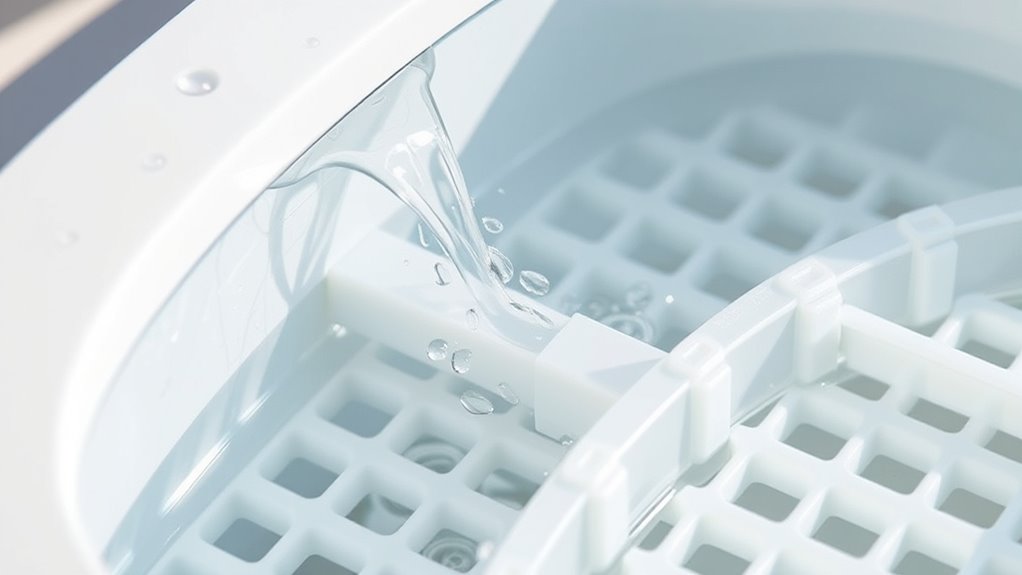
Flood and drain kits are an efficient and easy way to set up a hydroponic or aquaponic growing system. These kits leverage the water cycle to keep your plants healthy while simplifying maintenance. When you’re working with an ebb and flow system, understanding how the water moves through the setup is vital for success. The water cycle in these kits involves periodically flooding the grow tray with nutrient-rich water and then draining it back into a reservoir. This cyclical process ensures your plants receive a consistent supply of nutrients without overwatering or creating stagnant conditions.
One of the main advantages of flood and drain kits is their ability to promote oxygenation around the roots. When the water recedes, it exposes the roots to fresh air, preventing root rot and encouraging healthy growth. The ebb and flow action mimics natural water movement, which helps your plants thrive. To operate effectively, these kits typically include a timer that controls the pump, ensuring the flooding and draining happen at regular intervals. Proper timing is key to maintaining an ideal water cycle that provides your plants with just the right amount of moisture and oxygen.
Flood prevention is an important consideration when setting up your system. If the flood cycle is too frequent or too prolonged, it can lead to waterlogging, which stresses your plants and hampers growth. Conversely, inadequate flooding can deprive plants of necessary nutrients. Most kits include features to help prevent overfilling, such as float switches or adjustable timers. These safeguards ensure the system floods to the correct height without overflowing, protecting your setup from water damage and maintaining a stable environment. Proper flood prevention not only safeguards your plants but also reduces the risk of water damage to your grow space. Additionally, understanding the water cycle involved in these systems helps optimize overall performance and efficiency.
Another benefit of using flood and drain kits is their scalability and adaptability. Whether you’re growing a few plants or a larger setup, these kits can be customized to fit your needs. They also minimize water waste, since excess water is recycled through the system. This sustainable approach makes them ideal for indoor gardens or spaces where water conservation matters. With a good understanding of the water cycle and flood prevention measures, you can optimize your ebb and flow system for maximum yield and minimal hassle. Overall, these kits make hydroponic and aquaponic gardening accessible, efficient, and manageable, even for beginners.
Frequently Asked Questions
How Do I Troubleshoot Flooding Issues in My Flood and Drain System?
To troubleshoot flooding in your flood and drain system, first check your sensor calibration to make sure it accurately detects water levels. Next, inspect your pump for any clogs or wear, and perform regular pump maintenance to keep it running smoothly. Adjust the timing settings if needed, and verify that your drain lines are clear. These steps help prevent overflows and maintain ideal flood and drain operation.
What Are the Best Plants for Flood and Drain Hydroponic Setups?
You should choose plants that thrive in flood and drain systems, such as leafy greens like lettuce and spinach, herbs like basil and mint, and certain vegetables like peppers. Focus on plant selection that adapts well to frequent watering cycles. Proper nutrient management is vital; guarantee your plants receive balanced nutrients during each flood cycle to promote healthy growth and prevent issues like nutrient deficiencies or root rot.
How Often Should I Flush or Clean My Flood and Drain Components?
You should flush and clean your flood and drain components at least once every two weeks. This cleaning schedule prevents mineral buildup and keeps your system running smoothly, avoiding costly clogs. Think of it as a spa day for your setup—regular component maintenance ensures healthy roots and maximum growth. Neglecting this routine can cause issues, so stay proactive and keep your system fresh for the best hydroponic results.
Can Flood and Drain Systems Be Automated for Remote Monitoring?
Yes, you can automate your flood and drain system for remote monitoring using automation technology. Smart controllers and sensors let you track water levels, pump activity, and system health from anywhere. With these tools, you can adjust timers, receive alerts, and guarantee your system runs smoothly without manual intervention. Setting up remote monitoring makes maintaining ideal conditions easier, saving you time and giving you peace of mind.
What Safety Precautions Are Necessary for Flood and Drain Kit Installation?
You should prioritize electrical safety by ensuring all wiring is waterproof and properly insulated to prevent shorts. Proper ventilation is vital to avoid humidity buildup, which can cause mold or electrical issues. Always install your flood and drain kit in a dry, well-ventilated space, and use GFCI outlets for added protection. Double-check connections regularly, and follow manufacturer instructions meticulously to keep your system safe and functional.
Conclusion
With flood and drain kits, you gain a reliable way to manage watering your plants efficiently. Some might worry about complexity, but once you understand the mechanics, it’s straightforward and adaptable. The system’s versatility means you can customize it to fit your space and needs, ensuring healthy plants without constant oversight. Embrace the flow, and you’ll enjoy a thriving garden, even if you’re new to hydroponics—it’s easier than you think.