TL;DR

Get garden gear delivered free with Prime
- Fast, free delivery on millions of items
- Prime Video, Amazon Music and more included
- Member-only deals all year
Hummingbird movements vary by species: many travel south to Mexico and Central America, while Anna’s hummingbirds and some Allen’s hummingbirds remain in parts of the western United States. Gardeners can support birds that stay or stop over by keeping feeders clean and supplied, planting winter-blooming flowers and avoiding pruning branches that may provide shelter.
As daylight hours shorten and food becomes less available in northern regions, many hummingbirds move south for winter, while some remain in parts of the United States, according to a Homes and Gardens report. The report recommends clean, well-stocked feeders, winter-blooming plants and undisturbed branches to help birds that stay locally or pass through.
Ruby-throated, Rufous and Calliope hummingbirds generally migrate toward Mexico, with some traveling as far as Central America. By November, many migrants have reached those regions, the report says. Exact routes and timing differ among species, so a hummingbird’s absence from a yard does not by itself indicate that anything has gone wrong.
Some birds remain farther north. Anna’s hummingbirds are often present along the West Coast and in the Pacific Northwest. They can enter torpor—a temporary state in which body temperature and metabolism slow—to conserve energy, particularly on cold nights. Allen’s hummingbirds have both migratory birds that travel to Mexico and a population that stays in southern California year-round.
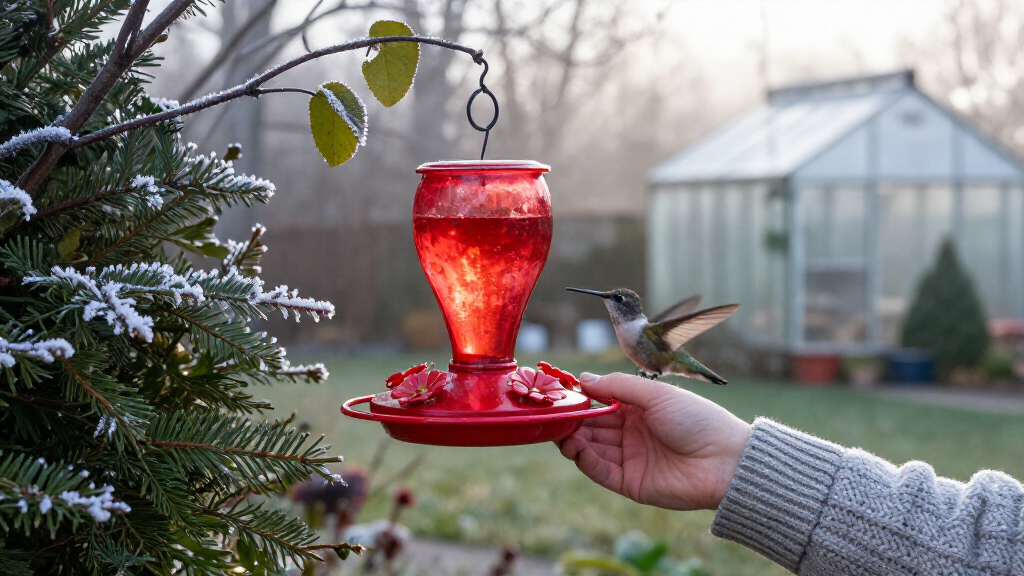
For winter support, the report advises cleaning feeders regularly and keeping nectar available. A heated feeder can help prevent nectar from freezing. It also recommends planting nectar-producing winter blooms, including camellias, and delaying pruning of shrubs and trees so branches that may provide shelter remain intact.
Winter Food and Shelter for Hummingbirds
Winter support can matter to birds that remain in a region as well as migrants stopping to feed. Natural nectar may be limited during cold months, and freezing conditions can make feeder nectar unavailable. Maintaining a clean feeder and planting flowers that bloom in winter can add food sources, while leaving branches unpruned can preserve potential shelter.
These steps do not guarantee hummingbirds will visit. Which species appear depends on location, seasonal movement and local conditions. A quiet feeder may simply reflect migration or the absence of a local wintering population, rather than a problem with the yard.
Products Worth Considering

Daltack 14-Pack Polycarbonate Greenhouse Panels (6' x 2' x 0.24)

Husqvarna 330LK Gas String Trimmer

Traeger Westwood Wood Pellet Grill and Smoker, 653 sq. in., WiFIRE
As an affiliate, we earn on qualifying purchases.
Migration Routes Differ by Species
Hummingbird migration is not a single journey shared by every species. The report describes Ruby-throated, Rufous and Calliope hummingbirds as generally moving south toward Mexico, with some continuing into Central America. Meanwhile, Anna’s hummingbirds commonly remain in parts of the western United States, and Allen’s hummingbirds include both migrants and year-round residents in southern California.
Shorter days are one signal associated with seasonal movement, while the reduced availability of food in northern areas adds pressure to travel. The report presents these patterns as general tendencies, not a prediction that every bird of a given species will follow the same route or schedule.
Local Winter Visitors Vary
The report does not provide regional counts, migration dates or population estimates, and it does not identify how many birds are likely to remain in any particular yard. Individual movements can vary, so readers cannot determine from the general patterns alone whether a hummingbird will visit their garden this winter.
It also does not specify feeder-cleaning intervals, nectar recipes or detailed instructions for heated feeders. Gardeners using feeders should follow the product’s directions and keep equipment clean; the report’s recommendations are general rather than a location-specific care plan.
Prepare the Garden for Cold Months
Gardeners can begin by checking whether hummingbirds are still appearing locally, then keep any feeder clean and supplied while birds are visiting. If temperatures are cold enough to freeze nectar, a heated feeder is one option mentioned in the report. Winter-blooming plants such as camellias can provide a natural food source, and postponing pruning helps retain branches that may offer cover.
If hummingbirds are absent, the report suggests supporting other wildlife as well: leave some faded perennials and fallen leaves in place and consider making wildlife shelters. These measures can prepare a garden for winter wildlife, though the report does not say they will attract hummingbirds specifically.
Key Questions
Where do hummingbirds go in winter?
Many Ruby-throated, Rufous and Calliope hummingbirds travel toward Mexico, and some continue to Central America. Anna’s hummingbirds often remain along the West Coast and in the Pacific Northwest; Allen’s hummingbirds include both migrants and year-round residents in southern California.
Why have hummingbirds disappeared from my yard?
Their absence may reflect seasonal migration as daylight decreases and food becomes scarcer in northern regions. It does not necessarily mean anything in the yard scared them away.
How can I help hummingbirds during cold weather?
Keep feeders clean and supplied, consider a heated feeder to reduce the chance that nectar freezes, and plant winter-blooming flowers such as camellias. Avoid pruning shrubs and trees when doing so could remove branches that provide shelter.
Do all hummingbirds migrate south?
No. Migration differs by species and population. Some hummingbirds travel to Mexico or Central America, while Anna’s hummingbirds and some Allen’s hummingbirds remain in parts of the United States.
Source: homesandgardens.com