
To winterize your indoor garden, you should adjust your lighting by increasing artificial hours and ensuring your plants get 12-16 hours daily. Maintain higher humidity levels using humidifiers or water trays, and reduce watering since growth slows. Keep temperatures stable and away from drafts or cold spots, and monitor regularly for pests or stress signs. Fine-tuning these steps helps your plants stay healthy all winter—discover more tips to keep your garden thriving within.

Get garden gear delivered free with Prime
- Fast, free delivery on millions of items
- Prime Video, Amazon Music and more included
- Member-only deals all year
Key Takeaways
- Adjust indoor lighting to ensure plants receive 12-16 hours daily, using timers and supplemental grow lights if needed.
- Increase humidity with humidifiers, water trays, or misting to prevent dryness caused by indoor heating.
- Reduce watering frequency by checking soil moisture and ensuring proper drainage to avoid overwatering.
- Maintain stable temperatures away from drafts, cold windows, or vents, possibly using insulation or space heaters.
- Regularly monitor plants for stress, pests, or disease, and modify care routines to promote healthy growth year-round.
As winter approaches, preparing your indoor garden to withstand the colder months is essential. During this time, the natural sunlight diminishes, so you need to make lighting adjustments to guarantee your plants continue to thrive. Evaluate the placement of your grow lights or windows and reposition your plants if necessary. You might find that increasing the duration of artificial light or adding supplemental grow lights helps compensate for shorter days. Keep in mind that many indoor plants require at least 12-16 hours of light daily during winter, so consider using timers to maintain consistent lighting schedules. This prevents stress and encourages healthy growth despite the reduced daylight.
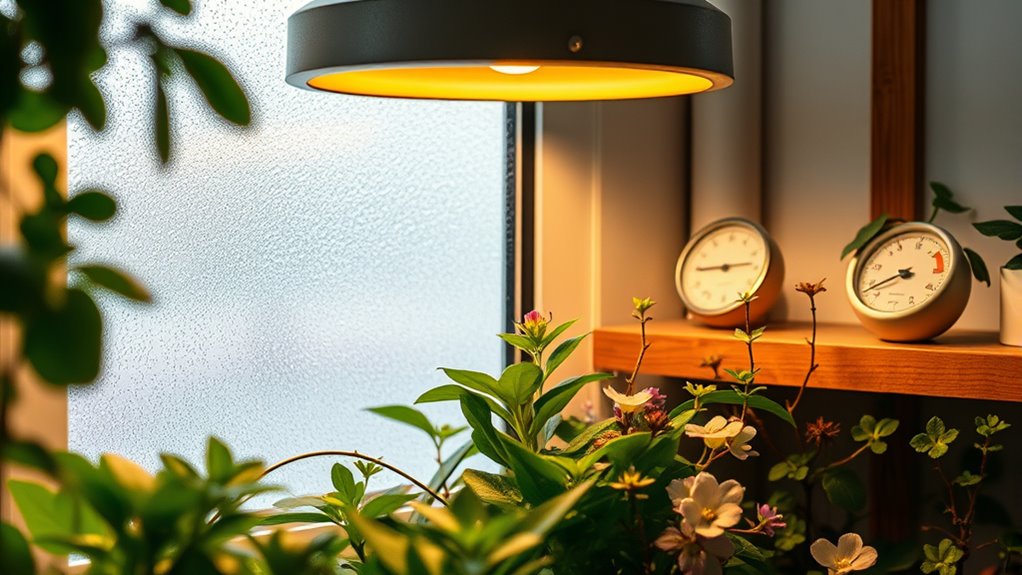
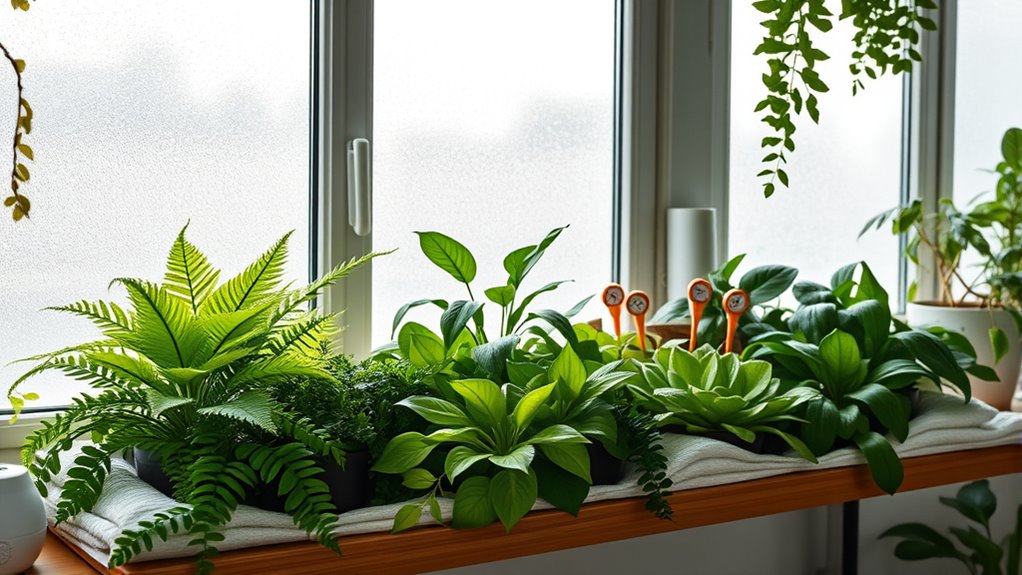
Along with lighting adjustments, humidity control becomes indispensable as indoor air tends to dry out during winter due to heating systems. Dry air can lead to wilting, browning leaf edges, and slower growth. To maintain ideal humidity levels, use a humidifier in your gardening space or place water trays near your plants to add moisture to the air naturally. Regularly misting your plants can also help, but avoid overdoing it, as excessive moisture can promote mold or pests. Monitoring humidity levels with a hygrometer allows you to fine-tune your approach, ensuring your plants have the environment they need for robust growth.
In addition to lighting and humidity, you should also pay attention to your plant’s watering schedule. During winter, plants generally require less water because their growth slows. Check the top inch of soil before watering to prevent overwatering, which can lead to root rot. Adjust your watering routine accordingly, making sure excess water drains well and doesn’t stagnate around the roots.
Furthermore, consider the temperature variations in your indoor space. Keep your garden away from drafts, cold windows, or heating vents that can cause sudden temperature fluctuations. Consistent warmth helps your plants maintain metabolic functions and prevents stress. If your home’s temperature drops considerably at night, you might want to provide additional insulation or use a space heater set to a safe level.
Finally, remember that winterizing isn’t just about making adjustments; it’s about observing your plants closely. Watch for signs of stress, pests, or disease, and respond promptly. With proper lighting adjustments and humidity control, along with attentive care, your indoor garden can flourish year-round, even through the coldest months. Your plants will thank you for creating a stable, nurturing environment that supports their health and vitality despite the winter challenges. Proper plant care techniques, including regular pruning and fertilizing, can further enhance their resilience during this season.
Frequently Asked Questions
How Do I Prevent Pests During Winter?
To prevent pests during winter, you should focus on pest prevention and pest identification. Regularly inspect your plants for signs of pests and remove any affected leaves. Keep your indoor garden clean and avoid overwatering, which attracts pests. Use natural deterrents like neem oil or insecticidal soap. Quarantine new plants to prevent introducing pests, and maintain good air circulation. Prompt pest identification helps you take quick action to protect your garden.
What Temperature Is Too Cold for Indoor Plants?
Did you know that most indoor plants thrive between 65-75°F? Temperatures below 55°F can stunt growth or cause damage. You should utilize plant insulation and temperature monitoring to keep your indoor garden safe. If temperatures dip below 55°F, it’s too cold, and you risk harming your plants. Keep your home consistently warm, especially during winter nights, to ensure your plants stay healthy and vibrant year-round.
How Often Should I Water in Winter?
You should water your indoor plants once every 1-2 weeks in winter, but it depends on their watering schedule and moisture levels. Check the soil regularly; if it feels dry an inch below the surface, it’s time to water. Avoid overwatering, which can cause root rot. Adjust your watering frequency based on the plant’s specific needs and the indoor environment’s humidity to keep them healthy and thriving.
Can I Use Artificial Lighting as a Winter Substitute?
Yes, you can use artificial lighting as a winter substitute. LED grow lights are a great choice because they provide a full light spectrum that mimics natural sunlight. Place the lights close to your plants and keep them on for about 12-16 hours daily to support healthy growth. This guarantees your indoor garden stays vibrant and productive even when natural sunlight diminishes during winter months.
How Do I Maintain Humidity Indoors?
A healthy garden is worth its weight in gold, so you should prioritize humidity control to keep your plants thriving indoors. To maintain proper humidity, use misting techniques regularly, especially during dry winter months. You can also place a humidifier nearby or set trays of water under your plants. These simple steps help prevent dry air, ensuring your indoor garden remains lush and vibrant all season long.
Conclusion
As you winterize your indoor garden, remember that even the most vibrant spring blooms need a peaceful winter’s rest, much like nature’s cycle. By taking these simple steps, you’re ensuring your plants stay healthy and strong, ready to burst back to life when warmth returns. Embrace this quiet season as a time of nurturing and patience. Just like the seasons themselves, your garden will thrive again—renewed and resilient, waiting patiently for spring’s embrace.
Halloween Picks
halloween
As an affiliate, we earn on qualifying purchases.