
TL;DR

Get garden gear delivered free with Prime
- Fast, free delivery on millions of items
- Prime Video, Amazon Music and more included
- Member-only deals all year
Gardening Know How describes reusing cleaned tomato cages as frames for breathable frost cloth or burlap to protect selected plants from winter conditions. The approach can help keep fabric off branches and buds, but it is not a guarantee against frost damage and requires attention to fit, ventilation and local conditions.
Gardening Know How has outlined a way to reuse old tomato cages as frames for breathable frost cloth or burlap, giving gardeners a low-cost option to shelter selected plants during winter cold snaps. The method keeps the covering from resting directly on branches and buds, but its effectiveness depends on the plant, cage fit and weather.
The guide recommends first removing dried leaves and tomato vines from the cage. It says plant debris should be cleared away, particularly if the previous tomato crop had Septoria leaf spot or early blight, because infected remnants may carry disease. The guide advises scrubbing the cage with diluted household bleach and rinsing it before use.
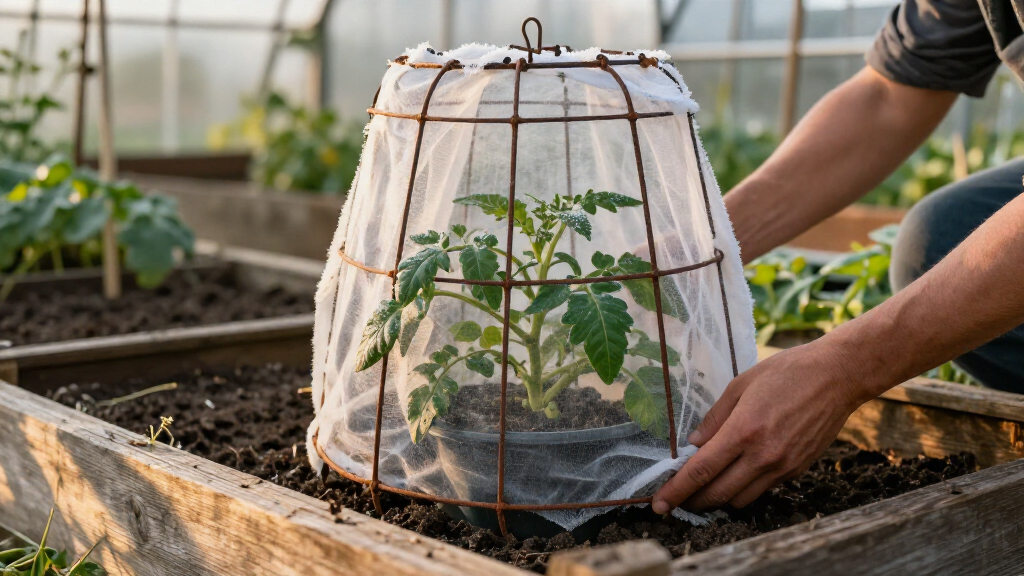
Lower the clean cage over the plant and check that branches fit within the frame rather than protruding through its wire. Push the legs firmly into the soil; in an exposed or windy bed, the guide says to secure the cage to a sturdy stake. Drape breathable frost cloth or horticultural fleece over the frame, fasten it with clips, and take it down to the soil. Landscape staples can hold the fabric in place at ground level.
The report advises against plastic wrap, saying a plant needs airflow and that a covered cage can heat up quickly during mild weather. It recommends checking beneath the cover every few days and ventilating when needed. Once a cold snap has passed, remove the temporary cover; the cage can remain in place for another weather dip.
A Reusable Frame for Winter Covers
The approach offers gardeners a way to put equipment that might otherwise be stored until spring to use during the colder season. A cage provides structure for a cover and can leave a gap between fabric and plant, helping prevent the material from pressing against leaves, stems and buds. That separation may also reduce the risk of heavy, wet snow weighing directly on covered branches.
For gardeners protecting several plants, repurposing cages may reduce the need to buy a separate frame or plant jacket for each one. But the report presents this as a practical option for appropriate plants and conditions, not as a universal solution. A cage that is too small, poorly secured or wrapped without ventilation may fail to protect the plant or create other problems.
Products Worth Considering

Sinimaka 10-Pack Twin-Wall Polycarbonate Greenhouse Panels, 8 × 4 ft

Orbit B-hyve XD 4-Port Smart Hose Watering Timer with Wi-Fi Hub

Takywep 6 x 9 ft Walk-In Greenhouse with Polycarbonate Panels
As an affiliate, we earn on qualifying purchases.
Plants the Guide Identifies
The guide says the method may suit tender shrubs and perennials, borderline-hardy plants, and young shrubs planted late in fall. It names bigleaf hydrangeas as a candidate because they form next year’s flower buds on old wood; severe cold can damage those buds even if the plant’s foliage returns. Hybrid tea roses and some perennials near the limits of their hardiness are also listed.
Small evergreens such as boxwood may benefit from burlap shielding against drying wind and sun, according to the report. Suitability depends on local growing conditions and the plant’s size, so the frame must leave enough room to keep fabric from pressing against the foliage. The advice also notes that a cage can be filled with dry, loose leaves, straw or pine straw for added insulation after a plant becomes dormant, often following several hard frosts.
That added fill should be dry, the guide says. Wet or tightly packed material against living foliage or a plant crown can remain soggy and contribute to rot. In spring, it recommends removing the insulation gradually as the risk of severe cold declines.
““This trick won’t save everything.””
— Gardening Know How
Protection Depends on Conditions
The supplied report does not give measured results comparing cage covers with commercial plant shelters, nor does it specify a temperature range at which the method will protect a particular plant. It also does not identify a single covering thickness or cage size for all uses. How much protection a plant receives will depend on factors such as local climate, exposure, plant hardiness, cover fit and the severity and duration of cold.
The guide describes a gardening practice, not a guarantee against frost, snow damage or winter injury. Readers should match protection to the needs of their plants and check the covering during changing weather. The source material does not provide a publication date, so the precise timing of the report is not available.
Check Covers Through Cold Snaps
Gardeners using the method should remove plant debris, clean and position the cage, then secure a breathable cover down to the soil. During cold weather, the guide recommends checking beneath the fabric every few days and allowing fresh air in when conditions call for it. After a cold snap, the temporary cover can come off while the frame stays ready for another dip in temperature.
For cages packed with insulation, use dry, loose material and remove it gradually in spring as severe cold becomes less likely. The report gives no specific forecast or scheduled follow-up; the next steps depend on local weather and each plant’s condition.
Key Questions
Can an old tomato cage protect plants from freezing temperatures?
It can serve as a frame for temporary breathable frost cloth or burlap around selected plants. The source describes it as a helpful method, not a guarantee of protection in every freeze.
Why put a cage between the plant and the fabric?
The cage keeps the covering from resting directly on branches and buds and gives gardeners a frame to secure the fabric. The separation may also reduce pressure from wet snow on the covered plant.
Can I wrap the cage in plastic?
The guide advises against plastic wrap because airflow is needed and a covered cage can heat up quickly in mild weather. It recommends breathable fabric and regular checks beneath the cover.
Which plants might benefit from a cage cover?
The report lists bigleaf hydrangeas, hybrid tea roses, borderline-hardy perennials, young shrubs and small evergreens as possible candidates. Choose a cage that fits the plant, and account for local conditions and the plant’s needs.
Can I add leaves or straw inside the cage?
The guide says dry, loose leaves, straw or pine straw can provide extra insulation after plants become dormant. Keep the fill dry and avoid packing wet material against foliage or a crown, where it may contribute to rot.
Source: gardeningknowhow.com