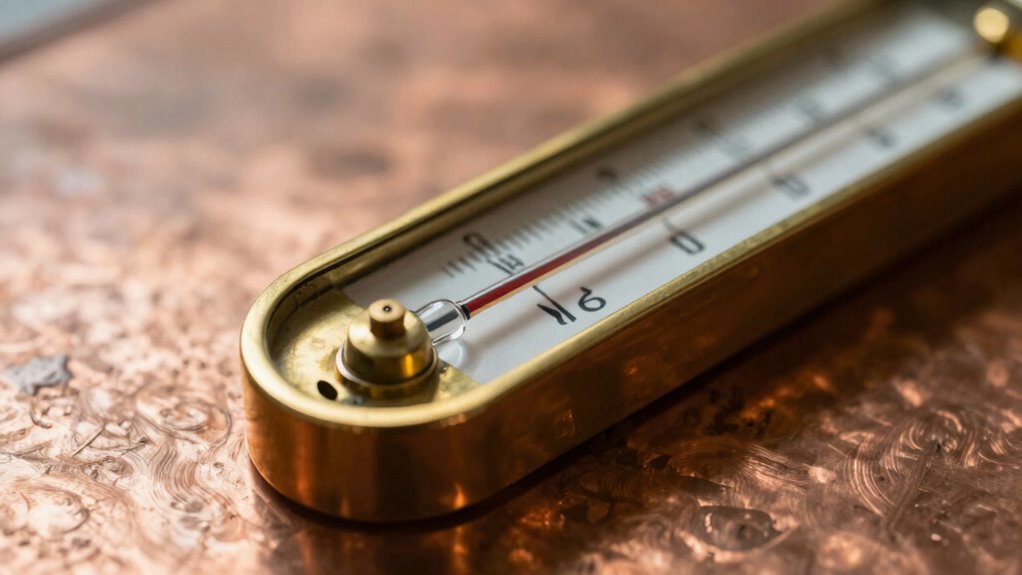

Reservoir thermometers deserve more attention because of their proven reliability, historical significance, and simple yet accurate design. Unlike many modern digital tools, they don’t rely on complex electronics or batteries, making them durable and low-maintenance. Their precise measurements and affordability make them valuable across various industries. While often overlooked, understanding their enduring legacy and ongoing advancements can reveal why they remain essential. Stay with us to discover how this timeless tool continues to impact temperature measurement today.
Key Takeaways
- They offer proven reliability and accuracy rooted in their simple, physical principles, making them dependable over time.
- Modern advancements enhance their precision, durability, and ease of use, keeping them relevant in high-tech environments.
- Their cost-effectiveness and straightforward maintenance make them accessible for diverse industrial and scientific applications.
- Their legacy laid the foundation for modern temperature measurement tools, emphasizing their historical importance.
- Their durability and resilience ensure long-term performance, making them a sustainable choice despite digital alternatives.
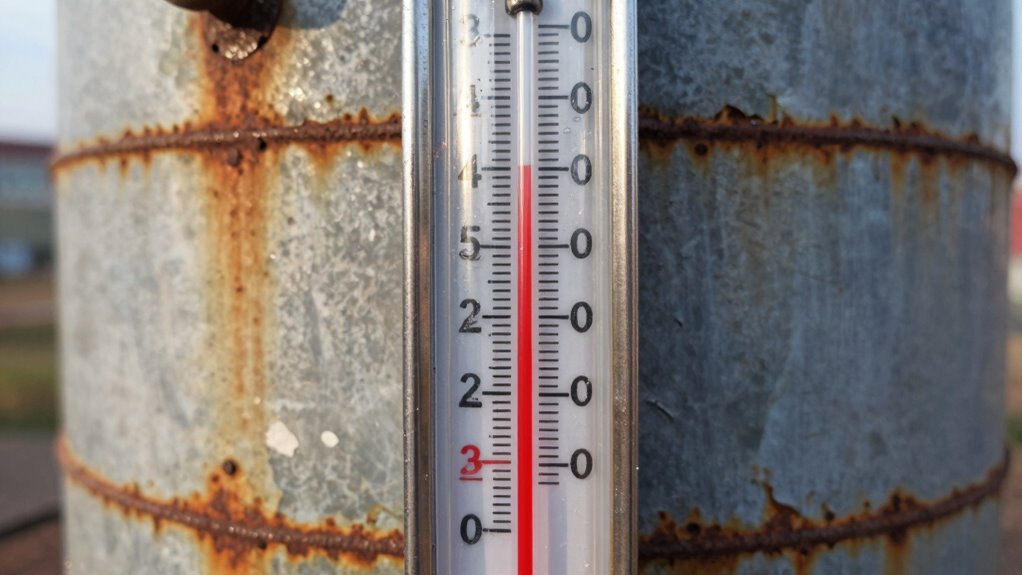
Reservoir thermometers play a crucial role in accurately measuring temperature, yet they often don’t receive the attention they deserve. These devices have a rich history rooted in the pursuit of precision, and understanding their evolution reveals why they remain essential today. Historically, reservoir thermometers have been praised for their accuracy, especially in scientific and industrial settings, because they measure temperature based on the expansion or contraction of a liquid within a reservoir. This design allows for consistent readings over time, making them a trusted tool for decades. Their historical accuracy set them apart from earlier temperature measurement methods, such as simple contact thermometers, which were often less reliable and more prone to error. Recognizing this legacy underscores their importance, even as newer technologies emerge. In recent years, technological advancements have markedly improved reservoir thermometers, making them more precise, durable, and easier to use. Modern materials have enhanced their resistance to corrosion and temperature fluctuations, which means they can operate reliably in challenging environments. Digital sensors and electronic readouts have further increased their accuracy and speed, reducing human error and providing instant, digital data. These advancements allow reservoir thermometers to serve in a wide array of applications—from laboratory research to industrial processes—where precision is non-negotiable. Despite these innovations, many people overlook their value, perhaps because they associate newer digital tools with progress, forgetting that reservoir thermometers laid the groundwork for many modern temperature measurement techniques. Additionally, their simplicity and reliability** make them especially valuable in situations where complex electronic devices might fail or be impractical. They don’t rely on complex electronics that can malfunction or require batteries; instead, they depend on fundamental physical principles that have stood the test of time. This simplicity also means they are often more cost-effective, making them accessible for a variety of users. Their straightforward design facilitates easy calibration and maintenance, which helps ensure consistent accuracy over extended periods. A widespread use of reservoir thermometers in various industries underscores their versatility and enduring relevance. In essence, reservoir thermometers deserve more attention because they embody a blend of historical accuracy and technological progress. They serve as a reminder of how foundational science can evolve without losing sight of its roots. Emphasizing their significance can lead to better appreciation of their role in temperature measurement, encouraging their continued use and innovation. Recognizing their enduring value will help guarantee that these reliable tools remain a crucial part of scientific and industrial practices** for years to come.
reservoir thermometer for industrial use
As an affiliate, we earn on qualifying purchases.
As an affiliate, we earn on qualifying purchases.
Frequently Asked Questions
How Do Reservoir Thermometers Compare to Digital Temperature Sensors?
Reservoir thermometers offer durability and straightforward calibration techniques, making them reliable for long-term use. Unlike digital sensors, they don’t rely on fragile electronics, so they withstand harsh environments better. Digital temperature sensors provide quick readings and easy integration with modern systems, but reservoir thermometers excel in durability and simple calibration. If you need a sturdy, low-maintenance option, reservoir thermometers are worth considering over digital sensors.
What Materials Are Commonly Used in Reservoir Thermometer Construction?
You’ll find that reservoir thermometers are commonly made from durable materials like glass, brass, or stainless steel, which guarantee material durability and withstand high temperatures. These materials help maintain measurement accuracy over time, resisting corrosion and wear. By choosing sturdy, reliable materials, reservoir thermometers provide precise temperature readings consistently, making them essential for applications demanding accurate measurements and long-lasting performance.
Are Reservoir Thermometers Suitable for High-Temperature Industrial Applications?
Can your equipment handle extreme conditions? Absolutely, reservoir thermometers are suitable for high-temperature industrial applications when they undergo proper calibration procedures. Their material durability, especially with heat-resistant alloys and ceramics, guarantees they withstand harsh environments. Think of them as the steadfast guardians of precise temperature measurement amidst intense heat. With regular calibration and durable materials, reservoir thermometers deliver reliable readings where others might fail, proving their essential role in demanding industries.
How Often Should Reservoir Thermometers Be Calibrated?
You should calibrate reservoir thermometers regularly, typically annually, but calibration frequency can vary depending on your maintenance routines and usage conditions. Regular calibration guarantees accuracy and reliable readings, especially in critical industrial environments. If your thermometer experiences frequent temperature fluctuations or heavy use, more frequent calibration may be necessary. Keep track of calibration dates and follow manufacturer guidelines to maintain peak performance and extend the device’s lifespan.
Can Reservoir Thermometers Measure Temperature in Corrosive Environments?
Yes, reservoir thermometers can measure temperature in corrosive environments if they’re made from corrosion-resistant materials like stainless steel or specialized alloys. Their material durability guarantees they withstand harsh conditions without degrading or losing accuracy. By selecting thermometers with high corrosion resistance, you guarantee reliable temperature readings over time, even in challenging environments. This makes reservoir thermometers an excellent choice for applications involving corrosive substances or aggressive conditions.
As an affiliate, we earn on qualifying purchases.
Conclusion
Reservoir thermometers might be small, but they hold immense importance, much like the silent guardians of accurate measurement. Ignoring their role is like overlooking the foundation of a sturdy building—you risk everything collapsing. By giving them the attention they deserve, you guarantee precise readings and better decision-making. Don’t let their quiet presence deceive you; sometimes, the most essential tools operate behind the scenes, quietly keeping everything in check. Recognize their value before it’s too late.
As an affiliate, we earn on qualifying purchases.
temperature measurement reservoir thermometer
As an affiliate, we earn on qualifying purchases.
As an affiliate, we earn on qualifying purchases.