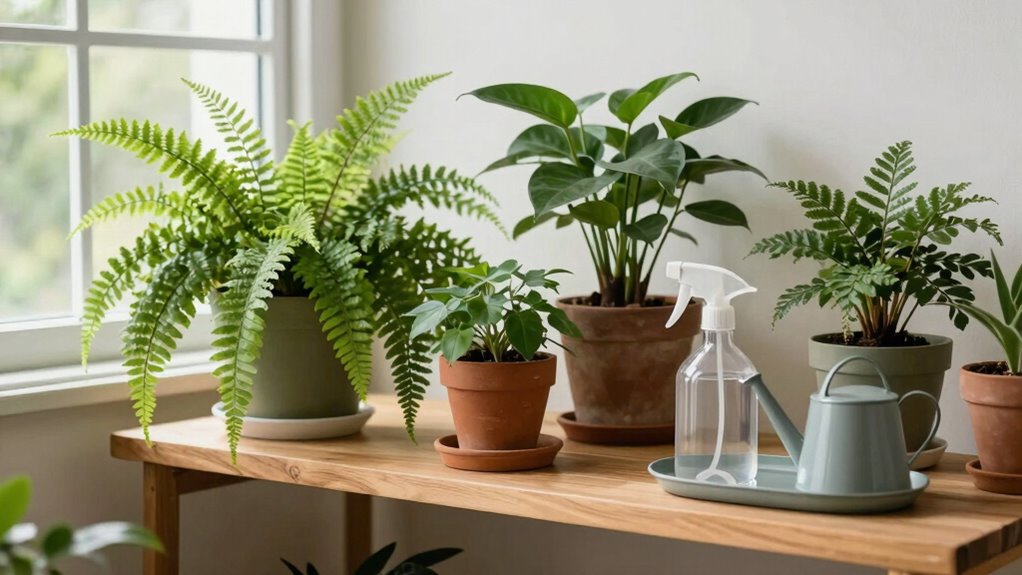

Before leaving for a long weekend, assess each plant’s watering needs and water thoroughly, grouping similar plants together for easier care. Check for pests, remove dead leaves, and apply organic pest prevention. Set grow lights on timers and cover pots to increase humidity. Use soil moisture meters to monitor moisture levels and guarantee proper ventilation. If you want to keep your indoor garden thriving, you’ll find more helpful tips if you keep exploring.

Get garden gear delivered free with Prime
- Fast, free delivery on millions of items
- Prime Video, Amazon Music and more included
- Member-only deals all year
Key Takeaways
- Water all plants thoroughly and consider self-watering devices to maintain consistent moisture levels during your absence.
- Inspect and treat plants for pests, remove dead leaves, and ensure good airflow to prevent infestations.
- Set grow lights on timers and adjust natural light or shading to prevent stress from abrupt light changes.
- Group plants by similar watering and humidity needs for easier care and monitoring.
- Arrange for someone to check on the garden periodically or set up automatic ventilation and humidity controls.
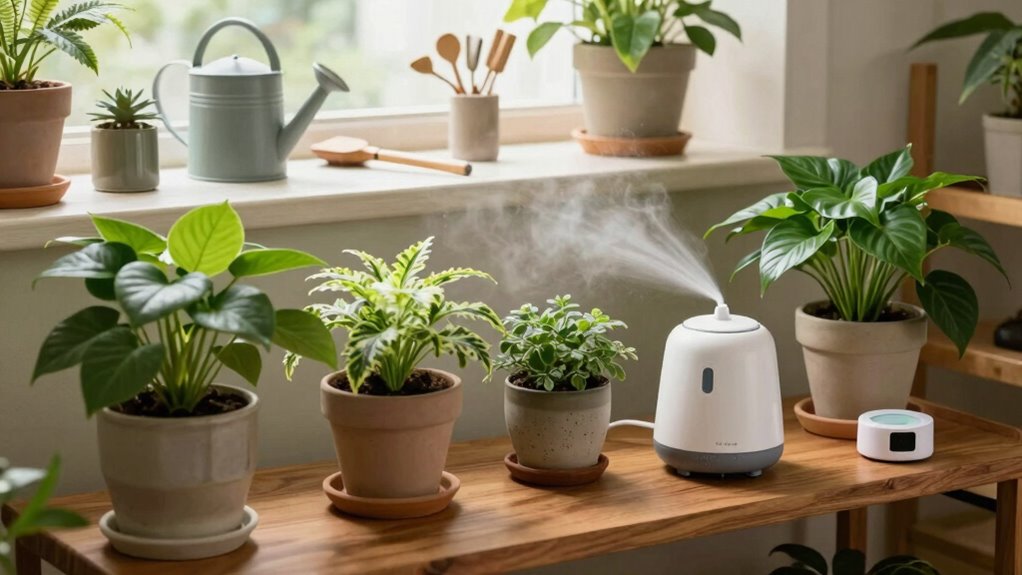
Leaving for a long weekend doesn’t mean your indoor garden has to suffer. With a little planning, you can guarantee your plants stay healthy and vibrant while you’re away. The key is to establish a reliable watering schedule and take proactive steps for pest prevention. First, assess your garden’s watering needs and set up a system that will keep your plants hydrated in your absence. If you have potted plants, consider watering them thoroughly before you leave. For added security, you can set up self-watering devices, such as wick systems or drip irrigation, which release water gradually over time. These tools help maintain consistent moisture levels, preventing your plants from drying out or becoming overwatered. Also, group plants with similar watering needs together to simplify the process and reduce the risk of neglecting any of them.
Plan your watering and group similar plants for a healthy, thriving indoor garden while you’re away.
Next, focus on pest prevention. Long weekends are perfect opportunities for pests like spider mites, aphids, or fungus gnats to take hold if you’re not vigilant. Before you leave, inspect each plant carefully, removing any visible pests and trimming away damaged or dead leaves. Applying a gentle organic pesticide or insecticidal soap can serve as a preventive measure, making it less likely for pests to infest your plants in your absence. Keep your garden clean by removing fallen leaves or debris that can harbor pests. Additionally, ensure good airflow around your plants, which discourages pest development and fungal issues. Proper ventilation can also help regulate humidity levels, further protecting your plants from disease. Incorporating humidity control techniques can be especially beneficial in maintaining optimal conditions during your absence. Understanding your plants’ specific watering needs can help you tailor your preparations for different species. Additionally, using soil moisture meters can give you a more precise assessment of your plants’ hydration levels before you leave.
Another helpful tip is to adjust your lighting schedule to account for your absence. If you use grow lights, set timers to keep the lights on and off at the usual times. This consistency prevents your plants from experiencing stress due to abrupt changes in light exposure. If your plants rely on natural light, consider moving them to a more shaded location or using sheer curtains to filter sunlight, especially if you expect bright sunlight during your trip.
Lastly, cover pots with plastic wrap or place them on trays filled with pebbles and water to maintain humidity and moisture levels. This creates a mini greenhouse effect that benefits your plants during your absence. Asking a trusted friend or neighbor to check on your garden periodically can add peace of mind, especially if you’re leaving for more than a few days. With these preparations—establishing a watering schedule, preventing pests, managing light, and maintaining humidity—you set your indoor garden up for success, ensuring it remains healthy and thriving until you return.
As an affiliate, we earn on qualifying purchases.
Frequently Asked Questions
How Often Should I Water My Indoor Garden Before Leaving?
You should water your indoor garden when the soil moisture feels dry about an inch below the surface. Check frequently, especially in warm weather. To prepare, adjust your fertilizer schedule by feeding your plants a light dose before you leave. This guarantees they get essential nutrients without overwatering. Remember, overwatering can lead to root rot, so always aim for moist, not soggy, soil before your trip.
Can I Leave My Plants Under Artificial Light While Away?
Like a modern-day alchemist, you can leave your plants under artificial lighting while you’re away. Artificial lighting supports plant growth by mimicking natural sunlight, ensuring your indoor garden thrives during your absence. Just set a timer to maintain consistent light cycles, and your plants will continue to grow healthily. This way, you won’t need to worry about neglect or uneven growth, keeping your indoor garden lush and vibrant.
What Pests Should I Check for Before Leaving?
Before leaving, you should do a thorough pest inspection of your indoor garden. Check leaves, stems, and soil for signs of pests like spider mites, aphids, or fungus gnats. Insect prevention is key, so remove any affected leaves and consider applying a gentle, plant-safe insecticidal soap. Ensuring your plants are pest-free helps prevent infestations in your absence, keeping your garden healthy and vibrant when you return.
How Do I Prevent Mold or Mildew During My Absence?
To prevent mold or mildew while you’re away, guarantee your indoor garden has proper soil drainage to avoid excess moisture buildup. Adjust humidity control settings to maintain a balanced environment—avoid high humidity, which encourages mold. You can also use a dehumidifier or a moisture absorber, and consider misting plants lightly before you leave to reduce excess moisture. Proper ventilation is essential to keep air circulating and prevent fungal growth.
Should I Prune My Plants Before Leaving for a Long Weekend?
Yes, you should prune your plants before leaving for a long weekend. Pruning helps reduce stress on your plants and encourages healthy growth. It also allows you to adjust your fertilizer schedule by removing dead or overgrown parts. Additionally, consider repositioning your plants to guarantee they receive ideal light during your absence, reducing the risk of uneven growth or issues caused by inconsistent care.
indoor plant pest control products
As an affiliate, we earn on qualifying purchases.
As an affiliate, we earn on qualifying purchases.
Conclusion
By prepping your indoor garden properly before a long weekend, you guarantee your plants stay healthy and vibrant in your absence. Remember, overwatering is a common mistake—about 70% of plant deaths are due to this. With a little planning—watering deeply, adjusting light, and setting up self-watering systems—you’ll return to a thriving garden. Your plants will thank you for the extra care, and you’ll enjoy peace of mind knowing they’re well taken care of.
As an affiliate, we earn on qualifying purchases.
grow light timers for indoor plants
As an affiliate, we earn on qualifying purchases.
As an affiliate, we earn on qualifying purchases.
Fall yard work Picks
leaf blowers
As an affiliate, we earn on qualifying purchases.