
TL;DR
A new solar-powered desalination system developed at the University of Rochester can produce drinking water from seawater without generating harmful brine waste. It uses laser-etched black metal panels that self-clean and can extract minerals like lithium, addressing water shortages and mineral demand.
Researchers at the University of Rochester have developed a solar-powered desalination system that converts seawater into drinking water without producing harmful brine waste, marking a significant advance in water treatment technology.
The system employs laser-etched black metal panels that absorb sunlight efficiently and prevent salt buildup, allowing continuous operation. Unlike traditional desalination methods such as reverse osmosis, which generate concentrated brine, this technique extracts nearly all salts in solid form, avoiding environmental harm associated with brine disposal.
Field tests using ocean water samples from the Pacific, Atlantic, and Indian Oceans demonstrated the system’s ability to produce clean freshwater while directing salts to passive regions on the panels for later collection. The technology also allows for the extraction of valuable minerals like lithium, which is embedded in the salts via nanoparticle-infused surfaces, offering a dual benefit of water and mineral resource recovery.
Potential Impact on Global Water and Mineral Resources
This technology could revolutionize desalination by providing an energy-efficient, waste-free method to produce drinking water, especially in arid regions or areas facing water shortages. Its ability to recover minerals like lithium addresses growing demand for battery materials, reducing environmental impacts associated with traditional mining. Widespread adoption could significantly reduce the ecological footprint of water treatment and mineral extraction processes.

Solar Automatic Drip Irrigation Kit System, JIYANG Solar Powered Auto Easy DIY Watering Device Supported Pots Plants, 6 Timing Modes with Anti-Siphoning Device (Supported 10 Pots, 6Timing Modes)
- Hassle-Free Automatic Watering: Automatically waters plants at preset intervals
- Solar Powered and Eco-Friendly: Uses solar energy, suitable for indoor and outdoor
- Supports Multiple Pots: Can water up to 30 pots simultaneously
As an affiliate, we earn on qualifying purchases.
As an affiliate, we earn on qualifying purchases.
Limitations of Current Desalination Technologies
Traditional desalination methods such as reverse osmosis and thermal distillation are energy-intensive, often requiring pre-treatment and producing large quantities of brine that harm marine ecosystems. These methods are also costly and less suitable for remote or resource-limited settings. The new approach offers a promising alternative by eliminating brine waste and reducing energy consumption, but it is still in the development stage and requires further validation for large-scale deployment.
“Our laser-etched black metal panels can continuously produce freshwater from seawater without clogging or producing harmful waste, and they can also help us recover valuable minerals like lithium.”
— Professor Chunlei Guo

Eidon Ionic Minerals – Liquid Lithium Chloride Concentrate – 2 oz
- Supports Nervous System: Helps maintain healthy nervous function
- All-Natural Ingredients: Pure lithium with no artificial additives
- Enhances Brain Health: Supports cognitive function and nutrient uptake
As an affiliate, we earn on qualifying purchases.
As an affiliate, we earn on qualifying purchases.
Unresolved Questions About Scalability and Cost
It is not yet clear how the technology will perform at a large scale or what the costs will be for commercial deployment. The durability of the panels over extended use and their effectiveness in diverse oceanic conditions remain to be tested. Further research is needed to evaluate economic viability and integration into existing water infrastructure.
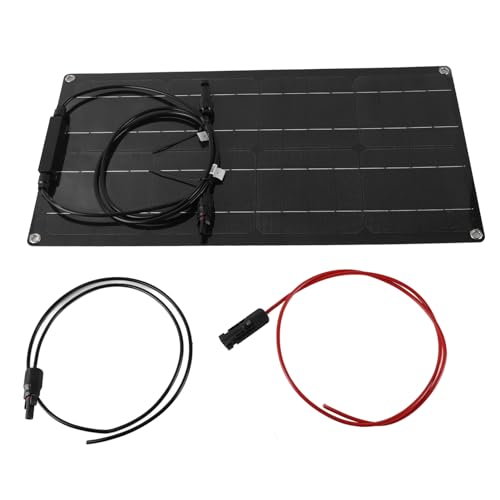
CDQL Black, Lightweight Solar Panel, 100W Monocrystalline, Portable Solar Charger Panel with Wire, Solar Panel for RV, Tent, Roof
- High Efficiency Monocrystalline Panel: 100W high energy conversion efficiency
- Easy Installation with Wire: Simplifies setup and improves charging
- Portable and Lightweight Design: Easy to transport and install
As an affiliate, we earn on qualifying purchases.
As an affiliate, we earn on qualifying purchases.
Next Steps for Validation and Commercialization
The research team plans to conduct larger pilot projects to assess long-term performance and scalability. They are also exploring partnerships with industry stakeholders to develop commercial prototypes and evaluate cost-effectiveness. Regulatory approvals and field testing in real-world settings are expected to follow, aiming for potential deployment within the next few years.

Desalination Kit Seawater Reverse Osmosis Water Filter, 2L/H Output
- Manual Operation: No power needed, hand-operated pump
- High Efficiency: Removes 97% salt and impurities
- Steady Water Output: Produces up to 2L per hour
As an affiliate, we earn on qualifying purchases.
As an affiliate, we earn on qualifying purchases.
Key Questions
How does this new desalination system differ from existing methods?
It uses laser-etched black metal panels that absorb sunlight efficiently, prevent salt buildup, and produce freshwater without generating harmful brine waste, unlike traditional methods that rely on filtration or distillation.
Can this technology extract minerals like lithium from seawater?
Yes, the system can recover minerals such as lithium by embedding nanoparticles in the panels, which isolate lithium salts during the desalination process.
What are the environmental benefits of this method?
It produces no harmful brine waste, reduces energy consumption, and enables resource recovery, minimizing ecological impacts associated with conventional desalination and mining.
When might this technology become widely available?
Further testing and pilot projects are planned, with commercial deployment potentially within the next few years, depending on scalability and cost assessments.
Are there any limitations or challenges remaining?
Yes, questions remain about long-term durability, effectiveness in diverse ocean conditions, and economic viability at large scale, which require further research.
Source: CleanTechnica