
TL;DR
A gardening guide explains that rosemary can generally stay outdoors in USDA Zones 8 to 12, while plants in Zone 7 and colder are at greater risk and should be moved indoors. In borderline Zones 8 and 9, row covers or pruning and mulch may help protect plants; local conditions and the specific plant’s tolerance matter.
Rosemary’s chance of surviving winter outdoors depends largely on local climate, according to a gardening guide that recommends added protection in borderline areas and moving plants indoors in colder zones. The advice matters to gardeners preparing for frost: leaving rosemary in the ground may put it at risk in USDA Zone 7 or colder, while growers in Zones 8 and 9 may need to shield it from cold and drying winds.

Get garden gear delivered free with Prime
- Fast, free delivery on millions of items
- Prime Video, Amazon Music and more included
- Member-only deals all year
The guide says rosemary is usually suitable for outdoor garden growing in USDA Zones 8 to 12. Plants in Zone 7 or colder may die if left outside through winter, it says, and should be dug up before the first frost and transferred to containers. The guidance is based on hardiness zones; it does not say that every plant in a listed zone will respond identically to winter conditions.
For plants staying outdoors near the edge of their winter range, particularly in Zones 8 and 9, one option is a floating row cover. The guide recommends draping it over the plant, closing gaps near the ground and securing the edges with soil, bricks or other weights. It says the cover can raise the air temperature around the plant slightly, but does not give a specific temperature range or guarantee of protection.
Another suggested approach is to cut green growth to about six inches and cover the plant with straw, leaf mold or wood chips just before temperatures fall below freezing. The guide says mulch can limit exposure to cold air and drying wind and help moderate soil temperature during freeze-thaw cycles. It does not specify a mulch depth, and gardeners should take care not to treat this method as a guarantee against severe cold.
Protect Rosemary Through Winter
Where rosemary grows helps guide whether to cover it outdoors or move it inside before frost.
Choose protection by zone
Hardiness zones are a starting point; local conditions and plant tolerance vary.
- Use a secured floating row cover.
- Or prune green growth to about six inches and add mulch before freezing weather.
- Dig up the plant before the first frost.
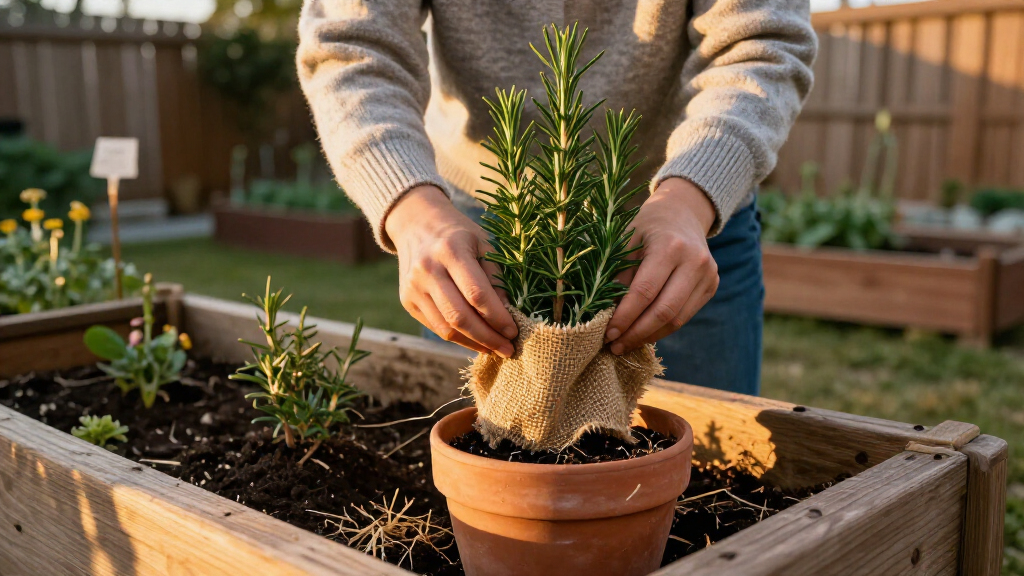
- Pot it with as much of the root ball intact as possible and move it indoors.
Cover plants staying outdoors
These options may reduce exposure to cold and drying wind, but do not guarantee survival.
Drape it over the plant, close gaps at ground level and weigh down the edges.
Cut green growth to about six inches; cover with straw, leaf mold or wood chips before temperatures fall below freezing.
Care for potted rosemary
Keep the plant above freezing in a cool location such as a lightly heated garage or hallway.
- Water lightly about once a week and avoid waterlogged soil.
- Acclimate gradually by moving the pot outdoors during the day as temperatures rise.
- Replant or keep it in its container after frost risk has passed.
Choosing the Right Winter Protection
The choice between covering, mulching and moving rosemary indoors can affect whether a plant survives until spring. Hardiness zone offers a starting point for that decision, while the guide’s recommendations distinguish between plants that may remain outside with extra protection and those in colder regions that should be brought in.
That distinction is useful for gardeners deciding what to do before the first frost. Moving an established plant involves digging it up, while leaving it outside exposes it to local winter conditions. The guide provides practical options, but it does not compare their success rates or address how factors such as a sheltered garden location may change the outcome.
Products Worth Considering

Greenworks 40V Brushless Electric Leaf Blower with 4.0 Ah Battery and Charger

Husqvarna Power Axe 350i 18-Inch Cordless Chainsaw Kit

Husqvarna Automower 435X AWD Robotic Lawn Mower
As an affiliate, we earn on qualifying purchases.
Preparing Rosemary Before Frost
The recommended timing is tied to weather rather than a single calendar date. Gardeners in colder zones are advised to dig up plants before the first frost, while outdoor protection for plants in borderline zones should be put in place before temperatures dip below freezing. The guide suggests autumn as a window for moving plants into containers.
For plants being dug up, it recommends keeping a substantial root ball intact. Its instructions say to start digging at least six inches from the main stem and continue around the plant; the suggested circle is at least a foot wide and a foot deep, adjusted to plant size. After potting, the plant can remain outdoors for a few frost-free days in a sheltered spot to acclimate. If bad weather is approaching, a garage or basement is offered as an alternative before moving it to its winter location.
Local Cold Risks Remain Variable
The guide gives broad zone-based recommendations, but does not establish a precise temperature threshold at which a particular rosemary plant will be damaged. It also does not provide trial data comparing row covers, mulch or indoor storage, so the relative effectiveness of those methods is unclear.
Winter conditions vary within hardiness zones, and the guide does not discuss the effects of individual cultivars, exposure, soil drainage or the duration of a cold spell. Its advice should be read as general gardening guidance rather than a promise that a plant will survive. No named expert or direct quotation is provided.
Monitor Plants Through Spring
Gardeners following the guide can check local forecasts as autumn temperatures fall, cover outdoor plants before freezing weather and move plants from colder zones before frost. Rosemary brought inside should be kept above freezing but not in excessive heat, the guide says. A lightly heated garage or hallway is suggested; warm indoor air may dry the plant, and gentle misting can help maintain humidity.
It recommends watering indoor rosemary lightly about once a week and avoiding waterlogged soil, which the guide says the herb does not tolerate. Growth is expected to slow in winter, though some leaf harvesting may remain possible. As temperatures rise, pots can be moved outdoors during the day to acclimate gradually; after the risk of frost has passed, gardeners can replant rosemary or continue growing it in its container.
Source: rss
Key Questions
Can rosemary stay outdoors over winter?
The guide says rosemary is usually fine outdoors in USDA Zones 8 to 12. In Zones 8 and 9, extra cover or mulch may help. In Zone 7 or colder, outdoor survival is less likely, and the guide recommends moving plants indoors.
When should I bring rosemary indoors?
For plants in Zone 7 or colder, dig them up and pot them before the first frost. The guide advises preserving as much of the root ball as possible and moving the plant to a place that stays above freezing.
How can I protect rosemary that stays in the garden?
For plants in borderline Zones 8 and 9, the guide suggests a secured floating row cover or pruning green growth to about six inches and covering the plant with straw, leaf mold or wood chips before freezing temperatures arrive.
How often should indoor rosemary be watered in winter?
The guide recommends light watering about once a week and warns against leaving rosemary in wet soil. It also suggests a cool, above-freezing location rather than a hot room.
Source: gardenerspath.com