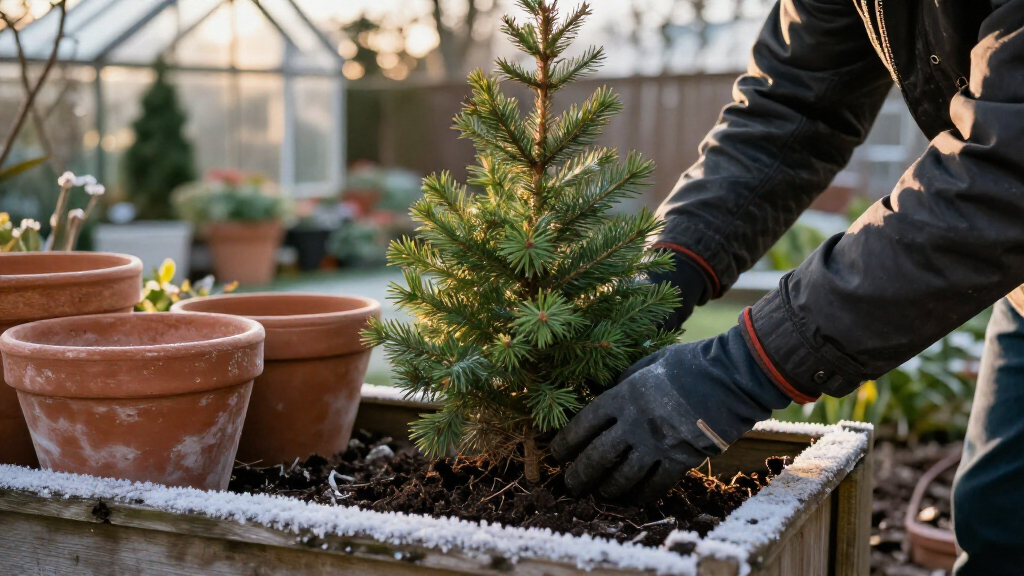

When I compare the best evergreen plants for winter, I look beyond whether a plant stays green: winter interest can come from berries, a tidy shape, or foliage that fills a difficult garden spot. The Dwarf Alberta Spruce is my leading choice for a formal container or compact conifer accent, while Wintergreen earns a place for shade and bright red fruit. For broad coverage in a sunny, dry site, Grey Owl Juniper offers a very different kind of winter presence.

Get garden gear delivered free with Prime
- Fast, free delivery on millions of items
- Prime Video, Amazon Music and more included
- Member-only deals all year
These four plants are not interchangeable. Wintergreen stays just inches tall and favors shade; the spruce grows into a substantial upright form; Grey Owl Juniper needs full sun and room to spread. A second Wintergreen listing offers similar seasonal character in a smaller pot, but its stated spread means it still needs space. I rank them by how usefully their foliage, berries, form, and growing requirements serve a winter garden—not by assuming one plant suits every yard.
Complete the kit


Key Takeaways
- Dwarf Alberta Spruce is the strongest choice for a dense, upright evergreen accent, but its listed mature height of 6–8 feet is much larger than a typical tabletop plant.
- Wintergreen #1 Container is the shade-friendly pick for persistent red berries and a very low ground-cover profile; it grows only 3–6 inches tall.
- Grey Owl Juniper suits sunny, well-drained areas where a blue-green spreader can cover ground and tolerate poor, rocky soil after establishment.
- Gaultheria in the 4.5-inch pot offers a smaller starting plant and a stated spreading habit of up to 3 feet, so its eventual footprint matters more than its delivery size.
- Match the plant to winter light and drainage first: the spruce tolerates partial shade, both Wintergreens prefer shade or partial sun, and Grey Owl Juniper is the full-sun option.
| Dwarf Alberta Spruce Shrub, 1 Gallon |  | Best Overall for a Sculptural Winter Accent | Botanical name: Picea glauca ‘Conica’ | Plant type: Evergreen shrub | Container size: 1 gallon | VIEW LATEST PRICE | See Our Full Breakdown |
| Wintergreen Evergreen Plant with White Flowers and Red Fruit, #1 Container |  | Best for Shade and Winter Berries | Botanical name: Gaultheria procumbens | Plant type: Evergreen ground cover | Container: #1 container | VIEW LATEST PRICE | See Our Full Breakdown |
| Gaultheria (Winterberry) Live Evergreen Plant, 5 in Tall, 6 in Wide, 4.5 in Pot |  | Best Smaller Starting Plant for a Spreading Bed | Plant type: Live evergreen ground cover | Starting size: 5 in. tall × 6 in. wide | Pot: 4.5-inch round | VIEW LATEST PRICE | See Our Full Breakdown |
| Perfect Plants Grey Owl Juniper, 1 Gallon |  | Best for Sunny, Dry, Open Sites | Plant type: Evergreen juniper shrub | Container: 1 gallon | Mature size: 3–4 ft tall × up to 6 ft wide | VIEW LATEST PRICE | See Our Full Breakdown |
| evergreen plants for winter | Plant type | Hardiness zones | Light | Mature size |
|---|---|---|---|---|
| Dwarf Alberta Spruce Shrub | Evergreen shrub | USDA zones 2–8 | Full sun to partial shade | 6–8 ft tall × 4–5 ft wide |
| Wintergreen Evergreen Plant wi | Evergreen ground cover | USDA zones 3–8 | Full shade to partial sun | 3–6 in. high × 6–12 in. wide |
| Gaultheria | Live evergreen ground cover | USDA zones 3–8 | Partial sun | — |
| Perfect Plants Grey Owl Junipe | Evergreen juniper shrub | USDA zones 3–9 | Full sun | 3–4 ft tall × up to 6 ft wide |
More Details on Our Top Picks
Dwarf Alberta Spruce Shrub, 1 Gallon
I rank the Dwarf Alberta Spruce first because its dense, naturally conical shape gives a winter garden a clear focal point even when flowers and deciduous foliage are gone. Its soft green needles stay present year-round, and the form suits a container, entryway, or landscape accent without needing berries or seasonal blooms to make the planting feel finished. It is also the most adaptable in light among these picks, listed for full sun to partial shade.
Compared with the low-growing Wintergreens, this spruce creates height and structure rather than a carpet of foliage. That makes it a better fit for a porch pot or a deliberate vertical accent, but a worse choice for filling ground beneath shrubs. Its listed mature height of 6–8 feet and width of 4–5 feet are the key planning details: “dwarf” describes its relative growth habit, not a plant that stays tiny. The listing also says plants may be trimmed before shipping, so the delivered silhouette may differ from the eventual natural shape.
I would choose it for a buyer who wants a reliable evergreen outline and is prepared to give it room. Moderate watering and early-spring mulch and fertilizer add some upkeep; this is not the drought-oriented choice that Grey Owl Juniper becomes once established. For a winter display focused on red fruit, either Wintergreen is more colorful. For a formal green centerpiece with a compact, familiar conifer shape, the spruce is the most versatile recommendation in this group.
Pros:- Dense, cone-shaped green foliage supplies year-round structure.
- Works in containers, landscapes, and accent plantings.
- Listed for full sun to partial shade, offering more light flexibility than Grey Owl Juniper.
- Can be shaped as a topiary or natural miniature-tree accent.
Cons:- Mature size of 6–8 feet tall and 4–5 feet wide can exceed small-space expectations.
- Moderate watering and early-spring care are required; plants may arrive trimmed.
Best for: Gardeners seeking a cone-shaped evergreen focal point for a container, entry, or landscape accent, with room for a shrub that can reach 6–8 feet.
Not ideal for: People who need a tiny, permanently compact plant, a ground cover, or a drought-tolerant choice for a hot, dry full-sun site.
- Botanical name:Picea glauca ‘Conica’
- Plant type:Evergreen shrub
- Container size:1 gallon
- Mature size:6–8 ft tall × 4–5 ft wide
- Hardiness zones:USDA zones 2–8
- Light:Full sun to partial shade
- Water:Moderate
- Uses:Outdoor container, landscape accent, or topiary
Our verdict“I recommend this spruce as the most versatile winter focal point, provided you plan for its full mature size rather than judging it by its one-gallon container.”
Wintergreen Evergreen Plant with White Flowers and Red Fruit, #1 Container
For a low planting that still contributes seasonal color, I place this Wintergreen ahead of the other ground-cover option. Its dark evergreen leaves and persistent red berries make it a better winter detail plant than the foliage-only silhouette of the spruce, especially in a shaded bed where many flowering choices are limited. The listing gives it a mature height of just 3–6 inches and a spread of 6–12 inches, so it can sit at the front of a border or fill a small pocket without competing for height.
Its growing conditions separate it from Grey Owl Juniper. Wintergreen is listed for full shade to partial sun, while the juniper calls for full sun and well-drained soil. That makes Wintergreen the more sensible choice beneath trees or in a shaded container, though moderate watering remains part of the care plan. The berries are described as edible, but I would not treat that description as a guarantee of safe eating; confirm plant identification and suitability before anyone consumes them.
Compared with the other Gaultheria listing, this one arrives in a #1 container and has a more modest stated mature spread. It is the stronger pick when I want a low, contained ground-cover accent, while the 4.5-inch-pot option is described as spreading up to 3 feet in every direction. The tradeoff is that this plant will not deliver height or a fast visual screen, and the supplied expected planting period is fall. Choose it for shade, berries, and a restrained footprint, not for a bold structural centerpiece.
Pros:- Persistent red berries add winter color among dark green leaves.
- Very low mature height fits the front of borders and small spaces.
- Tolerates full shade to partial sun, unlike the full-sun juniper.
- Rooted in a #1 container and described as ready to plant.
Cons:- A mature height of only 3–6 inches will not create visual height or screening.
- Moderate watering is needed, and the listing specifies fall as the expected planting period.
Best for: Gardeners who want a low, berry-bearing evergreen for a shaded or partly shaded border, woodland-style bed, or small ground-cover area.
Not ideal for: Buyers looking for an upright focal plant, a large area-filler, or an evergreen suited to a dry full-sun location.
- Botanical name:Gaultheria procumbens
- Plant type:Evergreen ground cover
- Container:#1 container
- Mature size:3–6 in. high × 6–12 in. wide
- Hardiness zones:USDA zones 3–8
- Light:Full shade to partial sun
- Soil and water:Loam; moderate watering
- Seasonal features:White flowers and persistent red fruit
Our verdict“I favor this Wintergreen for shaded winter color in a small footprint, though it is not the right choice when height or broad coverage matters.”
Gaultheria (Winterberry) Live Evergreen Plant, 5 in Tall, 6 in Wide, 4.5 in Pot
This Gaultheria Winterberry earns a separate place from the #1-container Wintergreen because its listing describes both a smaller 4.5-inch pot and a much broader eventual spread: up to 3 feet in every direction. It is a useful choice when I want to begin with a modest plant and let it fill space over time, rather than buy a plant whose mature footprint is described as only 6–12 inches wide. The glossy evergreen leaves, white bell-shaped flowers, and red berries bring more seasonal detail than a plain ground-cover shrub.
That broad spread is both its selling point and its main caution. The plant is listed at 5 inches tall and 6 inches wide at the stated size, with an expected height of 8 inches, but those starting dimensions do not describe the space it may eventually occupy. Compared with the #1-container Wintergreen, this one is potentially more useful as a spreading ground-cover patch and less predictable for a tight border. I would leave it room to expand or plan to manage its placement rather than squeeze it beside plants that cannot tolerate competition.
Its preferred partial shade and well-drained soil make it closer to the other Wintergreen than to Grey Owl Juniper. The description also says it can grow indoors or outdoors, but the indoor/outdoor label does not remove the need to match light, drainage, and watering to the plant’s needs. Moderate water is listed, so it is not the dry-site alternative. For a small pot or a shaded area with room to spread, this is an appealing starting point; for a controlled, compact edge, the #1-container listing is the clearer fit.
Pros:- Glossy evergreen leaves, white bell-shaped flowers, and red berries bring multiple seasons of interest.
- Small 4.5-inch pot provides a modest starting size.
- Spreading habit can cover a wider area than the #1-container Wintergreen listing.
- Listed for outdoor planting or container growing.
Cons:- Potential spread of up to 3 feet in every direction needs advance space planning.
- Requires partial shade, well-drained soil, and moderate watering.
Best for: Buyers who want to start with a small-potted evergreen ground cover and have a partially shaded bed or container with room for a spreading habit.
Not ideal for: Gardeners needing a reliably compact border plant, a full-sun evergreen, or a low-water option for dry, rocky soil.
- Plant type:Live evergreen ground cover
- Starting size:5 in. tall × 6 in. wide
- Pot:4.5-inch round
- Growth habit:Low and spreading; up to 3 ft in every direction
- Hardiness zones:USDA zones 3–8
- Light:Partial sun
- Soil and water:Well-drained soil; moderate watering
- Seasonal features:White bell-shaped flowers and red berries
Our verdict“I would choose this Gaultheria over the other Wintergreen when I want a small start and can accommodate a wider eventual spread.”
Perfect Plants Grey Owl Juniper, 1 Gallon
Grey Owl Juniper is my specialist pick for a sunny site where a low, spreading evergreen can cover ground and handle poorer soil. Its blue-green, scale-like foliage gives a different winter palette from the green spruce and dark-leaved Wintergreens, while its listed spread of up to 6 feet makes it more useful for broad coverage than either Gaultheria entry. Once established, it is described as drought-tolerant, a meaningful advantage in a bed that does not receive regular watering.
This is not a universal replacement for the other plants. It calls for full sun and well-drained soil, including tolerance for poor, rocky ground; the Wintergreens are better matches for shade, and the Dwarf Alberta Spruce accepts partial shade. If the intended site is beneath a tree or stays wet, I would move this juniper down the list rather than hope its drought tolerance will compensate for unsuitable light or drainage. Drought tolerance applies once established, not as a reason to neglect watering after planting.
At 3–4 feet tall and up to 6 feet wide, Grey Owl has a broad footprint and a more relaxed, spreading appearance than the spruce’s upright cone. Dense foliage and berries are described as useful for low-nesting birds, adding habitat value alongside winter color. It does not offer the same bright red berry display as Wintergreen, and a one-gallon plant will need time to occupy its potential spread. I rank it fourth overall only because its full-sun requirement makes it less adaptable across sites—not because it is a weak choice for the conditions it suits.
Pros:- Blue-green foliage adds a distinct winter color compared with the other green-leaved picks.
- Spreading habit provides ground-cover potential across a wider area.
- Tolerates poor, rocky soil when drainage is good.
- Drought-tolerant after establishment and described as useful cover for wildlife.
Cons:- Requires full sun, making it less flexible than the spruce or Wintergreens.
- Needs well-drained soil and can spread up to 6 feet wide.
Best for: Gardeners with a sunny, well-drained, possibly rocky area who want blue-green evergreen coverage and a plant that can tolerate dry conditions after establishment.
Not ideal for: People planting in shade, poorly drained soil, or a tight space that cannot accommodate a spread of up to 6 feet.
- Plant type:Evergreen juniper shrub
- Container:1 gallon
- Mature size:3–4 ft tall × up to 6 ft wide
- Hardiness zones:USDA zones 3–9
- Light:Full sun
- Soil:Well-drained; tolerates poor, rocky soil
- Foliage:Blue-green, scale-like
- Wildlife feature:Dense foliage and berries can attract low-nesting birds
Our verdict“I recommend Grey Owl Juniper for sunny, well-drained ground where its broad spread and established drought tolerance are assets, not for shade or confined planting.”
How We Picked
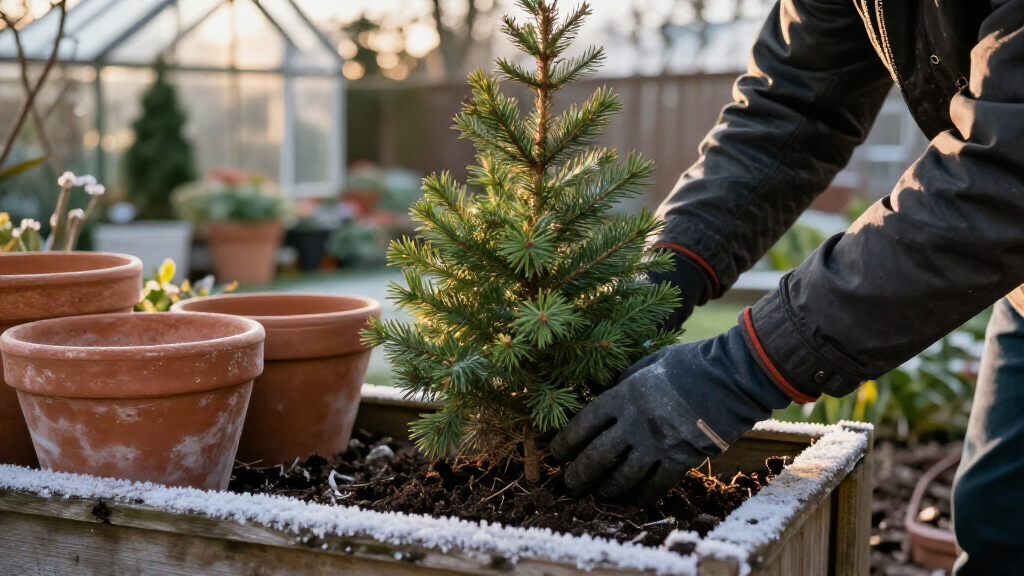
I ranked these plants for the specific job named in this guide: keeping a garden, container, or small outdoor space visually alive through winter. That means I gave weight to evergreen foliage, useful winter color, and a growth habit that suits a recognizable planting role. Berry-bearing Wintergreen offers seasonal detail that a plain foliage plant does not; the spruce earns its place with a strong cone shape; and Grey Owl Juniper brings blue-green color and ground-cover potential.
I also compared the practical details that determine whether an evergreen will work in a real site: mature size, light, soil drainage, and water needs. A plant can be attractive in winter yet be a poor match for a sunny exposed bed or a cramped pot. The supplied listings vary in container size and in how clearly they describe mature spread, so I distinguish a plant’s delivered size from its eventual footprint rather than treating a small pot as proof that the plant stays small.
My ranking is not a claim that one species is best for every climate or garden. The products list overlapping but not identical hardiness zones, and local winter conditions, soil, and exposure still matter. I favor the option with the clearest all-around role first, then rank the other three for more specific needs: shade and berries, a smaller initial purchase, or a sunny site with broad ground-cover potential. I also account for tradeoffs, including space demands, moderate watering, and the fact that sun requirements can rule out an otherwise appealing plant.
| evergreen plants for winter | Botanical name | Plant type | Hardiness zones | Light |
|---|---|---|---|---|
| Dwarf Alberta Spruce Shrub | Picea glauca ‘Conica’ | Evergreen shrub | USDA zones 2–8 | Full sun to partial shade |
| Wintergreen Evergreen Plant wi | Gaultheria procumbens | Evergreen ground cover | USDA zones 3–8 | Full shade to partial sun |
| Gaultheria | — | Live evergreen ground cover | USDA zones 3–8 | Partial sun |
| Perfect Plants Grey Owl Junipe | — | Evergreen juniper shrub | USDA zones 3–9 | Full sun |
Factors to Consider When Choosing Best Evergreen Plants For Winter
I would choose a winter evergreen by working from the planting site outward: first match its light and drainage, then check its mature footprint, and only then decide whether you want height, ground cover, or seasonal color. These four listings cover distinctly different jobs, so the right choice depends more on the site than on a general preference for evergreens.
Start with winter light and drainage
Light is the fastest way to narrow this group. The Dwarf Alberta Spruce is listed for full sun to partial shade, making it the most flexible choice when a spot receives mixed light. Both Wintergreens suit full shade to partial sun or partial sun, which makes them better candidates beneath trees and along shaded borders. Grey Owl Juniper needs full sun and well-drained soil; its tolerance for rocky ground does not mean it will thrive in shade or standing moisture.
Check the site through the day rather than relying on a label such as “partly sunny.” Also consider winter exposure: wind, reflected heat, and frozen soil can change how quickly containers dry or how stressful a site becomes. The supplied product details give general light and water needs, not a guarantee for every microclimate. Where drainage is slow, avoid assuming that a drought-tolerant plant will forgive persistently wet roots.
Choose form before foliage color
For a visible upright accent, the spruce is the clear choice: it has a dense cone-shaped habit and can become 6–8 feet tall. It is more architectural than either Wintergreen and more upright than the spreading juniper. If your goal is to cover soil at a low level, choose between the two Gaultheria plants instead. The #1-container Wintergreen has the more restrained stated mature footprint, while the smaller-pot listing may spread up to 3 feet in every direction.
Grey Owl Juniper fills a different gap. Its low, spreading habit can reach 6 feet wide and gives a sunny bed a substantial blue-green sweep. That footprint may be useful for an open bank or broad border, but it can crowd a narrow walkway. Compare the mature size rather than the shipped container: a one-gallon spruce is not a small mature plant, and a 4.5-inch pot of Gaultheria is not proof that the plant will stay within a few inches.
Decide what winter interest means in your garden
If “winter interest” means a defined evergreen silhouette, I would favor the spruce. If it means visible color close to the ground, the Wintergreens have the advantage because their red berries persist into fall and winter. Grey Owl Juniper offers blue-green foliage and a spreading mass, a quieter color contrast rather than a bright fruit display. Those differences matter when placing plants: a berry-bearing ground cover can enliven the front of a shaded bed, while a cone-shaped spruce reads from farther away.
The Wintergreen listings also describe white flowers, with the 4.5-inch-pot option specifying bell-shaped flowers in summer. Flower timing is not the main winter benefit, but it adds interest at other points in the year. Do not expect any of these plants to behave like a flowering winter annual; their value here is persistent foliage, shape, or fruit.
Plan watering around establishment and containers
The spruce and both Wintergreens are listed with moderate watering needs. That makes them a better fit for gardeners willing to check soil moisture, especially in containers that can dry more quickly than garden beds. Grey Owl Juniper is the low-water choice only after it has established, so it still needs suitable planting care at the beginning. Its drought tolerance should be understood as a mature-plant trait, not a reason to leave a newly planted shrub dry.
For containers, think about root room, drainage, and how the plant will be protected in your local winter. The spruce is explicitly offered for container use, while the Gaultheria listing allows pot growing and the other Wintergreen is described as a compact ground cover. A container also limits root insulation compared with garden soil, so a plant’s hardiness-zone listing alone does not settle whether an exposed pot will overwinter well in a particular location.
Use hardiness zones as a filter, not a promise
The listed ranges overlap but differ: the spruce is rated for USDA zones 2–8, both Wintergreens for zones 3–8, and Grey Owl Juniper for zones 3–9. Use those ranges to rule out clear mismatches, then compare the plant’s preferred light, soil, and moisture with the actual site. A zone range does not capture every factor, including wind exposure, drainage, container conditions, or local heat.
If you are unsure about your zone, confirm it through a trusted local gardening resource before ordering. I would also check whether the planting location has the specific conditions the plant calls for. A plant listed as hardy in your zone can still struggle in the wrong light or in soil that stays wet, while good placement gives the listed range its best chance of being relevant.
Think carefully about berries and planting around pets or children
Both Gaultheria descriptions call the red berries edible, but a product description is not a substitute for confident plant identification or guidance about safe consumption. I would treat the berries as an ornamental feature unless I had independently confirmed the species and knew it was appropriate for the intended use. If children or pets may eat plants in the garden, place berry-bearing plants where casual picking is less likely and consult a qualified local source about toxicity concerns.
This is also a practical distinction between the selections: choose Wintergreen for its visual berry display, not solely as a food crop. The spruce and juniper avoid the same red-berry appeal, though the juniper listing mentions berries as a wildlife feature. In every case, confirm plant identity on arrival and follow reliable local advice before allowing anyone to eat fruit from a landscape plant.
Frequently Asked Questions
Which of these plants is best for a shaded winter garden?
I would start with either Wintergreen listing because both are described as shade-tolerant: the #1-container plant suits full shade to partial sun, and the smaller-pot Gaultheria is listed for partial sun. The Dwarf Alberta Spruce can also handle partial shade, but it is a taller structural shrub rather than a low berry-bearing ground cover. Grey Owl Juniper is the one to skip for a shady spot because its listing calls for full sun.
Which evergreen is best for a small space?
For a small area, the #1-container Wintergreen has the clearest compact mature dimensions in this group: 3–6 inches tall and 6–12 inches wide. The 4.5-inch-pot Gaultheria starts smaller but may spread up to 3 feet in every direction, so it needs more room over time. I would not select the spruce or Grey Owl Juniper for a tightly confined spot unless you can accommodate their listed mature height or spread.
Can I grow these evergreens in containers?
The Dwarf Alberta Spruce is specifically described for containers, and the 4.5-inch-pot Gaultheria is listed for indoor or outdoor use, including pot growing. The Wintergreen ground-cover description also suggests container suitability. Grey Owl Juniper may be grown where its full-sun and drainage needs can be met, but its eventual spread of up to 6 feet makes a small pot a poor long-term match. In any container, check drainage and account for extra winter exposure around the roots.
Which plant needs the least watering?
Grey Owl Juniper is the best fit if low watering is a priority, since it is described as drought-tolerant once established. That qualification matters: I would water a newly planted juniper appropriately while it settles in. The spruce and both Wintergreens are listed for moderate watering, so they are less suited to a hands-off dry site. Even a drought-tolerant plant still needs well-drained soil and suitable sun.
Are the Wintergreen berries safe to eat?
The product listings describe the Wintergreen berries as edible, but I would not rely on a listing alone as food-safety guidance. Confirm the plant’s identity and consult a reliable local or qualified source before anyone consumes berries, especially children or pets. For choosing among these plants, I recommend treating the red fruit primarily as ornamental winter color unless you have independently verified its safe use.
Conclusion
For most buyers who want a recognizable evergreen focal point, I recommend the Dwarf Alberta Spruce, provided there is room for a shrub that may reach 6–8 feet. If your priority is shade and winter berries, choose the #1-container Wintergreen for its more restrained stated size. Pick the 4.5-inch-pot Gaultheria when you want a smaller starting plant and can give its eventual spread room. For a sunny, well-drained, dry or rocky site, Grey Owl Juniper is the specialist choice, with blue-green foliage and a broad ground-cover habit. The best winter evergreen here is the one whose light needs and mature footprint match your site—not simply the one that looks smallest in its container.
Fall yard work Picks

EGO POWER+ 21-Inch Single-Stage Snow Blower with Two 4.0Ah Batteries and 320W Charger
As an affiliate, we earn on qualifying purchases.